
Featured image for are the cruise lines american companies
Image source: rivercruiseadvisor.com
Most major cruise lines are not American companies, despite popular belief—industry giants like Carnival, Royal Caribbean, and Norwegian are incorporated in countries such as Panama, Liberia, and Bermuda to benefit from favorable maritime laws and tax structures. Even U.S.-based operations are often subsidiaries of foreign-flagged corporations, highlighting the global nature of the cruise industry and its complex corporate ownership.
Key Takeaways
- Most cruise lines are foreign-owned: Despite U.S. operations, giants like Carnival and Royal Caribbean are based abroad.
- Legal registration impacts taxation: Foreign flagging reduces tax burdens but limits U.S. legal protections.
- Passenger rights differ: Non-American companies may not follow U.S. consumer laws strictly.
- Onboard jobs aren’t U.S.-based: Crews are international; few American citizens work on ships.
- Book with awareness: Choose based on safety, service, and policies—not nationality.
📑 Table of Contents
- Are the Cruise Lines American Companies? Find Out Now
- The Corporate Headquarters: A Closer Look at Ownership
- Ship Registration and the Concept of Flag of Convenience
- Tax Strategies and Financial Structures
- Labor and Crewing: A Global Workforce
- Branding vs. Reality: The American Experience on Global Ships
- Data Table: Cruise Line Nationality Breakdown
- Conclusion: The Global Nature of the Cruise Industry
Are the Cruise Lines American Companies? Find Out Now
When planning a vacation on the high seas, many travelers assume that the cruise lines they book with are American companies. After all, major cruise brands like Carnival, Royal Caribbean, and Norwegian are headquartered in cities like Miami, Florida, and have become household names across the United States. With American flags on their ships, English as the primary onboard language, and U.S.-based marketing campaigns, it’s easy to see why this perception exists. However, the reality of cruise line ownership, registration, and operations is far more complex than a simple label of “American.”
The cruise industry is a global business, and while several prominent brands are American in terms of corporate headquarters and marketing, the legal, financial, and operational structures of these companies often span multiple countries. From ship registration to ownership of subsidiaries, tax strategies, and labor practices, the answer to “Are the cruise lines American companies?” requires a deeper dive. Understanding the nuances of cruise line nationality can help travelers make informed decisions, appreciate the global nature of the industry, and even uncover some surprising facts about where their vacation dollars go.
The Corporate Headquarters: A Closer Look at Ownership
Headquarters in the U.S. Don’t Always Mean American Ownership
One of the most common misconceptions is that a company’s physical headquarters equate to its nationality. While many major cruise lines maintain their corporate offices in the United States—particularly in Miami, a global cruise hub—this doesn’t automatically make them American-owned. For example, Carnival Corporation & plc, the world’s largest cruise operator, is a dual-listed company with headquarters in both Miami and Southampton, UK. It was formed in 2003 through the merger of Carnival Corporation (U.S.) and P&O Princess Cruises (UK), making it a British-American multinational entity. Despite its Miami presence, Carnival Corporation & plc is incorporated in Panama and listed on both the New York Stock Exchange (NYSE) and the London Stock Exchange (LSE).
Visual guide about are the cruise lines american companies
Image source: goawaytrav.com
Similarly, Royal Caribbean Group is headquartered in Miami and trades on the NYSE, but it is incorporated in Liberia—a country known for its favorable maritime laws and tax structure. The company operates under a dual corporate structure, with Royal Caribbean Cruises Ltd. as the parent company, registered in Liberia, and Royal Caribbean International as the primary brand. This strategic incorporation allows the company to take advantage of international shipping regulations and tax incentives not available in the U.S.
Norwegian Cruise Line Holdings: A Case of Global Ownership
Norwegian Cruise Line Holdings Ltd. (NCLH), the parent company of Norwegian Cruise Line, Oceania Cruises, and Regent Seven Seas Cruises, is another example of a company with American branding but international roots. While its operational headquarters are in Miami, the company is incorporated in Bermuda. Bermuda is a British Overseas Territory and a popular jurisdiction for cruise companies due to its stable economy, favorable tax environment, and well-established maritime registry.
Ownership of NCLH is also diversified. As of recent filings, a significant portion of shares are held by institutional investors and private equity firms, including U.S.-based entities like Vanguard and BlackRock, as well as international investors. This mix of ownership further blurs the line between “American” and “global” companies. In essence, the company may be managed from Miami, but its legal identity and shareholder base are international.
Practical Tip: Check the Company’s Incorporation Details
If you’re curious about a cruise line’s true nationality, don’t rely solely on its marketing or headquarters location. Instead, look up the company’s SEC filings (for U.S.-listed firms), annual reports, or corporate websites. These documents typically disclose the country of incorporation, major shareholders, and dual listings. For instance, Carnival’s 2023 annual report clearly states its dual incorporation in the U.S. and UK, along with its listing on both major stock exchanges.
Ship Registration and the Concept of Flag of Convenience
Why Cruise Ships Fly Foreign Flags
One of the most telling indicators of a cruise line’s international nature is the flag of registry—the country under whose laws a ship is registered. You may have noticed that most cruise ships fly flags from countries like the Bahamas, Bermuda, Malta, or Panama, rather than the American flag. This practice is known as using a “flag of convenience” (FOC), and it’s a strategic decision made by nearly all major cruise lines, regardless of where their corporate offices are located.
Visual guide about are the cruise lines american companies
Image source: ik.imgkit.net
The U.S. has one of the most stringent maritime regulatory frameworks in the world, known as the Jones Act (Merchant Marine Act of 1920). This law requires that ships transporting goods between U.S. ports be built, owned, and operated by U.S. citizens. While cruise ships don’t transport cargo, the Jones Act and related U.S. Coast Guard regulations impose high standards for safety, labor, and environmental compliance. These regulations, while ensuring high safety standards, also come with significant costs and operational limitations.
By registering ships under foreign flags, cruise lines gain access to:
- Lower taxes and registration fees
- More flexible labor laws (e.g., hiring international crew at competitive wages)
- Reduced regulatory burden
- Freedom to operate globally without U.S. port restrictions
Examples of Flag of Convenience in Action
Take Carnival Cruise Line, a brand that feels distinctly American. Despite being part of Carnival Corporation & plc, its ships—like the Carnival Horizon and Carnival Breeze—are registered in the Bahamas. Similarly, Royal Caribbean International operates ships such as Symphony of the Seas and Wonder of the Seas under the Malta flag. Norwegian Cruise Line registers its vessels in Panama, while Princess Cruises uses the UK registry.
Even Disney Cruise Line, a brand deeply tied to American culture and storytelling, registers its ships in the Bahamas. The Disney Magic, Disney Wonder, and newer Disney Wish all fly the Bahamian flag, highlighting how even the most “American” brands opt for international registration to remain competitive.
Tip: How to Find a Ship’s Flag of Registry
You can verify a ship’s flag by visiting the website of the Maritime and Port Authority of the country in question, or by checking databases like MarineTraffic.com or VesselFinder.com. These platforms allow you to search by ship name or IMO number and display the flag state, ownership, and technical specifications. Knowing a ship’s flag can give you insight into the regulatory standards it follows and the labor conditions onboard.
Tax Strategies and Financial Structures
Why Cruise Lines Incorporate Abroad
Tax optimization is a major driver behind the international structure of cruise companies. The United States has a high corporate tax rate (21% as of 2023, plus state taxes), and U.S.-based companies are subject to worldwide taxation. In contrast, countries like Panama, Bermuda, and Liberia have little to no corporate income tax for international shipping operations. These nations generate revenue through registration fees and tonnage taxes—flat fees based on a ship’s size, not its profits.
For example, Carnival Corporation & plc reports its global profits under a tax structure that leverages its dual U.S.-UK incorporation. By allocating profits to subsidiaries in low-tax jurisdictions, the company minimizes its overall tax burden. In 2022, Carnival reported an effective tax rate of just 1.5%, despite generating billions in revenue. This was achieved through a combination of foreign tax credits, offshore incorporation, and strategic transfer pricing.
Royal Caribbean Group, incorporated in Liberia, benefits from a tonnage tax system that charges a fixed fee per gross ton of a vessel. For a ship like Harmony of the Seas (226,963 gross tons), the annual tax is a fraction of what it would be if the ship were U.S.-registered and subject to corporate income tax.
Subsidiaries and Holding Companies: The Global Web
Modern cruise lines operate through a complex network of subsidiaries and holding companies, often located in tax-friendly jurisdictions. For instance:
- Carnival has subsidiaries in the UK, the Netherlands, and Panama.
- Royal Caribbean Group owns companies in Cyprus, Singapore, and the Cayman Islands.
- NCLH has entities in Bermuda, the British Virgin Islands, and Hong Kong.
This structure allows cruise companies to:
- Optimize tax liabilities across jurisdictions
- Protect assets from legal claims
- Facilitate cross-border financing and leasing
- Manage currency and investment risks
Tip: Understanding Tax Transparency
While tax optimization is legal, it raises questions about corporate responsibility. Some advocacy groups call for greater transparency in how cruise lines report profits and pay taxes. As a consumer, you can support companies that publish detailed sustainability reports, including tax disclosures. For example, Royal Caribbean Group publishes an annual Sustainability Report that includes information on its tax footprint across regions.
Labor and Crewing: A Global Workforce
The International Crew on U.S.-Branded Ships
Another factor that challenges the idea of cruise lines as “American” is the composition of their workforce. While the officers and senior management may be from the country of incorporation (e.g., British officers on a Carnival UK-registered ship), the vast majority of crew members come from developing countries such as the Philippines, India, Indonesia, and Eastern Europe.
For example, a typical Royal Caribbean ship may have over 1,500 crew members, with only a small percentage being American or European. The hospitality staff, housekeeping, and entertainment teams are often hired through global recruitment agencies and paid in U.S. dollars, but under international labor standards rather than U.S. labor laws.
This global workforce model allows cruise lines to maintain high service standards at competitive costs. However, it has also led to criticism regarding labor conditions, including:
- Long working hours (often 10–12 hours per day, 7 days a week)
- Limited vacation time
- Restricted communication with family
- Variable pay structures and tips
Labor Unions and Crew Welfare Initiatives
In recent years, cruise lines have faced increasing pressure to improve crew welfare. Some brands, like Norwegian Cruise Line, have partnered with organizations like the International Transport Workers’ Federation (ITF) to ensure fair treatment and access to legal support for crew members. Royal Caribbean has launched wellness programs, including mental health resources and recreational activities, to improve quality of life onboard.
Additionally, the Seafarer’s Rights International and the International Labour Organization (ILO) have pushed for better enforcement of the Maritime Labour Convention (MLC 2006), which sets standards for working conditions, wages, and living accommodations on ships. While not all countries enforce the MLC equally, cruise lines that register ships in jurisdictions with strong labor protections (e.g., Malta, Norway) tend to have better crew conditions.
Tip: Supporting Ethical Cruising
If crew welfare is important to you, research cruise lines that publish crew satisfaction surveys, have partnerships with labor unions, or participate in third-party audits. Some travel agencies now offer “ethical cruising” packages that highlight brands with strong labor practices.
Branding vs. Reality: The American Experience on Global Ships
Why Cruise Lines Market Themselves as American
Despite their international legal and operational structures, cruise lines heavily emphasize an “American” brand identity. This is a deliberate marketing strategy. American consumers are the largest market for cruise vacations, accounting for over 40% of global cruise passengers. Brands like Carnival, Royal Caribbean, and Norwegian use American themes in their advertising—patriotic decor, Fourth of July celebrations, and even U.S.-style food and entertainment—to appeal to this audience.
Onboard experiences often include:
- American-style dining (burgers, fries, apple pie)
- U.S. sports events on big screens
- English as the primary language
- U.S. dollars as the onboard currency
- American music and entertainment (Broadway shows, pop concerts)
This creates a sense of familiarity and comfort for American travelers, even when the ship is registered in the Bahamas or the company is incorporated in Liberia.
Exceptions: Truly U.S.-Based Cruise Lines
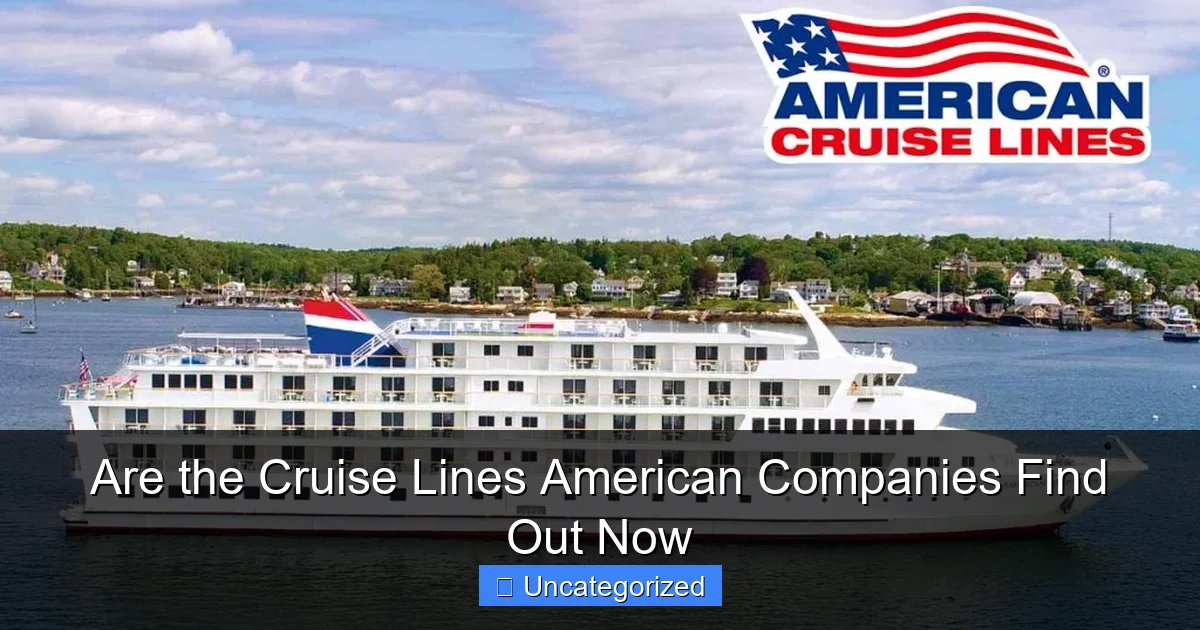
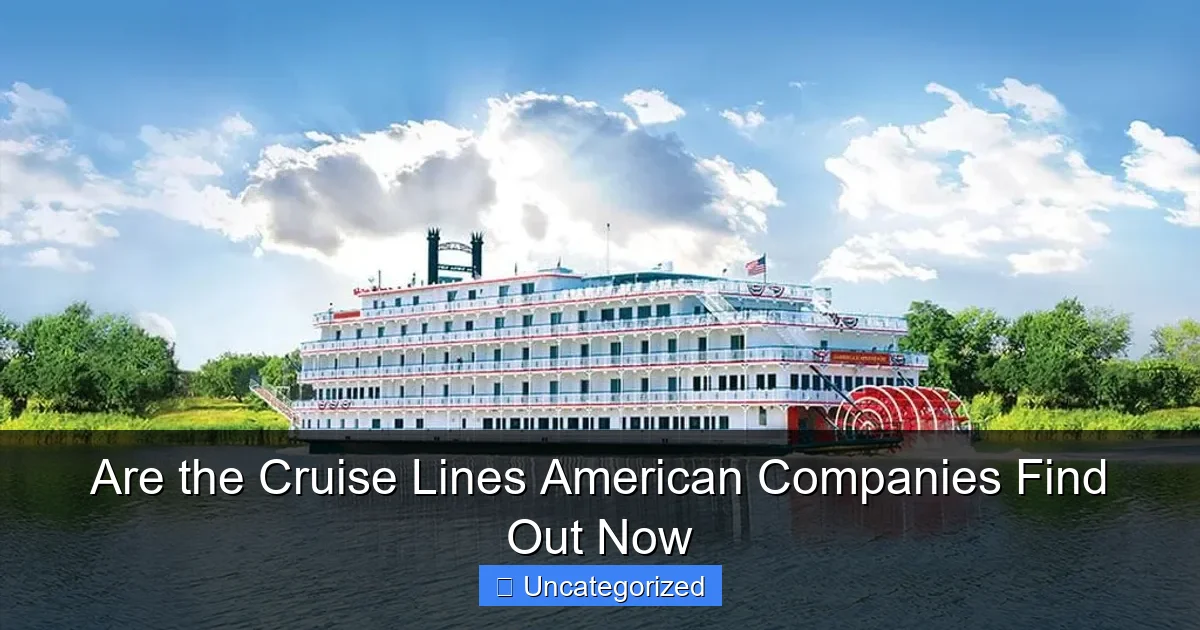
There are a few cruise lines that are genuinely American in both ownership and registration. American Cruise Lines is one such example. This smaller, domestic-focused company operates river cruises along the Mississippi, Columbia, and other U.S. waterways. Its ships are U.S.-flagged, built in American shipyards, and crewed by U.S. citizens—complying fully with the Jones Act.
Similarly, Un-Cruise Adventures, a boutique operator, uses U.S.-registered vessels for small-group expeditions in Alaska and the Pacific Northwest. These companies cater to travelers seeking authentic American experiences and are often more expensive due to higher operational costs.
Tip: Choosing Based on Your Priorities
If supporting U.S. jobs, shipbuilding, and domestic tourism is important to you, consider booking with Jones Act-compliant cruise lines. For those prioritizing value, variety, and global destinations, the larger international brands offer unparalleled options. The key is to understand the trade-offs between brand identity and operational reality.
Data Table: Cruise Line Nationality Breakdown
| Brand | Corporate Headquarters | Country of Incorporation | Primary Flag of Registry | Parent Company | Notable Ships |
|---|---|---|---|---|---|
| Carnival Cruise Line | Miami, FL | Panama / UK (dual) | Bahamas | Carnival Corporation & plc | Carnival Horizon, Carnival Breeze |
| Royal Caribbean International | Miami, FL | Liberia | Malta | Royal Caribbean Group | Symphony of the Seas, Wonder of the Seas |
| Norwegian Cruise Line | Miami, FL | Bermuda | Panama | Norwegian Cruise Line Holdings Ltd. | Norwegian Encore, Norwegian Prima |
| Princess Cruises | Santa Clarita, CA | UK | UK | Carnival Corporation & plc | Discovery Princess, Sky Princess |
| Disney Cruise Line | Miami, FL | USA (The Walt Disney Company) | Bahamas | The Walt Disney Company | Disney Wish, Disney Magic |
| American Cruise Lines | Guilford, CT | USA | USA | American Cruise Lines Inc. | Queen of the Mississippi, American Star |
Conclusion: The Global Nature of the Cruise Industry
So, are the cruise lines American companies? The answer is nuanced. While many major cruise brands are headquartered in the United States and cater to American travelers, their legal, financial, and operational frameworks are deeply international. From dual incorporations in Panama and the UK to ships registered under Bahamian and Maltese flags, and a global crew from dozens of nations, the modern cruise industry is a testament to globalization.
Understanding this complexity doesn’t diminish the value of a cruise vacation—it enhances it. As a traveler, you gain insight into the intricate systems that make these floating resorts possible. Whether you prioritize American ownership, crew welfare, or simply the best vacation experience, knowing the truth behind cruise line nationality empowers you to make informed choices.
Ultimately, the cruise industry thrives on a blend of American branding and global execution. The next time you step aboard a ship that feels quintessentially American, remember: behind the scenes, it’s a world of international collaboration, strategic tax planning, and diverse cultures—all working together to deliver your dream vacation. And now, you know the full story.
Frequently Asked Questions
Are the major cruise lines American companies?
While some cruise lines like Carnival Corporation and Royal Caribbean Group are headquartered in the U.S., many operate as international corporations with global registrations. For example, Norwegian Cruise Line is incorporated in Bermuda, despite its American branding.
Is Carnival Cruise Line an American-owned company?
Carnival Corporation, the parent company of Carnival Cruise Line, is technically a dual U.S.-U.K. entity but maintains its operational headquarters in Miami, Florida. So while it’s American-managed, it’s legally structured as a multinational corporation.
Do American cruise lines pay U.S. taxes?
Most major cruise lines, including American-based ones, register ships under foreign flags (like Panama or the Bahamas) to reduce tax burdens. This means they pay minimal U.S. taxes despite operating heavily in U.S. waters.
Are the cruise lines American companies if they sail from U.S. ports?
Sailing from U.S. ports doesn’t necessarily mean a cruise line is American. For example, MSC Cruises and Costa Cruises are European-owned but operate out of Florida. The are the cruise lines American companies question depends on corporate ownership, not departure locations.
Why do so many cruise lines incorporate outside the U.S.?
Foreign incorporation offers tax advantages, lower operating costs, and fewer labor regulations. This is why even cruise lines with strong American ties, like Royal Caribbean, are registered in countries like Liberia or Bermuda.
Which cruise lines are fully American-owned?
True 100% American-owned cruise lines are rare, but brands like Disney Cruise Line and American Cruise Lines are U.S.-based and flagged. These prioritize U.S. regulations, though they still face competition from international giants dominating the market.