Port fees are *not* included in the base price of your Carnival Cruise Line ticket, and they can significantly increase your total cost. These mandatory fees, covering docking, terminal access, and local taxes, are added during booking or as a separate line item before sailing, so always review your final invoice carefully to avoid surprises.
Key Takeaways
- Port fees are extra: Not included in base fare; paid separately before or during cruise.
- Check your invoice: Review final documents to see exact port fee amounts charged.
- Fees vary by itinerary: Longer or exotic routes often have higher port costs.
- Book early to lock rates: Pre-pay fees at time of booking to avoid increases.
- Ask about bundles: Some packages include port fees—confirm with Carnival before booking.
📑 Table of Contents
- Understanding the True Cost of a Carnival Cruise: Are Port Fees Included?
- What Are Port Fees and Why Do They Matter?
- Are Port Fees Included in Carnival Cruise Line’s Base Fare?
- How Much Do Port Fees Cost on a Carnival Cruise?
- How to Budget for Port Fees and Avoid Surprises
- Tips to Save on Port Fees and Maximize Your Cruise Value
- Final Thoughts: Planning Your Carnival Cruise with Confidence
Understanding the True Cost of a Carnival Cruise: Are Port Fees Included?
Planning a cruise vacation with Carnival Cruise Line is an exciting adventure filled with promises of sun-drenched decks, gourmet dining, and unforgettable shore excursions. Whether you’re dreaming of a Caribbean escape, an Alaskan expedition, or a European getaway, Carnival offers a wide array of itineraries tailored to suit every traveler’s taste. However, as you browse through the seemingly affordable base fares, a critical question arises: Are port fees included in Carnival Cruise Line? This question isn’t just a minor detail—it’s a pivotal factor that can significantly impact your overall vacation budget. Understanding the breakdown of what’s included (and what’s not) is essential to avoid unwelcome surprises when your final bill arrives.
Many travelers are drawn to Carnival’s “fun, affordable, and hassle-free” branding, but the devil is often in the details. While the initial price may appear competitive, additional mandatory costs like port fees, taxes, and gratuities can add up quickly. These fees are not just small line items—they can account for hundreds of dollars per person, depending on your destination and cruise duration. In this comprehensive guide, we’ll dive deep into the intricacies of Carnival’s pricing structure, clarify whether port fees are included, and provide you with the knowledge to plan your dream cruise with confidence. By the end of this article, you’ll have a clear understanding of what to expect, how to budget effectively, and how to maximize the value of your Carnival cruise experience.
What Are Port Fees and Why Do They Matter?
Defining Port Fees, Taxes, and Surcharges
When you book a cruise, the advertised fare is rarely the final price you’ll pay. Beyond the base fare, there are several mandatory add-ons, with port fees being one of the most significant. Port fees, also known as port charges or port expenses, are costs imposed by the ports of call (the destinations your ship visits) for services such as docking, security, waste disposal, and passenger processing. These fees are collected by the cruise line on behalf of the local authorities and are passed directly to the passenger—meaning they are not a profit center for Carnival.
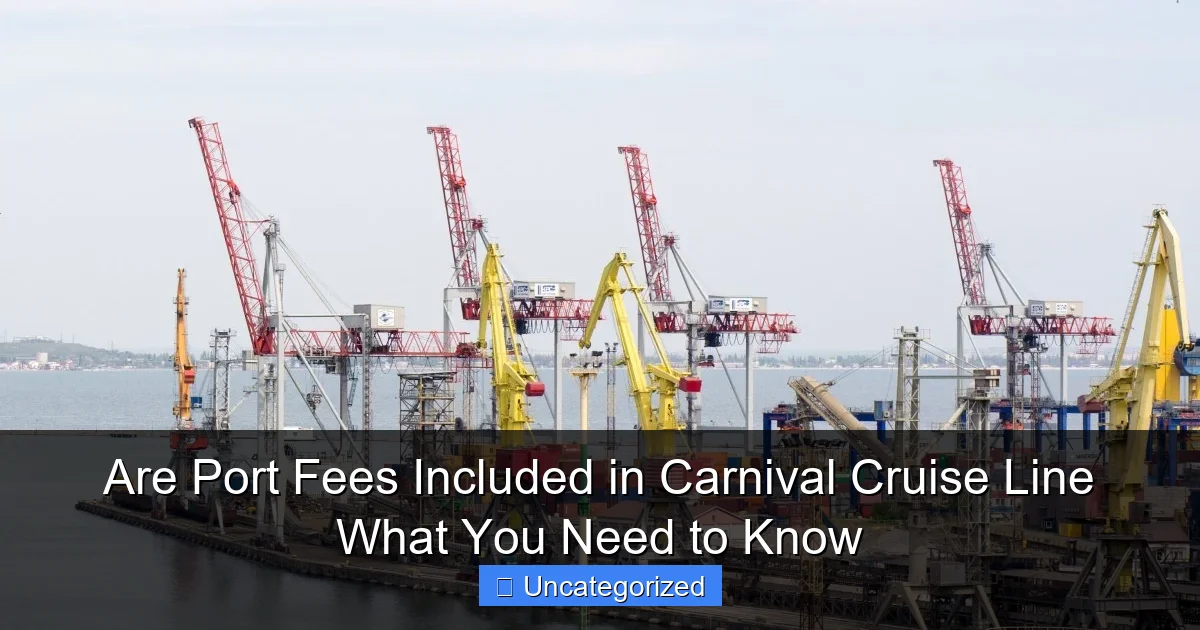
Visual guide about are port fees included in carnival cruise line
Image source: c.pxhere.com
In addition to port fees, you’ll also encounter:
- Government taxes and fees: These are mandatory charges imposed by federal, state, or local governments, such as the U.S. Passenger Vessel Services Act (PVSA) tax or local tourism taxes.
- Environmental and fuel surcharges: Occasionally, cruise lines add surcharges to cover fluctuating fuel prices or environmental compliance costs, though Carnival typically bundles these into the base fare.
- Security fees: Charges related to onboard and port security, including screening and monitoring.
How Port Fees Differ from Other Cruise Costs
It’s crucial to distinguish port fees from other expenses like gratuities (tips), shore excursions, specialty dining, and alcoholic beverages. While the latter are optional and can be managed or skipped, port fees are non-negotiable and mandatory. They are calculated per person, per cruise, and vary widely depending on:
- The number of ports visited
- The duration of the cruise
- The geographic location (e.g., Caribbean vs. Alaska vs. Mediterranean)
- The size and type of ship
Example: A 7-night Western Caribbean cruise on the Carnival Horizon might include stops in Cozumel, Belize, and Roatan. Each of these ports charges a different fee, and the total port fees could range from $150 to $250 per person. In contrast, a 3-day Baja Mexico cruise might only have port fees totaling $80–$100 per person. These differences underscore why port fees matter—they can make a noticeable difference in your total vacation cost.
Are Port Fees Included in Carnival Cruise Line’s Base Fare?
The Short Answer: Not Usually, But They Are Itemized
Here’s the straightforward answer: No, port fees are not typically included in Carnival Cruise Line’s base fare. Instead, they are added as a separate line item on your cruise booking invoice. However, this doesn’t mean they’re hidden or unexpected. Carnival is transparent about these charges and provides a detailed cost breakdown during the booking process.
Visual guide about are port fees included in carnival cruise line
Image source: c.pxhere.com
When you search for a cruise on Carnival.com, the initial price you see is the base fare. As you proceed through the booking steps, you’ll reach a page titled “Review Your Cruise” or “Cruise Summary,” where you’ll see a clear itemization of:
- Base fare
- Port charges and fees
- Government taxes
- Total price per person
This transparency is a positive aspect of Carnival’s pricing model. Unlike some budget airlines that hide fees until checkout, Carnival allows you to see the full cost upfront—as long as you read the fine print.
How Carnival Discloses Port Fees: A Step-by-Step Look
To illustrate, let’s walk through a real-world example using a sample 7-night Eastern Caribbean cruise from Miami on the Carnival Celebration (as of 2023 pricing):
- Search Result: The base fare shows $799 per person.
- Booking Step 1: You select your cabin and number of passengers.
- Booking Step 2: You click “Continue” and are taken to the “Review Your Cruise” page.
- Cost Breakdown:
- Base Fare: $799.00
- Port Charges & Fees: $225.00
- Government Taxes: $45.50
- Total: $1,069.50 per person
This means that while the cruise was advertised as “from $799,” the actual cost is over $270 more per person due to port fees and taxes. The port fees alone account for about 21% of the total price. This is why it’s essential to look beyond the headline number and focus on the final total.
How Much Do Port Fees Cost on a Carnival Cruise?
Average Port Fee Ranges by Destination
Port fees vary significantly based on itinerary, ship size, and local regulations. Below is a breakdown of typical port fee ranges for popular Carnival cruise regions (as of 2023–2024):
| Region | Typical Cruise Duration | Port Fees (Per Person) | Notes |
|---|---|---|---|
| Caribbean (Eastern/Western) | 3–7 nights | $150–$250 | Higher in ports like St. Thomas or Grand Cayman |
| Baja Mexico (Ensenada, Cabo) | 3–5 nights | $80–$120 | Generally lower due to fewer ports and shorter stays |
| Alaska | 7–14 nights | $250–$400 | Higher due to remote ports and environmental fees |
| Europe (Mediterranean, Northern Europe) | 7–12 nights | $300–$500+ | Some ports (e.g., Venice, Barcelona) charge premium fees |
| Canada/New England | 7–10 nights | $200–$300 | Includes Canadian port fees and U.S. departure taxes |
These ranges are estimates and can fluctuate. For example, a 7-night Alaska cruise with stops in Juneau, Skagway, and Ketchikan might have port fees closer to $375 per person, while a 4-night Bahamas cruise with Nassau and Freeport could be around $100 per person.
Factors That Influence Port Fee Amounts
Several variables affect how much you’ll pay in port fees:
- Number of Ports: More stops = more fees. A 10-night cruise with six ports will have higher fees than a 7-night cruise with three.
- Port Type: Busy tourist hubs (e.g., St. Thomas, Nassau) often charge more than smaller or less-visited ports.
- Local Regulations: Some countries impose higher taxes or environmental levies. For example, the Bahamas has a $25–$35 per person “cruise tax.”
- Ship Size: Larger ships may pay higher docking fees, which can be partially passed on to passengers.
- Seasonality: Fees may increase during peak travel seasons due to higher demand.
Pro Tip: If you’re budget-conscious, consider shorter cruises to Mexico or the Bahamas, where port fees are generally lower. Alternatively, look for repositioning cruises (e.g., transatlantic), which often have fewer ports and lower fees—though they may have higher base fares due to longer sea days.
How to Budget for Port Fees and Avoid Surprises
Step 1: Always Check the Final Price Breakdown
The most critical step in budgeting for your Carnival cruise is to never rely solely on the advertised base fare. Instead, follow these steps:
- Go to Carnival.com and search for your desired cruise.
- Select your cabin and passengers.
- Proceed to the “Review Your Cruise” or “Cruise Summary” page.
- Note the total price, including port fees and taxes.
- Take a screenshot or print the page for your records.
This ensures you’re working with accurate, up-to-date pricing. Carnival updates fees regularly, and what you see today might change tomorrow.
Step 2: Calculate Your Total Vacation Cost
Beyond port fees, factor in other mandatory and optional expenses:
- Gratuities (tips): Carnival automatically adds $16–$18 per person per day (depending on cabin category). For a 7-night cruise, that’s $112–$126 per person.
- Travel insurance: Highly recommended. Costs $50–$150 per person, depending on coverage.
- Shore excursions: $50–$200+ per person per port.
- Onboard spending: Alcohol, spa, photos, Wi-Fi, specialty dining, etc.
- Flights and pre/post-cruise stays: If flying to the departure port.
Example Budget for a 7-Night Caribbean Cruise (per person):
- Base Fare: $799
- Port Fees: $225
- Taxes: $45
- Gratuities: $120
- Travel Insurance: $80
- Shore Excursions (3 ports): $150
- Onboard Spending (estimated): $200
- Total Estimated Cost: $1,619
This means the final cost is over double the base fare. By budgeting for all components, you avoid sticker shock and can plan accordingly.
Step 3: Look for Promotions That Include Port Fees
While rare, Carnival occasionally runs promotions that waive or discount port fees. These are often:
- Last-minute deals: To fill unsold cabins.
- Group or military discounts: Sometimes include fee waivers.
- Special events: Like “Cruise with Confidence” offers during uncertain times.
Sign up for Carnival’s email newsletter and follow their social media channels to stay informed about these opportunities.
Tips to Save on Port Fees and Maximize Your Cruise Value
Choose Itineraries with Lower Port Fees
As shown in the data table earlier, some regions have significantly lower port fees. If budget is a priority, consider:
- 3–5 night Baja Mexico cruises: Port fees average $80–$120.
- 4-night Bahamas cruises: Fees around $90–$110.
- Repositioning cruises: Often have fewer ports and lower fees, though base fares may be higher.
These shorter cruises are also ideal for first-time cruisers or those with limited vacation time.
Book Early or Last-Minute for Better Deals
Port fees are generally fixed, but the base fare can fluctuate. To save money:
- Book early (6–12 months in advance): Secure lower base fares before prices rise due to demand.
- Book last-minute (1–3 months before departure): Look for unsold cabins and potential promotions, including port fee waivers.
Use Carnival’s “Cruise Planner” tool to set price alerts for your desired itinerary.
Consider Travel Insurance That Covers Cancellations
While not directly related to port fees, travel insurance can protect you if you need to cancel due to illness, job loss, or other covered reasons. This prevents you from losing the non-refundable portion of your cruise cost, including port fees and base fare.
Use Carnival’s Payment Plans and Discounts
- Payment plans: Spread the cost over several months with no interest.
- Senior, military, or resident discounts: Can reduce base fare, indirectly lowering the impact of port fees.
- Carnival VIFP Club: Loyalty members get exclusive offers, including potential fee reductions.
Final Thoughts: Planning Your Carnival Cruise with Confidence
So, are port fees included in Carnival Cruise Line? The answer is clear: while they are not bundled into the base fare, they are fully disclosed during the booking process. Carnival’s transparent pricing model allows you to see the full cost upfront, empowering you to make informed decisions. Port fees are a necessary part of cruising—they support the infrastructure and services that make your vacation possible—but they should never be a surprise.
By understanding how port fees work, how they vary by destination, and how to budget for them alongside other cruise expenses, you can plan a vacation that’s both enjoyable and financially responsible. Remember, the key to a stress-free cruise isn’t just finding the lowest base fare—it’s seeing the whole picture. Whether you’re sailing the Caribbean, exploring Alaska, or island-hopping in Europe, knowing what you’re paying for ensures that your Carnival cruise delivers the fun, value, and memories you expect.
As you embark on your next adventure, keep these takeaways in mind: always check the final price breakdown, budget for all mandatory and optional costs, and leverage promotions and smart booking strategies to maximize value. With this knowledge in hand, you’re ready to set sail—confident, prepared, and excited for the journey ahead. Bon voyage!
Frequently Asked Questions
Are port fees included in the base price of a Carnival Cruise Line ticket?
No, port fees are typically not included in the base fare advertised by Carnival Cruise Line. These mandatory charges are added during checkout or as a separate line item on your invoice. They cover docking costs, local taxes, and fees required by the ports you visit.
What do port fees for Carnival Cruise Line cover?
Carnival Cruise Line port fees cover docking expenses, harbor maintenance, and local government taxes at each destination. They also include security and administrative costs associated with port operations. These fees vary depending on the itinerary and ports visited.
Can I see the port fees before booking a Carnival cruise?
Yes, Carnival Cruise Line usually displays an estimated total including port fees during the online booking process. However, the exact port fees may be itemized later in your invoice. Always review the final breakdown before confirming your reservation.
Are port fees included in Carnival Cruise Line’s all-inclusive packages?
Even with Carnival’s “all-inclusive” or inclusive packages, port fees are generally not bundled in. They remain separate mandatory charges added to your final bill. These fees are mandatory for all passengers, regardless of package type.
Do port fees change after booking a Carnival cruise?
Port fees can occasionally change due to fluctuations in local taxes or port charges, but Carnival usually absorbs minor increases. If there’s a significant change, they may adjust your invoice or offer a refund for decreases. Always check your updated invoice before departure.
Are port fees the same as gratuities on Carnival Cruise Line?
No, port fees and gratuities are separate charges. Port fees cover docking and local taxes, while gratuities (or “service charges”) go to crew members. Both are mandatory but itemized differently in your cruise invoice.