Featured image for are norwegian air and norwegian cruise line the same company
Image source: cruisespotlight.com
Norwegian Air and Norwegian Cruise Line are not the same company, despite sharing the “Norwegian” name and a similar branding aesthetic. They operate independently—Norwegian Air as a low-cost airline and Norwegian Cruise Line as a global cruise operator—with distinct ownership, management, and services, though both emerged from Norway’s rich maritime and travel heritage.
Key Takeaways
- Not the same: Norwegian Air and Norwegian Cruise Line are separate companies.
- Different industries: One operates airlines; the other runs cruise ships.
- No shared ownership: They have distinct corporate structures and investors.
- Check branding carefully: Similar names can cause confusion for travelers.
- Book directly: Always verify the correct company when making reservations.
- No loyalty crossover: Rewards programs do not transfer between the two.
📑 Table of Contents
- Are Norwegian Air and Norwegian Cruise Line the Same Company?
- Origins and Corporate History: Tracing the Roots of Two Norwegian Travel Giants
- Business Models and Operational Structures: Airlines vs. Cruises
- Ownership, Branding, and Legal Structures: Who Controls What?
- Customer Experience and Market Positioning: Who Serves Whom?
- Financial Performance and Industry Challenges: A Tale of Two Sectors
- Conclusion: Two Brands, One Name, Zero Shared Ownership
Are Norwegian Air and Norwegian Cruise Line the Same Company?
When planning a vacation or business trip, travelers often encounter brand names that sound similar or share a national identity. One common source of confusion is Norwegian Air and Norwegian Cruise Line. At first glance, both companies evoke images of Norway—frozen fjords, the midnight sun, and sleek Scandinavian design—leading many to assume they are part of the same corporate family. After all, both operate in the travel and tourism industry, serve international customers, and even use similar color schemes and branding cues. But are they actually the same company? The short answer is no, but the longer explanation involves corporate history, business models, geographic operations, and financial structures that set them apart in meaningful ways.
This comprehensive guide will explore the origins, operations, ownership, and customer experiences of both Norwegian Air and Norwegian Cruise Line. By the end, you’ll understand why these two brands—despite sharing a name and a country of origin—are entirely separate entities with distinct business goals, challenges, and market strategies. Whether you’re a frequent flyer, a cruise enthusiast, or just curious about how global travel brands operate, this article will clarify the differences and similarities between Norwegian Air and Norwegian Cruise Line, helping you make informed decisions for your next journey.
Origins and Corporate History: Tracing the Roots of Two Norwegian Travel Giants
The Birth of Norwegian Air Shuttle
Norwegian Air Shuttle, commonly known as Norwegian Air, was founded in 1993 as a regional airline in Norway. Initially, it operated domestic flights using small turboprop aircraft, focusing on connecting remote communities across Norway. The company began as a modest regional carrier, but its trajectory changed dramatically in 2002 when it rebranded and shifted its strategy toward low-cost, long-haul flights. Under the leadership of CEO Bjørn Kjos (who served from 2002 to 2019), Norwegian Air launched its first international routes and introduced a business model inspired by European low-cost carriers like Ryanair and easyJet.
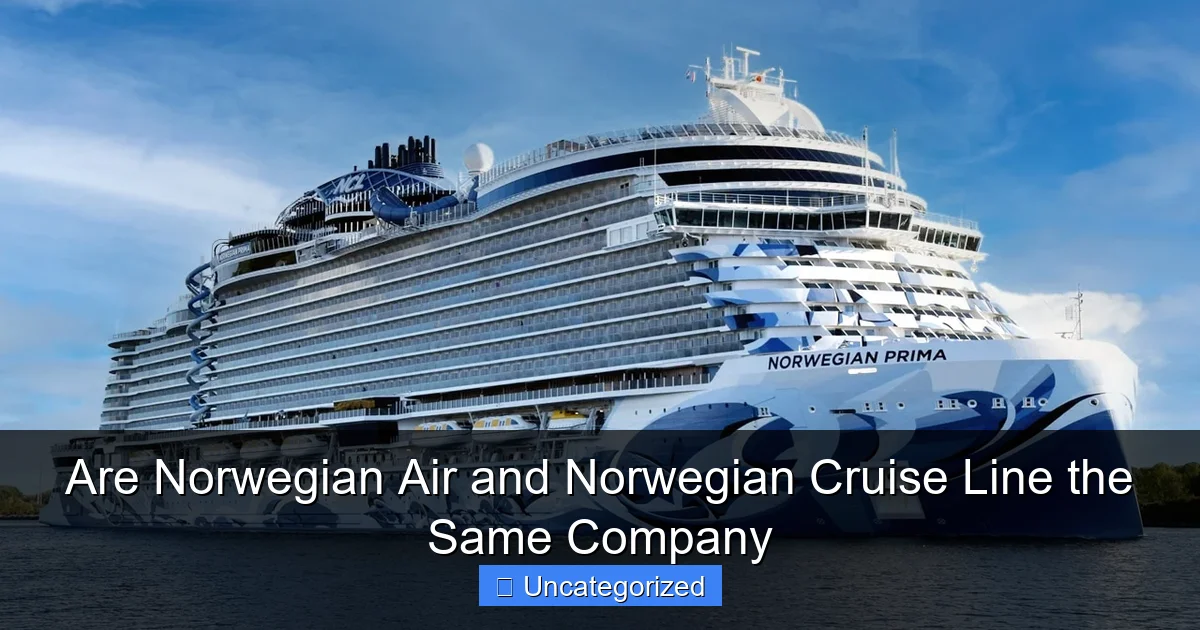
Visual guide about are norwegian air and norwegian cruise line the same company
Image source: cruiseradio.net
The airline’s expansion was aggressive and transformative. By 2013, Norwegian Air began offering transatlantic flights from Europe to the United States using fuel-efficient Boeing 787 Dreamliners, making it one of the first budget airlines to offer long-haul flights at competitive prices. This move disrupted the traditional airline industry and earned Norwegian Air a reputation as a pioneer in low-cost long-haul travel. The company went public on the Oslo Stock Exchange in 2003 and later expanded into markets such as the UK, Ireland, and Argentina with subsidiaries like Norwegian Air UK and Norwegian Air Argentina.
Norwegian Cruise Line: A Legacy in Maritime Tourism
Norwegian Cruise Line (NCL), on the other hand, has a much longer and more maritime-focused history. Founded in 1966 by Knut Kloster and Ted Arison (who later co-founded Carnival Cruise Line), NCL began as a small cruise operator based in Miami, Florida. Its first ship, the Sunward, offered voyages to the Caribbean from Miami, targeting American tourists. Unlike Norwegian Air, NCL was not founded in Norway but adopted the “Norwegian” name to reflect its heritage and the nationality of its founder, Kloster, and to evoke the romantic image of Scandinavian maritime tradition.
Over the decades, NCL grew into one of the world’s largest cruise lines, introducing innovations such as “Freestyle Cruising”—a concept that eliminated fixed dining times and formal dress codes, offering passengers greater flexibility. The company expanded its fleet, added new destinations (including Alaska, Europe, and Asia), and became a subsidiary of NCL Corporation Ltd., a Bermuda-based holding company. In 2013, NCL Holdings was acquired by Genting Hong Kong, a major Asian conglomerate, further distancing the brand from any direct Norwegian ownership or control.
Key Takeaway: Different Founding Eras and Geographies
The most fundamental difference lies in their founding eras and geographic roots. Norwegian Air is a true Norwegian company, founded and headquartered in Norway, with deep ties to Scandinavian business culture. Norwegian Cruise Line, despite its name, is an American-founded cruise line that adopted Norwegian branding for marketing and heritage appeal. This distinction is critical: one is from Norway, the other is named after Norway.
Business Models and Operational Structures: Airlines vs. Cruises
Norwegian Air: The Low-Cost, High-Volume Airline Model
Norwegian Air operates on a classic low-cost carrier (LCC) model, which emphasizes:
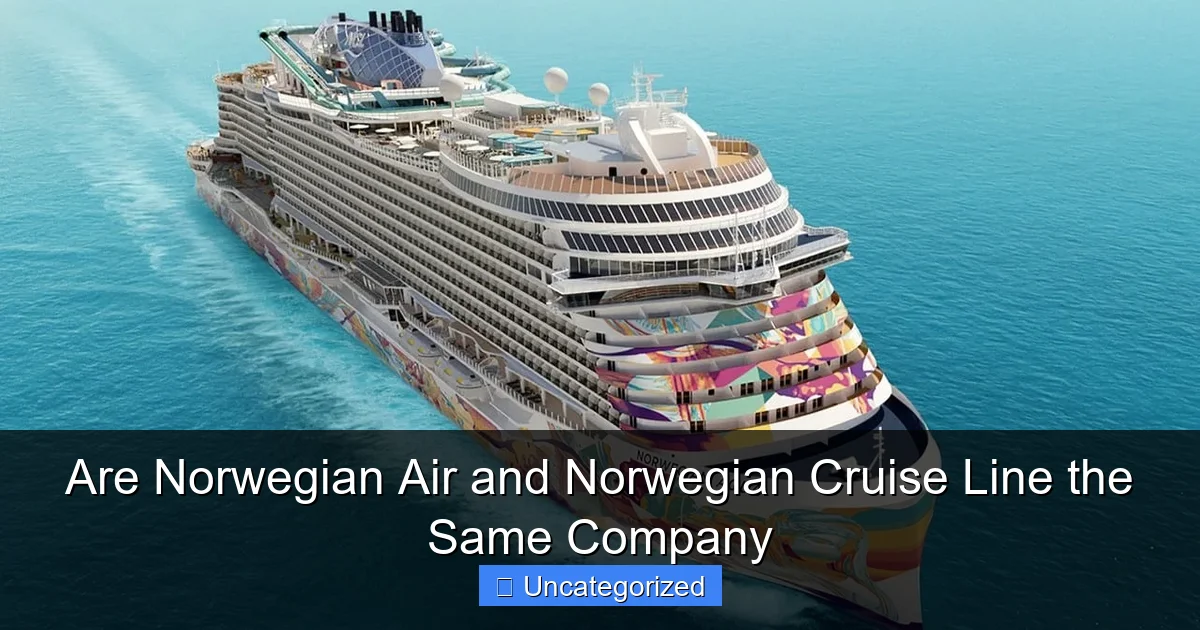
Visual guide about are norwegian air and norwegian cruise line the same company
Image source: cruisefever.net
- Point-to-point routes rather than hub-and-spoke systems
- High aircraft utilization (maximizing flight hours per day)
- Ancillary revenue (charging for baggage, seat selection, meals, and priority boarding)
- Lean staffing and operational efficiency
The airline focuses on connecting secondary airports (e.g., London Gatwick, Berlin Schönefeld, New York Stewart) to reduce landing fees and avoid congestion. Its long-haul flights use fuel-efficient Boeing 787s, which allow it to offer transatlantic fares as low as $99 one-way—a major draw for budget-conscious travelers.
However, this model has also led to financial instability. Norwegian Air accumulated significant debt during its expansion phase, especially after launching its transatlantic routes. The airline faced severe challenges during the COVID-19 pandemic, which grounded fleets and dried up demand. In 2020, it filed for reorganization under Irish insolvency law and underwent a major restructuring, shedding unprofitable routes, reducing its fleet, and shifting focus back to European short-haul flights.
Norwegian Cruise Line: The Experience-Based Hospitality Model
Norwegian Cruise Line, in contrast, operates under a completely different business model centered on experience, luxury, and customer retention. Key features include:
- All-inclusive vacation packages (though add-ons are common)
- Large, amenity-rich ships (e.g., the Norwegian Encore, with 16 dining options, a racetrack, and Broadway shows)
- Freestyle Cruising—no assigned dining times, flexible itineraries
- High customer service standards and onboard entertainment
NCL’s revenue comes not just from ticket sales but from onboard spending: drinks, excursions, spa treatments, specialty dining, and retail. This “captive audience” model allows cruise lines to generate significant profits from passengers already on board.
Unlike airlines, cruise lines face different operational challenges: port regulations, environmental compliance, and the high cost of maintaining large vessels. However, NCL benefits from long-term customer loyalty, repeat bookings, and strong relationships with travel agencies and tour operators.
Operational Differences in Practice
Consider two real-world examples:
Example 1: A traveler booking a flight from Oslo to New York with Norwegian Air pays a base fare of $150 but adds $60 for checked baggage, $25 for a seat assignment, and $15 for a meal—totaling $250. The airline’s profit depends on filling seats and maximizing ancillary revenue.
Example 2: A family of four books a 7-day Caribbean cruise with NCL for $3,000. They spend an additional $1,200 on drinks, excursions, spa visits, and specialty dining. The cruise line earns revenue from both the initial fare and the onboard spending, creating a higher lifetime value per customer.
These models reflect fundamentally different approaches to travel: one prioritizes speed and cost, the other emphasizes leisure and experience.
Ownership, Branding, and Legal Structures: Who Controls What?
Norwegian Air: A Publicly Traded, Restructured Airline
Norwegian Air Shuttle is a publicly traded company listed on the Oslo Stock Exchange (ticker: NAS). After its 2020 restructuring, ownership shifted significantly. The airline is now majority-owned by a consortium of creditors and new investors, including:
- Norwegian Government (via state-owned funds) – provided emergency loans during the pandemic
- Private equity and hedge funds – including those from the US and Europe
- Bondholders and aircraft lessors – who converted debt into equity
The company is headquartered in Bærum, near Oslo, and remains subject to Norwegian labor laws, aviation regulations, and EU safety standards (through EASA). Its branding emphasizes Scandinavian values: simplicity, efficiency, and sustainability (e.g., carbon offset programs, use of biofuels).
Norwegian Cruise Line: A Global Conglomerate Subsidiary
Norwegian Cruise Line is part of Norwegian Cruise Line Holdings Ltd., a Bermuda-registered company traded on the New York Stock Exchange (ticker: NCLH). The parent company also owns two other major cruise brands:
- Oceania Cruises – luxury small-ship cruising
- Regent Seven Seas Cruises – all-inclusive ultra-luxury voyages
NCL Holdings is majority-owned by Genting Hong Kong, a Hong Kong-based conglomerate with interests in shipping, gaming, and tourism. Genting’s influence has led to investments in new ships, Asian market expansion, and partnerships with Asian travel agencies. However, in 2022, Genting Hong Kong filed for liquidation, creating uncertainty for NCL’s long-term ownership structure.
Despite its Bermuda registration, NCL’s operational headquarters are in Miami, Florida, and it complies with US maritime laws, CDC health regulations, and international safety standards (SOLAS).
Branding: Why the Name “Norwegian”?
Both companies use “Norwegian” in their names for strategic reasons, but with different motivations:
- Norwegian Air uses the name authentically—it is Norwegian-owned, based in Norway, and serves Norwegian interests.
- Norwegian Cruise Line uses the name for branding appeal. In the 1960s, Scandinavian maritime heritage was associated with safety, elegance, and exploration. The name helped differentiate NCL from American competitors like Carnival and Royal Caribbean.
Interestingly, Norwegian Cruise Line does not operate under Norwegian maritime law. Its ships are registered in Bahamas, Malta, or Panama (flag states), which offer lower taxes and fewer labor restrictions—a common practice in the cruise industry.
Customer Experience and Market Positioning: Who Serves Whom?
Norwegian Air: The Budget Traveler’s Choice
Norwegian Air primarily targets budget-conscious travelers and millennial backpackers seeking affordable international flights. Its customer base includes:
- Students and young professionals
- Backpackers exploring Europe and North America
- Business travelers on short-haul European routes
The airline’s in-flight experience is minimalistic: slim seats, no free meals on long-haul flights, and limited legroom in economy. However, it offers modern amenities like Wi-Fi, USB charging ports, and an intuitive booking platform. Norwegian Air also partners with loyalty programs like EuroBonus (SAS) and offers co-branded credit cards in select markets.
Tip: To save money, book flights during Norwegian Air’s frequent sales (e.g., “Black Friday” or “Cyber Monday” deals) and avoid peak travel seasons. Use the airline’s app for mobile check-in and boarding passes to reduce fees.
Norwegian Cruise Line: The Leisure and Luxury Seeker
NCL targets families, couples, and retirees looking for all-inclusive, stress-free vacations. Its customer segments include:
- Families with children (kids sail free promotions)
- Honeymooners and couples (romantic packages)
- Repeat cruisers (loyalty program: Latitudes Rewards)
Onboard experiences are designed to impress: Broadway shows (e.g., Jersey Boys), water parks, rock climbing walls, and gourmet dining. NCL also offers themed cruises (e.g., “Sail Away” music cruises) and private island destinations like Great Stirrup Cay in the Bahamas.
Tip: Book early to get the best cabin locations (avoid lower decks and near elevators). Use NCL’s “Free at Sea” promotion to get extras like specialty dining, Wi-Fi, or shore excursion credits.
Market Positioning Comparison
While Norwegian Air competes with Ryanair, easyJet, and Wizz Air, NCL competes with Carnival, Royal Caribbean, and MSC Cruises. Their market positioning reflects their industries:
- Norwegian Air: Disruptor, cost leader, innovator in long-haul LCC
- Norwegian Cruise Line: Lifestyle brand, experience provider, luxury enabler
Financial Performance and Industry Challenges: A Tale of Two Sectors
Norwegian Air: Volatility and Recovery
Norwegian Air’s financial history is marked by rapid growth and near-collapse. Key data points:
| Year | Revenue (USD) | Net Profit/Loss | Fleet Size | Key Event |
|---|---|---|---|---|
| 2018 | $4.2 billion | $130 million loss | 168 aircraft | Peak expansion |
| 2020 | $1.1 billion | $2.3 billion loss | 50 aircraft (reduced) | COVID-19 grounding, restructuring |
| 2022 | $1.9 billion | $180 million loss | 55 aircraft | Recovery in European routes |
| 2023 | $2.4 billion | $90 million profit | 60 aircraft | Return to profitability |
The airline’s recovery has been driven by a focus on short-haul European flights, reduced debt, and improved operational efficiency. However, it still faces challenges: high fuel prices, labor strikes, and competition from state-backed airlines like SAS and Lufthansa.
Norwegian Cruise Line: Resilience and Recovery
NCL’s financials tell a different story. Despite pandemic-related shutdowns, the cruise industry rebounded strongly. Key data:
| Year | Revenue (USD) | Net Profit/Loss | Fleet Size | Key Event |
|---|---|---|---|---|
| 2019 | $6.5 billion | $1.1 billion profit | 28 ships | Pre-pandemic peak |
| 2020 | $1.3 billion | $4.1 billion loss | 0 ships (suspended) | CDC no-sail order |
| 2022 | $3.8 billion | $1.6 billion loss | 24 ships | Gradual restart |
| 2023 | $6.2 billion | $320 million profit | 26 ships | Strong demand, high ticket prices |
NCL’s recovery has been fueled by pent-up demand, higher ticket prices, and strong onboard spending. However, it faces rising fuel and labor costs, as well as environmental scrutiny over emissions and waste disposal.
Industry Challenges Compared
- Norwegian Air: Fuel volatility, labor unions, airport slot restrictions
- Norwegian Cruise Line: Environmental regulations, port fees, health and safety protocols
Conclusion: Two Brands, One Name, Zero Shared Ownership
So, are Norwegian Air and Norwegian Cruise Line the same company? The answer is a definitive no. They are separate corporations with distinct histories, business models, ownership structures, and customer bases. Norwegian Air is a true Norwegian airline focused on low-cost air travel, while Norwegian Cruise Line is an American-founded cruise brand that uses Norwegian heritage for marketing appeal. One flies; the other sails. One prioritizes efficiency; the other emphasizes experience.
Understanding this distinction helps travelers make better decisions. If you’re looking for an affordable flight from London to Boston, Norwegian Air might be your best bet. If you’re planning a romantic getaway with Broadway shows and private islands, Norwegian Cruise Line offers a unique experience. Neither company owns or controls the other, and their financial health, operational strategies, and future outlooks are entirely independent.
As the travel industry evolves—shaped by climate change, digital transformation, and shifting consumer preferences—both Norwegian Air and Norwegian Cruise Line will need to adapt. But one thing is certain: they will do so as separate entities, each carving its own path in the skies and seas. Whether you’re soaring above the clouds or cruising through turquoise waters, knowing the difference ensures your journey starts with clarity and confidence.
Frequently Asked Questions
Are Norwegian Air and Norwegian Cruise Line the same company?
No, Norwegian Air and Norwegian Cruise Line are not the same company. They are separate entities operating in different industries—aviation and cruise travel, respectively—despite sharing the “Norwegian” name and similar branding.
Is Norwegian Cruise Line owned by Norwegian Air?
No, Norwegian Cruise Line (NCL) is not owned by Norwegian Air. NCL is operated by Norwegian Cruise Line Holdings Ltd., a publicly traded company, while Norwegian Air is an independent airline headquartered in Norway.
Do Norwegian Air and Norwegian Cruise Line share loyalty programs?
No, the two companies do not share loyalty programs. Norwegian Air has its own frequent flyer program, Norwegian Reward, while Norwegian Cruise Line offers the Latitudes Rewards program for cruise passengers.
Can I use Norwegian Air miles for Norwegian Cruise Line bookings?
No, Norwegian Air miles cannot be used for Norwegian Cruise Line bookings. The two brands operate independently and do not have any partnership or shared benefits between their reward systems.
Why do Norwegian Air and Norwegian Cruise Line have similar names?
Both companies are based in Norway and reflect the country’s heritage in their branding, but this is where the connection ends. The shared “Norwegian” name is purely coincidental and not indicative of any corporate relationship.
Does Norwegian Cruise Line Holdings Ltd. own Norwegian Air?
No, Norwegian Cruise Line Holdings Ltd. does not own Norwegian Air. They are completely separate corporations with distinct ownership structures, stock listings, and business operations.