Featured image for are cruise lines us companies
Image source: files.prezzee.com
Most major cruise lines operating in the U.S. are not American-owned or flagged, despite marketing that suggests otherwise. To avoid U.S. taxes, labor laws, and regulations, companies like Carnival, Royal Caribbean, and Norwegian register ships under foreign flags—a legal but often misunderstood practice. This allows them to reduce costs while still catering primarily to American travelers.
Key Takeaways
- Most cruise lines are not US companies: They use foreign flags for tax and regulatory advantages.
- Check the flag, not the brand: The ship’s flag reveals its legal nationality and labor laws.
- US passengers aren’t protected by US laws: International waters mean foreign regulations apply onboard.
- Corporate structure matters: Many “American” brands are subsidiaries of foreign-owned corporations.
- Research before booking: Understand which country’s laws govern your cruise experience.
- Flag of convenience impacts costs: Foreign registration reduces taxes and operational expenses.
📑 Table of Contents
- Are Cruise Lines US Companies? The Truth Behind the Flags
- The Myth of the “American” Cruise Line
- Flag of Convenience: The Real Story Behind the Ship’s Flag
- Where Are the Major Cruise Lines Legally Incorporated?
- Implications for Passengers, Crew, and the U.S. Economy
- Can a Cruise Line Be Fully U.S.-Flagged?
- Conclusion: The Global Nature of the Cruise Industry
- Data Table: Major Cruise Lines and Their Incorporation/Flag States
Are Cruise Lines US Companies? The Truth Behind the Flags
When you picture a luxurious cruise vacation—sun-kissed decks, all-you-can-eat buffets, Broadway-style shows, and ports of call in exotic destinations—chances are you’re imagining a vessel operated by a major cruise line like Carnival, Royal Caribbean, or Norwegian. These brands dominate the global cruise industry, with massive ships that resemble floating cities. But here’s a question that often surprises travelers: Are cruise lines US companies?
At first glance, the answer might seem obvious. After all, Carnival Corporation is headquartered in Miami, Florida; Royal Caribbean Group has its main offices in Miami and Washington, D.C.; and Norwegian Cruise Line Holdings operates out of Miami as well. These are all American cities, and the companies are publicly traded on U.S. stock exchanges. Yet, despite these American roots, the reality is far more complex. The cruise industry is a masterclass in global business strategy, where legal structures, tax optimization, and international regulations shape where a company is truly “based.” In this deep dive, we’ll explore the truth behind the flags, unraveling the legal, financial, and operational realities of cruise line ownership. From flag of convenience practices to corporate headquarters, we’ll answer not just where cruise lines are based, but why they make these choices—and what it means for passengers, employees, and the global economy.
The Myth of the “American” Cruise Line
Headquarters vs. Legal Registration
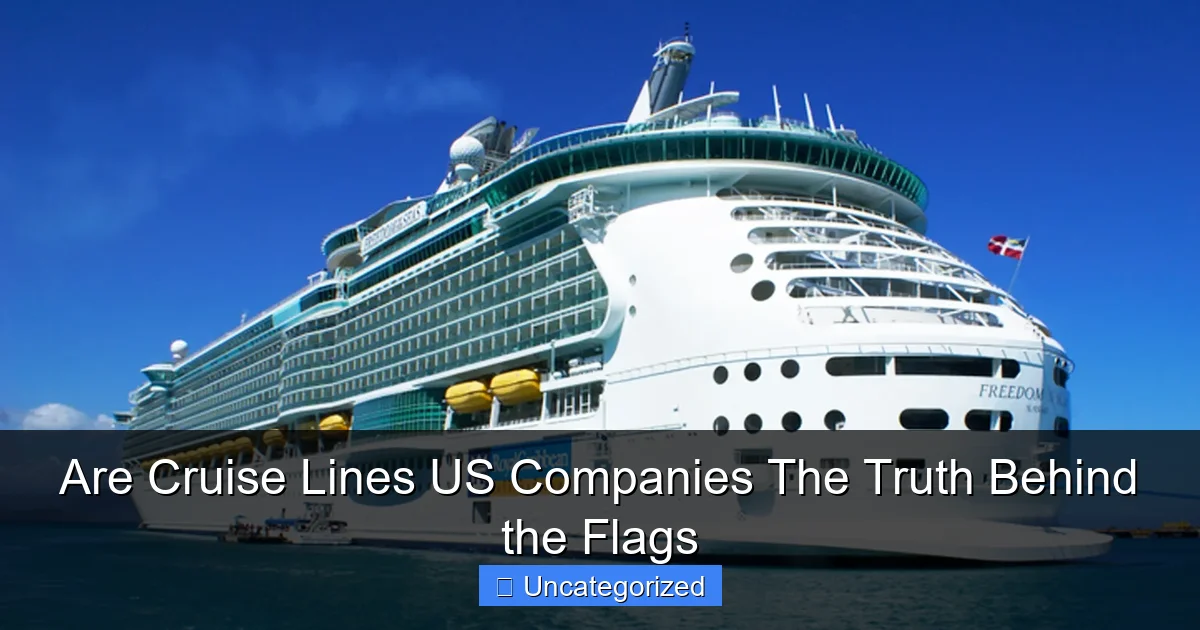
One of the most common misconceptions about cruise lines is equating their corporate headquarters with their country of legal registration. While companies like Carnival, Royal Caribbean, and Norwegian maintain major operational offices in the United States—often in Miami, a city affectionately dubbed the “Cruise Capital of the World”—this doesn’t mean the ships themselves are American-flagged or the parent companies are fully subject to U.S. law.
Visual guide about are cruise lines us companies
Image source: a57.foxnews.com
For example, Carnival Corporation & plc is a dual-listed company. It operates as two separate legal entities: Carnival Corporation, registered in Panama, and Carnival plc, registered in the United Kingdom. The two companies operate under a “dual listed company” (DLC) structure, meaning they share economic interests and management but maintain separate legal registrations. This structure allows Carnival to access capital markets in both the U.S. and the U.K., while benefiting from Panama’s favorable corporate laws and tax regime.
Similarly, Royal Caribbean Group is incorporated in Liberia, a country known for its open ship registry and tax incentives for maritime businesses. Norwegian Cruise Line Holdings is incorporated in Bermuda. Both companies maintain significant U.S. operations but are legally foreign entities.
Why the Disconnect?
So why do these companies choose to incorporate outside the United States, even though they operate primarily in U.S. waters and serve millions of American passengers each year? The answer lies in regulatory flexibility, tax optimization, and labor laws. By registering in countries with open registries (also called “flags of convenience”), cruise lines gain significant advantages:
- Lower corporate taxes: Many flag states charge minimal or zero corporate income tax on foreign-earned revenue.
- Reduced regulatory burden: U.S. labor laws, including minimum wage requirements and overtime rules, do not apply to foreign-flagged ships, even when they operate in U.S. waters.
- Operational flexibility: Flag states often have less stringent safety and environmental regulations compared to the U.S. or EU, allowing for faster approvals and lower compliance costs.
- Access to global labor pools: Crew members can be sourced from countries with lower labor costs, without being subject to U.S. immigration or wage laws.
This disconnect between headquarters and legal registration is not unique to cruise lines—it’s a common strategy in global shipping, aviation, and offshore industries. But for consumers, it creates a confusing landscape where “American” branding doesn’t always reflect the underlying corporate structure.
Flag of Convenience: The Real Story Behind the Ship’s Flag
What Is a Flag of Convenience?
A flag of convenience is a practice where a ship is registered in a country other than the home country of its owners, typically for economic or regulatory benefits. The term originated in the 1920s and is now used by over 70% of the world’s merchant fleet, including most major cruise lines.

Visual guide about are cruise lines us companies
Image source: blog.cruiseinsider.com
Ships flying flags of convenience are subject to the laws of the country where they are registered, not the country of the company’s headquarters or the nationality of the crew. This means that if a Carnival ship is registered in the Bahamas, it is governed by Bahamian maritime law, even though Carnival is headquartered in Miami and the ship sails from Florida.
Common flag states for cruise ships include:
- Bahamas – A top choice for Carnival and Royal Caribbean, with a well-established maritime authority and tax incentives.
- Panama – Offers a large open registry and political stability, popular with Carnival Corporation.
- Liberia – Known for its efficient registration process and modern regulatory framework, favored by Royal Caribbean and MSC Cruises.
- Marshall Islands – A U.S.-aligned flag state with strong ties to American maritime law, used by Norwegian and some Disney ships.
- Italy – Used by Costa Cruises and AIDA, both under Carnival’s umbrella, reflecting their European roots.
Why Cruise Lines Choose Flags of Convenience
The decision to use a flag of convenience is driven by several strategic factors:
1. Tax Benefits: Flag states typically charge low registration fees and do not impose corporate income tax on revenue earned outside their territorial waters. For example, Liberia’s corporate tax rate for international shipping companies is 0%. This allows cruise lines to reinvest profits into shipbuilding, marketing, and expansion.
2. Labor Flexibility: U.S. labor laws require minimum wage, overtime, and certain working conditions for American workers. On foreign-flagged ships, cruise lines can employ crew from countries like the Philippines, India, Indonesia, and Eastern Europe, where wages are significantly lower. While this raises ethical concerns about fair labor practices, it’s a legal and common practice under international maritime law.
3. Regulatory Efficiency: Flag states often have streamlined processes for ship inspections, certifications, and crew documentation. This reduces bureaucratic delays and allows for faster turnaround times between cruises.
4. Political and Legal Stability: Many flag states, like the Bahamas and Liberia, have stable governments and strong ties to international maritime organizations, reducing the risk of political interference or sudden regulatory changes.
Example: The Carnival Breeze, a 3,690-passenger ship, sails from Miami to the Caribbean but is registered in the Bahamas. This means it follows Bahamian maritime law, pays fees to the Bahamian Maritime Authority, and is inspected under Bahamian standards—despite being owned by a company headquartered in the U.S.
Where Are the Major Cruise Lines Legally Incorporated?
Carnival Corporation & plc
As mentioned earlier, Carnival operates under a dual-listed structure:
- Carnival Corporation – Incorporated in Panama
- Carnival plc – Incorporated in the United Kingdom
This structure allows Carnival to benefit from Panama’s tax-friendly environment and the U.K.’s stable corporate governance. The company owns nine global cruise brands, including Princess Cruises, Holland America Line, and Costa Cruises. While most of these brands have U.S.-based operations, their ships are registered in various flag states, primarily the Bahamas, Italy, and the Netherlands.
Royal Caribbean Group
Royal Caribbean Group is incorporated in Liberia, a country with a long history of supporting international shipping. The company owns Royal Caribbean International, Celebrity Cruises, and Silversea Cruises. Its ships are primarily registered in:
- Bahamas – Most Royal Caribbean and Celebrity ships
- Liberia – Some newer vessels, especially those with higher tonnage
- Italy – Silversea ships, reflecting their European heritage
Despite being incorporated in Liberia, Royal Caribbean maintains a strong U.S. presence, with its largest office in Miami and a significant number of American executives and managers.
Norwegian Cruise Line Holdings (NCLH)
NCLH is incorporated in Bermuda, a British Overseas Territory known for its tax-neutral environment. The company owns Norwegian Cruise Line, Oceania Cruises, and Regent Seven Seas Cruises. Its ships are registered in:
- Marshall Islands – Most Norwegian Cruise Line vessels
- Bermuda – Some Oceania and Regent ships
- Malta – A few Regent ships, reflecting Mediterranean operations
Bermuda’s incorporation offers NCLH access to U.S. capital markets (it’s listed on the NYSE) while minimizing corporate tax exposure.
Other Notable Cruise Lines
- MSC Cruises – Incorporation: Switzerland; Ships: Primarily Italy and Liberia
- Disney Cruise Line – Incorporation: Delaware, USA; Ships: Marshall Islands (due to U.S. labor law exemptions for foreign-flagged ships serving U.S. ports)
- Virgin Voyages – Incorporation: United Kingdom; Ships: Bahamas
Tip for Travelers: If you’re curious about a ship’s flag, check the ship’s stern or the cruise line’s website. The flag is usually displayed prominently, and the country of registration is listed in the ship’s official documentation.
Implications for Passengers, Crew, and the U.S. Economy
For Passengers: What You Need to Know
As a passenger, the flag of your ship has several implications:
1. Legal Protection: In the event of an incident (e.g., injury, medical emergency, or crime), the ship’s flag state governs the investigation and legal proceedings. This means that if you’re on a Bahamian-flagged ship, Bahamian law applies—even if the ship is docked in Miami. However, U.S. courts may still have jurisdiction over certain cases, especially those involving American citizens.
2. Onboard Policies: Foreign-flagged ships are not required to follow U.S. labor laws for crew members. This means that while you may see American staff in guest-facing roles (e.g., front desk, concierge), the majority of the crew—deckhands, cleaners, kitchen staff—are likely from other countries and paid under different wage structures. This can affect service quality and crew morale.
3. Environmental Regulations: Flag states set their own environmental standards. While most cruise lines follow international guidelines (e.g., MARPOL), some flag states have weaker enforcement, raising concerns about pollution, wastewater discharge, and carbon emissions. For eco-conscious travelers, researching a ship’s flag state can provide insight into its environmental practices.
4. Insurance and Liability: Cruise lines often use foreign-flagged ships to limit liability in case of accidents. This can affect compensation claims, especially for non-U.S. passengers.
For Crew Members: A Global Workforce
The cruise industry employs over 1.2 million people worldwide, with crew members coming from over 150 countries. While this provides employment opportunities in developing nations, it also raises concerns about:
- Wage disparities – Crew from the Philippines or Indonesia may earn significantly less than those from Western countries, even when performing the same job.
- Working conditions – Long hours, limited privacy, and restricted communication with family are common, though major cruise lines have improved standards in recent years.
- Legal protections – Crew members on foreign-flagged ships have limited recourse under U.S. labor laws, even when working on ships that sail from U.S. ports.
Example: A 2022 report by the International Transport Workers’ Federation (ITF) found that while major cruise lines have adopted better labor standards, many crew members still face challenges with contract transparency and access to grievance mechanisms.
For the U.S. Economy: A Double-Edged Sword
The U.S. benefits significantly from the cruise industry, despite the foreign registration of most ships:
- Job creation – Over 400,000 U.S. jobs are supported by the cruise industry, including port operations, tourism, and supply chains.
- Tax revenue – While the ships themselves are not U.S.-flagged, cruise lines pay port fees, sales taxes, and payroll taxes for American employees.
- Tourism boost – Cruises drive demand for hotels, restaurants, and excursions in U.S. coastal cities.
However, critics argue that the use of flags of convenience allows cruise lines to avoid paying U.S. corporate taxes on a significant portion of their revenue, which could otherwise fund public services or infrastructure improvements.
Can a Cruise Line Be Fully U.S.-Flagged?
The Case of American Cruise Lines
Yes, there are cruise lines that are fully U.S.-flagged and U.S.-incorporated. The most prominent example is American Cruise Lines, which operates small-ship cruises along the U.S. East Coast, Mississippi River, and Pacific Northwest.
Key Features of U.S.-Flagged Cruise Lines:
- U.S. incorporation – The company is registered in the U.S. (in this case, Connecticut).
- U.S.-built ships – Vessels are constructed in American shipyards, supporting domestic manufacturing.
- U.S.-registered ships – All ships fly the American flag and are subject to U.S. maritime laws.
- U.S. crew – All crew members are U.S. citizens or legal residents, paid under U.S. wage laws.
Because of these requirements, U.S.-flagged cruise lines are subject to the Jones Act, a federal law that requires ships carrying passengers between U.S. ports to be built, owned, and operated by Americans. This limits their ability to operate internationally but ensures compliance with U.S. labor, safety, and environmental standards.
Challenges of Being U.S.-Flagged
Operating under U.S. law comes with significant challenges:
- Higher costs – U.S. labor, construction, and regulatory compliance are more expensive.
- Limited routes – The Jones Act restricts international operations.
- Smaller scale – U.S.-flagged lines typically operate smaller vessels, limiting economies of scale.
As a result, only a handful of companies choose this path, and they focus on niche markets where the “all-American” experience is a selling point.
Conclusion: The Global Nature of the Cruise Industry
So, are cruise lines U.S. companies? The answer is: it’s complicated. While many major cruise brands are headquartered in the United States, maintain U.S. operations, and serve American passengers, their legal registration, ship flags, and corporate structures are deeply global. This hybrid model allows them to optimize taxes, access global talent, and operate efficiently across international waters.
For travelers, this means enjoying world-class vacations while supporting a complex, interconnected industry. For policymakers, it highlights the need for international cooperation on labor rights, environmental standards, and consumer protection. And for the cruise lines themselves, it’s a delicate balancing act—leveraging global opportunities while maintaining a strong brand presence in the U.S. market.
Understanding the truth behind the flags empowers consumers to make informed choices. Whether you’re booking a luxury Caribbean getaway or a river cruise along the Mississippi, knowing where your ship is registered can give you insight into its operations, labor practices, and environmental impact. The next time you step aboard a cruise ship, take a moment to look at the flag flying at the stern. It’s not just a symbol of nationality—it’s a window into the global business of cruising.
Data Table: Major Cruise Lines and Their Incorporation/Flag States
| Cruise Line | Parent Company | Incorporation Country | Primary Ship Flag States | Notable U.S. Operations |
|---|---|---|---|---|
| Carnival Cruise Line | Carnival Corporation & plc | Panama (Corp), UK (plc) | Bahamas, Italy | Miami, FL |
| Royal Caribbean International | Royal Caribbean Group | Liberia | Bahamas, Liberia | Miami, FL |
| Norwegian Cruise Line | Norwegian Cruise Line Holdings | Bermuda | Marshall Islands, Bermuda | Miami, FL |
| Disney Cruise Line | The Walt Disney Company | USA (Delaware) | Marshall Islands | Orlando, FL |
| American Cruise Lines | American Cruise Lines, Inc. | USA (Connecticut) | USA | Guilford, CT |
| MSC Cruises | MSC Group | Switzerland | Italy, Liberia | Miami, FL |
Frequently Asked Questions
Are cruise lines US companies required to operate under the US flag?
No, most major cruise lines are not US-flagged companies despite being headquartered in the United States. Due to international maritime laws and tax advantages, they often register ships under “flags of convenience” in countries like the Bahamas, Bermuda, or Panama.
Why aren’t major cruise lines US companies with American-registered ships?
Operating under foreign flags allows cruise lines to avoid stricter US labor laws, higher taxes, and costly safety regulations. This practice, common in the shipping industry, helps keep operational expenses lower for these global businesses.
Are cruise lines US companies legally obligated to hire American crew members?
No, foreign-flagged ships (even those owned by US-based corporations) can employ international crews. While some officers may be American, most hospitality staff are typically sourced from countries with lower wage requirements.
Do US-based cruise lines pay US taxes if they’re not registered in the United States?
While cruise lines headquartered in the US pay corporate taxes on domestic earnings, their ship operations abroad often fall under foreign tax jurisdictions. This dual structure helps minimize overall tax burdens for these multinational companies.
Which popular cruise lines are truly US companies despite foreign registration?
Carnival Corporation, Royal Caribbean Group, and Norwegian Cruise Line Holdings are all US-listed corporations with headquarters in America. However, their fleets operate under foreign flags to leverage cost savings and regulatory flexibility.
Does the US Coast Guard inspect foreign-flagged cruise ships visiting US ports?
Yes, foreign-flagged ships must comply with US safety and environmental standards when docking in American ports. The US Coast Guard conducts inspections, but day-to-day regulations are governed by the ship’s country of registry.