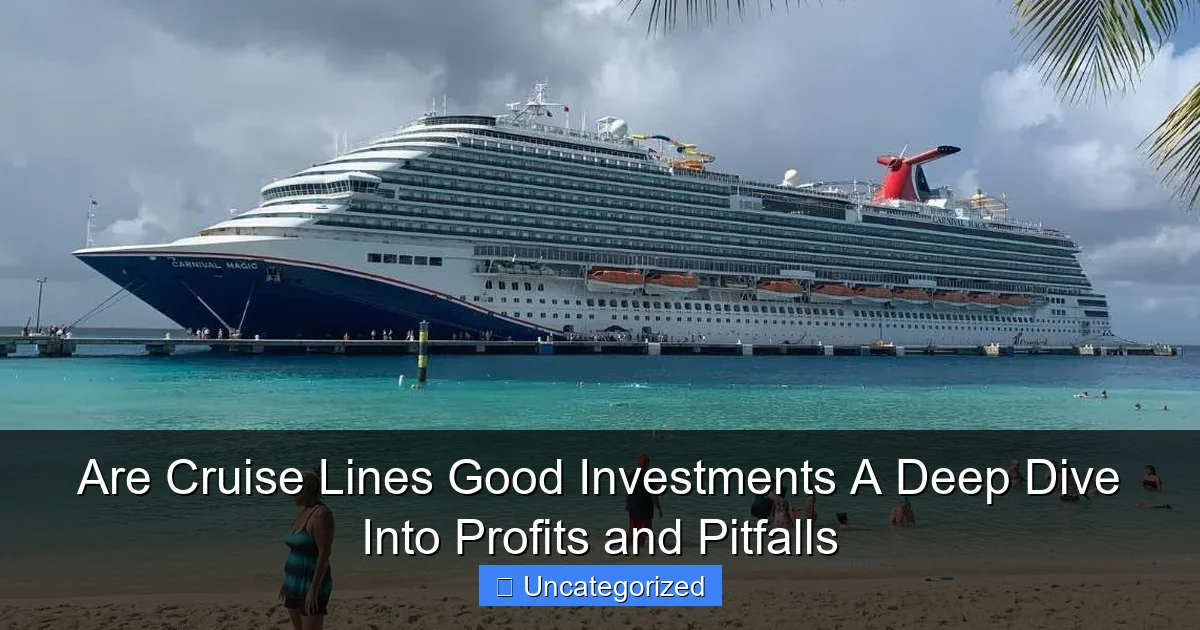
Featured image for are cruise lines good investments
Image source: usbusinessnews.com
Cruise lines can be volatile investments, heavily influenced by economic cycles, fuel costs, and global events like pandemics. While industry leaders like Carnival and Royal Caribbean show strong post-pandemic recovery and high profit margins during peak travel seasons, long-term risks—including debt loads and environmental regulations—demand cautious evaluation.
Key Takeaways
- Cruise lines are cyclical: Performance heavily tied to economic conditions and travel demand.
- High debt levels: Many operators carry significant leverage, increasing financial risk.
- Recovery potential: Post-pandemic rebound shows strong revenue growth opportunities.
- Operational costs are steep: Fuel, labor, and maintenance margins require close monitoring.
- Geopolitical risks matter: Route disruptions can quickly impact profitability and stock prices.
- Dividend inconsistency: Payouts often suspended during downturns; not reliable long-term.
📑 Table of Contents
- The Allure and the Reality: Are Cruise Lines Good Investments?
- Understanding the Cruise Line Business Model
- Historical Performance: Boom, Bust, and Recovery
- Key Financial Metrics for Investors
- Risks and Pitfalls: What Could Go Wrong?
- Strategic Opportunities and Growth Drivers
- Data Snapshot: Cruise Line Financials (2023 vs. 2019)
- Conclusion: Weighing the Investment Case
The Allure and the Reality: Are Cruise Lines Good Investments?
Imagine waking up each morning to a new horizon: turquoise waters, white-sand beaches, or bustling ports of call. For many, this dream is the essence of a cruise vacation. But for investors, the cruise industry represents something far more complex—a volatile yet potentially lucrative sector shaped by global economic tides, consumer behavior, and unpredictable crises. The question of are cruise lines good investments is not just about profitability but also about risk, timing, and long-term resilience. While the industry has delivered impressive returns in bull markets, it has also shown alarming vulnerability during downturns, from the 2008 financial crisis to the 2020 pandemic shutdown.
The cruise industry is a fascinating paradox. On one hand, it’s a high-margin business driven by luxury experiences, onboard spending, and repeat customers. On the other, it faces massive capital expenditures, fluctuating fuel costs, and geopolitical risks. Investors must navigate a landscape where a single event—a norovirus outbreak, a geopolitical conflict, or a global health emergency—can erase years of gains. In this deep dive, we’ll explore the financial mechanics of cruise line stocks, analyze historical performance, dissect risks and opportunities, and provide actionable insights for those considering whether to board the investment ship or stay on dry land.
Understanding the Cruise Line Business Model
How Cruise Lines Make Money
Cruise lines operate on a dual-revenue model: ticket sales and onboard spending. While the base fare covers the cruise itself, the real profit engine lies in what passengers spend after boarding. This includes:

Visual guide about are cruise lines good investments
Image source: usbusinessnews.com
- Dining at specialty restaurants (e.g., Royal Caribbean’s Chops Grille)
- Beverage packages (wine, cocktails, soda)
- Spa treatments and wellness services
- Excursions and shore activities
- Casino gambling
- Retail shopping and photo packages
<
Onboard spending can account for 30–40% of total revenue for major players like Carnival Corporation (CCL) and Norwegian Cruise Line Holdings (NCLH). For example, in 2022, Royal Caribbean Group reported $1.8 billion in onboard revenue, representing 38% of its total $4.7 billion in revenue. This high-margin revenue stream—often with 70–80% gross margins—makes the model particularly attractive during periods of high occupancy.
Capital-Intensive Operations and Fleet Management
Building and maintaining a modern cruise ship is a capital-intensive endeavor. A single mega-ship like Royal Caribbean’s Symphony of the Seas costs approximately $1.35 billion to construct, with a lifespan of 30+ years. These vessels require:
- Annual dry-dock maintenance ($50–$100 million per ship)
- Fuel costs (3–5% of operating expenses, highly sensitive to oil prices)
- Crewing and training (up to 2,000 crew members per ship)
- Insurance and regulatory compliance (e.g., SOLAS, MARPOL)
Moreover, cruise lines must constantly refresh their fleets to attract customers. Carnival’s “Excel-class” ships, for instance, feature LNG-powered engines and advanced water treatment systems, reflecting a $2+ billion investment in sustainability and innovation. This cycle of reinvestment creates a double-edged sword: while new ships boost revenue potential, they also strain cash flow and increase debt.
Seasonality and Demand Cycles
Unlike hotels or airlines, cruise demand is highly seasonal and route-dependent. Key insights include:
- Caribbean cruises peak during winter months (December–March)
- Mediterranean voyages surge in summer (June–August)
- Alaska cruises are limited to a 5-month season (May–September)
This seasonality forces cruise lines to manage capacity carefully. For example, Norwegian Cruise Line often relocates ships to Asia or the South Pacific during the Caribbean off-season, minimizing idle time. However, this flexibility comes at a cost—repositioning voyages are expensive and often operate at a loss.
Historical Performance: Boom, Bust, and Recovery
Pre-Pandemic Growth (2010–2019)
The decade before 2020 was a golden era for cruise stocks. Key drivers included:

Visual guide about are cruise lines good investments
Image source: bestinterest.blog
- Global middle-class expansion (especially in Asia)
- Declining fuel prices (Brent crude averaged $60–$70/barrel)
- Record occupancy rates (often exceeding 100% due to double-occupancy cabins)
During this period, Carnival Corporation’s stock (CCL) surged from $30 in 2010 to a peak of $72 in 2018—a 140% gain. Royal Caribbean (RCL) rose from $18 to $135, while Norwegian (NCLH) climbed from $25 to $59. Analysts attributed this to strong pricing power, cost-cutting initiatives, and a shift toward premium experiences (e.g., Royal Caribbean’s Quantum-class smart ships).
The Pandemic Collapse (2020–2021)
The 2020 pandemic was an unprecedented crisis. By March 2020, all three major cruise lines suspended operations, leading to:
- Zero revenue for 15+ months
- $10+ billion in combined losses (CCL: -$10.2B; RCL: -$5.8B; NCLH: -$4.0B)
- Stock price crashes (CCL fell to $8, RCL to $19, NCLH to $12)
To survive, companies raised capital through high-interest debt, asset sales, and stock dilution. Carnival, for instance, issued $12 billion in debt at rates up to 11.5%, diluting shareholders by 30%. The industry’s recovery was slow: it took until late 2022 for passenger volumes to return to 80% of pre-pandemic levels.
Post-Pandemic Rebound (2022–2024)
The recovery has been uneven but promising. Key trends include:
- Demand surge: 2023 passenger volumes exceeded 2019 levels by 12% (CLIA data)
- Pricing power: Average ticket prices rose 25% due to pent-up demand and inflation
- Debt reduction: Carnival cut net debt by $4 billion in 2023 through refinancing and asset sales
By Q1 2024, all three major cruise lines reported positive operating cash flow. Royal Caribbean’s stock rebounded to $110 (up 479% from its 2020 low), while Carnival reached $18 (125% recovery). However, profitability remains below pre-pandemic peaks—a reminder of the industry’s fragility.
Key Financial Metrics for Investors
Revenue and Occupancy Rates
Investors should monitor revenue per passenger cruise day (RPC) and occupancy rates. These metrics reveal pricing trends and demand health. For example:
- In 2023, Royal Caribbean’s RPC hit $285, up from $230 in 2019
- Carnival’s occupancy averaged 104% (vs. 102% in 2019)
- Norwegian’s RPC grew 18% year-over-year, driven by luxury segment demand
Higher RPC indicates successful upselling and premium pricing, while occupancy above 100% suggests strong demand and efficient capacity use.
Debt and Liquidity
Post-pandemic debt levels remain a critical concern. As of Q1 2024:
- Carnival’s total debt: $28.5 billion (net debt: $24.1B)
- Royal Caribbean’s total debt: $20.3 billion (net debt: $17.8B)
- Norwegian’s total debt: $14.2 billion (net debt: $12.9B)
While companies have extended debt maturities, interest expenses remain high. Carnival’s interest payments totaled $2.1 billion in 2023, consuming 40% of operating cash flow. Investors should watch for:
- Debt-to-EBITDA ratios (ideal: < 5x)
- Liquidity reserves (minimum 12 months of operating expenses)
- Credit rating improvements (e.g., S&P upgraded Carnival to B+ in 2024)
Profit Margins and Cash Flow
Operating margins and free cash flow (FCF) are vital for long-term viability. In 2023:
- Royal Caribbean: 18% operating margin, $1.2B FCF
- Carnival: 8% operating margin, -$0.5B FCF (still recovering)
- Norwegian: 12% operating margin, $0.3B FCF
Positive FCF enables debt repayment, fleet upgrades, and dividend reinstatement (Royal Caribbean resumed dividends in 2024). Investors should prioritize companies with consistent FCF generation.
Risks and Pitfalls: What Could Go Wrong?
Geopolitical and Environmental Risks
Cruise lines are vulnerable to external shocks. Examples include:
- Geopolitical conflicts: The 2022 Ukraine war forced rerouting of Mediterranean cruises, costing operators $500 million in lost revenue.
- Climate change: Rising sea levels threaten ports (e.g., Venice’s cruise restrictions), while extreme weather disrupts itineraries.
- Pandemics: The 2020 shutdown highlighted the risk of global health crises. Even minor outbreaks (e.g., norovirus) can lead to cancellations and reputational damage.
Additionally, environmental regulations like the IMO 2020 sulfur cap have increased fuel costs by 15–20%, squeezing margins.
Operational Challenges
Running a cruise line is operationally complex. Key risks include:
- Labor shortages: Post-pandemic, crew recruitment remains difficult, with 20% of positions unfilled in 2023 (Cruise Industry News).
- Fuel volatility: A $10/barrel increase in oil prices adds $300 million to annual costs for Carnival.
- Cybersecurity: In 2022, Royal Caribbean suffered a data breach affecting 12,000 crew members, costing $15 million in remediation.
These risks require robust contingency planning, but even the best strategies can fail.
Competition and Market Saturation
The industry faces growing competition from:
- Luxury alternatives: Private yacht charters and all-inclusive resorts (e.g., Sandals) attract high-net-worth travelers.
- New entrants: Virgin Voyages and Disney Cruise Line are expanding fleets, increasing market saturation.
- Air travel: Post-pandemic, some travelers prefer shorter, more flexible trips.
Overcapacity could lead to price wars, eroding profitability. In 2023, Carnival’s yield (revenue per available berth day) fell 3% due to aggressive discounting in Europe.
Strategic Opportunities and Growth Drivers
Sustainability and ESG Investing
Environmental, Social, and Governance (ESG) initiatives are reshaping the industry. Cruise lines are investing in:
- LNG-powered ships: Carnival’s AIDAnova is the first LNG-powered cruise ship, reducing CO2 emissions by 25%.
- Shore power: Royal Caribbean’s Icon of the Seas can plug into port grids, cutting emissions by 90% in port.
- Waste reduction: Norwegian’s “Sail & Sustain” program aims for zero landfill waste by 2030.
ESG-focused funds now hold 22% of Carnival’s stock, up from 12% in 2020 (Morningstar). Investors should favor companies with transparent ESG reporting.
Technology and Personalization
Digital innovation is driving revenue and efficiency:
- AI-driven pricing: Dynamic pricing tools optimize ticket and onboard sales (e.g., Royal Caribbean’s “Smart Pricing”).
- Wearable tech: Keyless cabins and wearable bands (e.g., Carnival’s Medallion) boost onboard spending by 20%.
- Virtual reality: Pre-cruise VR tours increase booking conversion rates.
These technologies reduce operational costs and enhance customer loyalty.
Expansion into Emerging Markets
Asia-Pacific is the next growth frontier. Key moves include:
- China: Royal Caribbean’s Spectrum of the Seas is dedicated to the Chinese market.
- India: Carnival launched its first India cruise in 2023, targeting 500,000 passengers annually.
- Southeast Asia: Norwegian plans 10 new Asia itineraries by 2025.
The Asia-Pacific cruise market is projected to grow at 12% CAGR through 2030 (Statista), offering a significant upside for early movers.
Data Snapshot: Cruise Line Financials (2023 vs. 2019)
| Metric | Carnival (CCL) | Royal Caribbean (RCL) | Norwegian (NCLH) |
|---|---|---|---|
| Revenue (2023) | $21.6B | $13.9B | $8.5B |
| Revenue (2019) | $20.8B | $10.9B | $6.5B |
| Operating Margin (2023) | 8% | 18% | 12% |
| Operating Margin (2019) | 15% | 20% | 14% |
| Net Debt (2023) | $24.1B | $17.8B | $12.9B |
| Net Debt (2019) | $8.3B | $9.2B | $5.1B |
| Occupancy Rate (2023) | 104% | 106% | 102% |
| Occupancy Rate (2019) | 102% | 104% | 100% |
Source: Company annual reports, CLIA, and Bloomberg. Note: Revenue figures are adjusted for inflation.
Conclusion: Weighing the Investment Case
So, are cruise lines good investments? The answer is nuanced. For long-term investors with high risk tolerance, cruise stocks offer compelling upside potential. The industry’s high-margin onboard revenue, global demand recovery, and ESG-driven innovation create a solid foundation for growth. Royal Caribbean, in particular, stands out with its strong balance sheet, technological edge, and premium brand positioning.
However, for risk-averse investors, the sector remains fraught with pitfalls. The capital-intensive model, debt burdens, and vulnerability to external shocks mean that cruise stocks are inherently volatile. The pandemic proved that even the most resilient companies can face existential threats. Key takeaways include:
- Diversify: Avoid overconcentration in a single cruise stock. Consider ETFs like the AdvisorShares Hotel ETF (BEDZ).
- Monitor debt: Prioritize companies with improving credit metrics and positive free cash flow.
- Time the market: Buy during periods of low oil prices or post-crisis dips (e.g., early 2021).
- Focus on ESG: Sustainable practices will be critical for long-term regulatory and consumer approval.
Ultimately, investing in cruise lines is not for the faint-hearted. It requires patience, vigilance, and a willingness to weather storms—both literal and figurative. But for those who navigate the risks wisely, the rewards can be as vast as the open sea.
Frequently Asked Questions
Are cruise lines good investments for long-term growth?
Cruise lines can offer long-term growth potential, especially as global tourism rebounds post-pandemic, but they are highly sensitive to economic downturns and geopolitical risks. Investors should weigh cyclical revenue patterns against demographic trends favoring experiential travel.
What are the biggest financial risks of investing in cruise lines?
Cruise lines face high operating costs, fuel price volatility, and massive debt loads from fleet expansions. Regulatory fines and health-related disruptions (e.g., norovirus outbreaks) can also severely impact profitability. Due diligence on balance sheets is critical.
How do cruise line investments compare to other travel sector stocks?
Unlike airlines or hotels, cruise lines combine leisure, hospitality, and transportation, often yielding higher margins but with greater capital intensity. Their performance is more volatile, making them a higher-risk, higher-reward option in the travel sector.
Do cruise lines pay dividends to investors?
Most major cruise lines suspended dividends during the pandemic and have been slow to reinstate them, prioritizing debt reduction. While dividend potential exists long-term, current returns favor growth-focused investors over income seekers.
How does consumer demand affect cruise line stock performance?
Strong booking trends and onboard spending boost revenues, but demand is highly discretionary. Economic recessions, rising interest rates, or negative publicity (e.g., accidents) can trigger sharp stock declines, making sentiment a key metric.
Are cruise lines good investments during economic uncertainty?
Cruise lines are cyclical and often underperform during recessions as travelers cut discretionary spending. However, undervalued stocks may rebound quickly during recovery phases, requiring careful timing and risk tolerance.