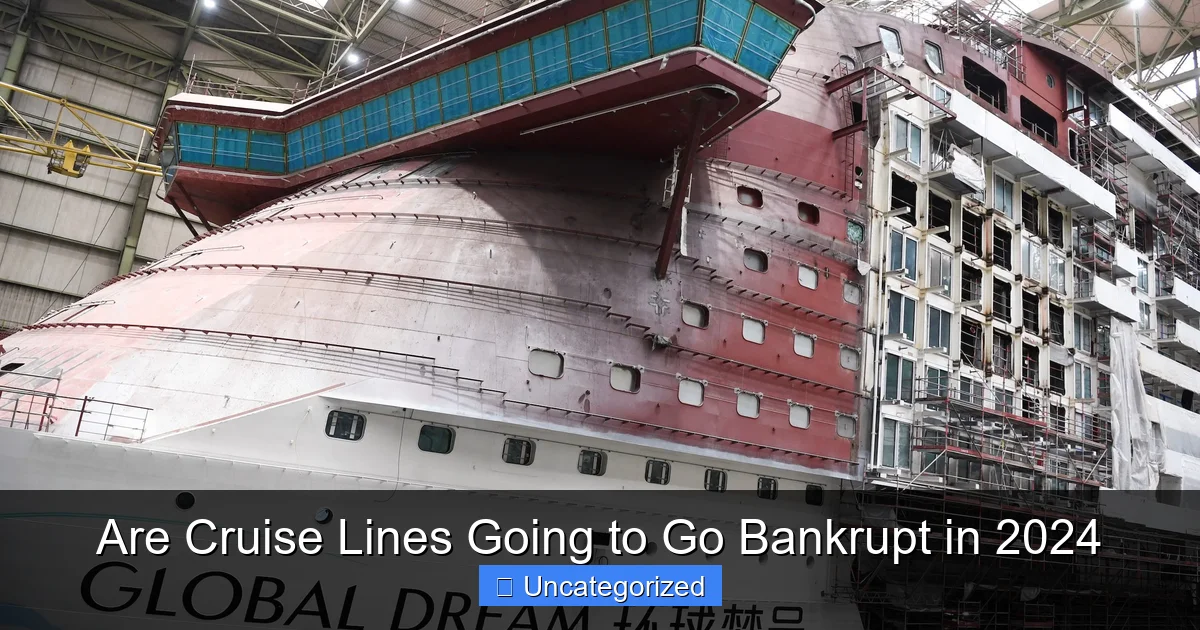
Featured image for are cruise lines going to go bankrupt
Image source: gcaptain.com
Cruise lines are not expected to go bankrupt in 2024, thanks to strong post-pandemic demand, rising ticket prices, and improved operational efficiencies. Major players like Carnival, Royal Caribbean, and Norwegian have stabilized finances through refinancing, asset sales, and cost controls—positioning the industry for cautious growth despite inflation and geopolitical risks.
Key Takeaways
- Major cruise lines are solvent: Strong bookings and cost controls reduce 2024 bankruptcy risks.
- Monitor debt refinancing: Watch Q2–Q3 earnings for liquidity updates and loan restructuring.
- Smaller operators face higher risk: Niche brands may struggle without diversified revenue streams.
- Demand remains resilient: Record 2023–2024 bookings signal sustained consumer confidence.
- Geopolitical impacts are key: Red Sea disruptions or fuel spikes could strain budgets.
- Investors should track EBITDA: Improving margins signal recovery, not just sales growth.
📑 Table of Contents
- The Big Question: Are Cruise Lines Going Bankrupt in 2024?
- 1. The Financial Health of Cruise Lines: A Post-Pandemic Snapshot
- 2. Major Risks Facing the Industry in 2024
- 3. Opportunities for Growth and Innovation
- 4. Case Studies: Who’s Sailing—and Who’s Sinking?
- 5. The Bottom Line: Bankruptcy Predictions for 2024
- Conclusion: Will the Cruise Industry Sink or Sail?
The Big Question: Are Cruise Lines Going Bankrupt in 2024?
For over a century, cruise vacations have been synonymous with luxury, adventure, and relaxation. From the golden age of ocean liners to today’s floating megacities, cruise lines have weathered storms—both literal and metaphorical. But as we enter 2024, a new wave of uncertainty has emerged: are cruise lines going bankrupt? The question looms large for travelers, investors, and industry insiders alike, especially after the pandemic’s devastating impact on global tourism. With headlines about debt, labor shortages, and fluctuating demand, it’s hard not to wonder if the industry is on the brink of collapse.
The cruise industry is no stranger to challenges. From the Costa Concordia disaster in 2012 to the Norovirus outbreaks that plagued ships in the early 2010s, cruise lines have repeatedly proven their resilience. However, the past four years have been uniquely brutal. The COVID-19 pandemic brought global cruising to a screeching halt, with ships idled for months, revenue plummeting, and debt skyrocketing. While the industry has rebounded, with 2023 seeing record-breaking bookings, the road to recovery is far from smooth. In this article, we’ll dive deep into the financial health of cruise lines, explore the risks and opportunities facing the industry, and answer the burning question: will 2024 be the year the cruise ship sinks—or sails stronger than ever?
1. The Financial Health of Cruise Lines: A Post-Pandemic Snapshot
Debt and Liquidity: The Pandemic Hangover
The most pressing concern for cruise lines is their staggering debt. According to industry reports, major players like Carnival Corporation, Royal Caribbean Group, and Norwegian Cruise Line Holdings collectively accumulated over $50 billion in debt during the pandemic. Carnival alone reported a net loss of $10.2 billion in 2020, while Royal Caribbean’s debt-to-equity ratio soared to 3.5x—a level that would make most investors nervous.
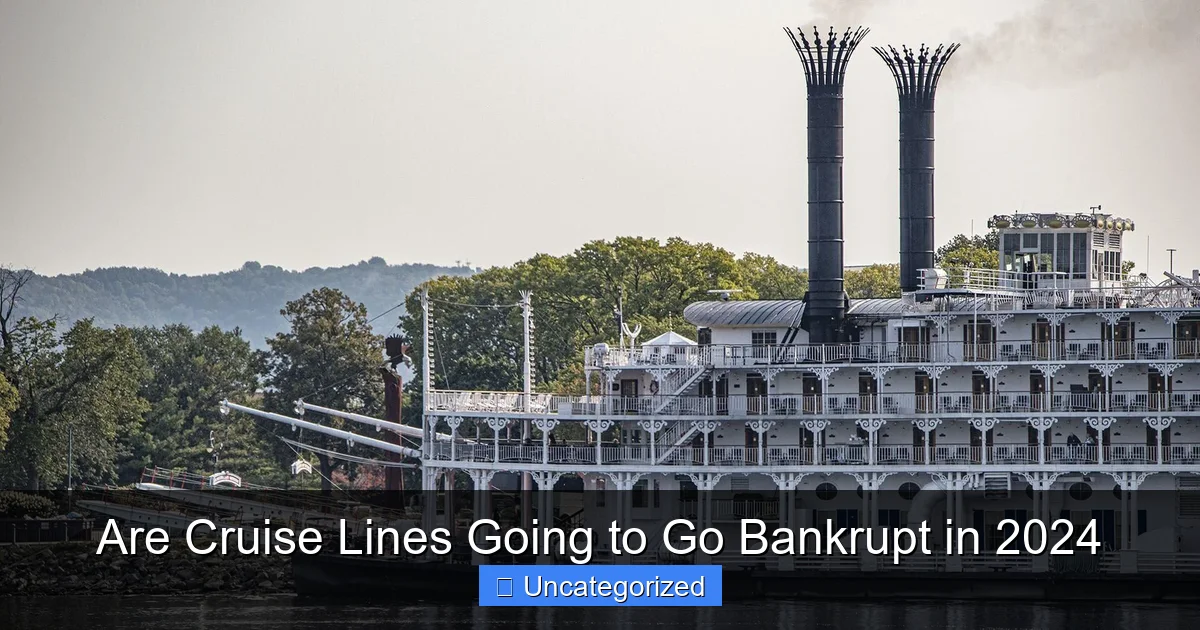
Visual guide about are cruise lines going to go bankrupt
Image source: bloximages.newyork1.vip.townnews.com
To survive, cruise lines took drastic measures:
- Debt restructuring: Companies issued bonds and equity to raise capital, often at high interest rates.
- Cost-cutting: Thousands of employees were furloughed, and non-essential expenses were slashed.
- Asset sales: Older ships were sold or scrapped to free up cash.
By 2023, the tide seemed to turn. Carnival’s debt peaked at $33 billion but has since been reduced to $27 billion through refinancing. Royal Caribbean, meanwhile, reported a 2023 net income of $1.2 billion—the first positive annual earnings since 2019. However, liquidity remains a concern. As of Q4 2023, Carnival’s cash reserves stood at $7.8 billion, barely enough to cover 18 months of operations if revenue were to drop again.
Recovery Metrics: Bookings, Pricing, and Occupancy
On the surface, demand appears robust. In 2023, cruise bookings hit record highs, with Carnival reporting a 20% increase in revenue compared to 2019. Royal Caribbean’s “Celebrity Beyond” sold out its inaugural season within weeks, and Norwegian Cruise Line’s “Norwegian Prima” achieved 100% occupancy for 12 consecutive months.
But dig deeper, and the picture is nuanced:
- Price sensitivity: While luxury and premium lines (e.g., Regent Seven Seas, Viking) are thriving, budget-focused brands like Carnival Cruise Line are relying heavily on promotions and discounts to fill ships.
- Occupancy gaps: Smaller and mid-sized ships (e.g., Holland America, Oceania) report 80-90% occupancy, below the industry’s historical 105% average (due to onboard spending).
- Booking windows: 2024 bookings are strong, but 2025 demand is softer, suggesting travelers may be waiting for better deals.
Example: A 7-day Alaska cruise on Carnival in 2024 starts at $599—a 25% discount compared to 2019 pricing—to entice budget-conscious travelers.
2. Major Risks Facing the Industry in 2024
Economic Volatility and Inflation
The global economy is a double-edged sword for cruise lines. While a strong economy boosts discretionary spending, inflation and recession fears are dampening consumer confidence. Key risks include:
- Fuel prices: A 2023 surge in crude oil prices increased operating costs by 15-20%. Cruise lines now spend $500,000-$1 million per day on fuel for a single megaship.
- Labor costs: Post-pandemic wage hikes for crew (up 10-15%) and shore-based staff are straining margins.
- Currency fluctuations: A strong U.S. dollar makes international cruises (e.g., Europe, Asia) more expensive for Americans, reducing demand.
Tip: Travelers can hedge against inflation by booking early and opting for “all-inclusive” packages, which lock in prices for excursions, drinks, and gratuities.
Regulatory and Environmental Pressures
The cruise industry faces growing scrutiny over its environmental impact. The International Maritime Organization (IMO) has mandated a 40% reduction in carbon emissions by 2030, forcing costly upgrades:
- LNG-powered ships: Royal Caribbean’s “Icon of the Seas” (launching 2024) runs on liquefied natural gas, cutting emissions by 20% but costing $2 billion per ship.
- Shore power: Ports like Seattle and Vancouver now require ships to plug into onshore electricity, adding $50,000-$100,000 per docking.
- Fines and penalties: In 2023, Carnival paid $20 million for violating air emission standards in California.
Environmental compliance could cost the industry $5-10 billion annually by 2030—a burden that may push smaller lines into bankruptcy.
Geopolitical and Health Risks
The Red Sea crisis, Middle East tensions, and potential new pandemics pose existential threats. In 2023, 12 cruise itineraries were rerouted due to Red Sea attacks, costing lines $200 million in lost revenue and insurance claims. Meanwhile, health scares (e.g., norovirus, COVID-19 variants) could trigger another global shutdown.
Example: In December 2023, a norovirus outbreak on a Princess Cruises ship sickened 150 passengers, leading to a 10% drop in bookings for the line’s Caribbean voyages.
3. Opportunities for Growth and Innovation
New Markets and Demographics
Cruise lines are betting big on untapped markets:
- Asia-Pacific: Royal Caribbean’s “Spectrum of the Seas” is now based in Shanghai, targeting Chinese travelers.
- Millennials and Gen Z: Lines like Virgin Voyages (adults-only) and Carnival (social media-focused) are attracting younger crowds with tech-savvy ships and Instagram-worthy experiences.
- Luxury and expedition cruises: Silversea and Lindblad Expeditions are expanding into polar regions, with bookings up 30% for 2024.
Tip: Travelers seeking unique experiences should consider “destination-focused” cruises (e.g., Antarctica, Galápagos) or themed voyages (e.g., wellness, culinary).
Technology and Sustainability
Innovation is key to survival:
- AI and automation: Royal Caribbean’s “Excalibur” AI system optimizes fuel use, saving $50 million annually.
- Green ships: Carnival’s “Carnival Jubilee” (2023) is the first LNG-powered ship in North America.
- Virtual reality: Norwegian’s “Haven” suites now offer VR excursions, reducing the need for physical tours.
Example: In 2024, Disney Cruise Line will launch “Disney Treasure,” featuring a fully electric propulsion system and zero single-use plastics.
Strategic Partnerships and Mergers
To cut costs, cruise lines are forming alliances:
- Carnival and Costa Cruises: Shared ports and crew training.
- Royal Caribbean and TUI Cruises: Joint marketing for European itineraries.
- Norwegian and Oceania: Pooled procurement for food and supplies.
Mergers could also be on the horizon. Industry analysts predict a potential tie-up between Norwegian and Holland America to create a mid-tier powerhouse.
4. Case Studies: Who’s Sailing—and Who’s Sinking?
Carnival Corporation: The Comeback Kid?
Carnival, the world’s largest cruise operator, is a cautionary tale. After a $10 billion loss in 2020, the company slashed 20% of its fleet, laid off 12,000 employees, and raised $15 billion in debt. By 2023, Carnival had:
- Reduced debt by $6 billion.
- Achieved 95% occupancy.
- Launched 3 new ships (e.g., “Carnival Jubilee”).
But challenges remain: Carnival’s stock price is still 40% below pre-pandemic levels, and its credit rating is “junk” status (BB+).
Royal Caribbean: The Innovation Leader
Royal Caribbean has outperformed rivals with bold investments:
- “Icon of the Seas” (2024): A $2.7 billion, 5,600-passenger ship with a 17-deck waterpark and 18 restaurants.
- “Perfect Day at CocoCay”: A private island in the Bahamas with a $250 million investment.
- AI-driven revenue management: Dynamic pricing boosted profits by 12% in 2023.
Result: Royal Caribbean’s stock is up 30% since 2021, and it holds an investment-grade credit rating (BBB).
Norwegian Cruise Line: The High-Risk Gambler
Norwegian took a different path, focusing on premium experiences and debt reduction. It sold 10 ships, cut costs by $1 billion, and launched “Norwegian Prima” (2022). However, its debt-to-EBITDA ratio remains high at 5.5x, and 2024 bookings are flat. Analysts warn of a potential credit downgrade if demand weakens.
5. The Bottom Line: Bankruptcy Predictions for 2024
Who’s Most at Risk?
Smaller and mid-sized lines are most vulnerable:
- Small operators: Lines with fewer than 5 ships (e.g., Windstar, Azamara) lack economies of scale.
- Highly leveraged companies: Norwegian Cruise Line and MSC Cruises (not publicly traded) have debt ratios exceeding 6x.
- Budget brands: Carnival Cruise Line and MSC’s “MSC Seaside” class rely on price-sensitive travelers.
Data from S&P Global suggests a 20% chance of bankruptcy for these players in 2024.
Who’s Likely to Survive?
The “Big Three” (Carnival, Royal Caribbean, Norwegian) have the resources to weather storms:
- Royal Caribbean: Strong balance sheet, innovation, and premium positioning.
- Carnival: Massive scale, diversified brands, and aggressive cost-cutting.
- Norwegian: Premium focus, though debt remains a concern.
Analysts give them an 80% survival rate through 2025.
| Company | 2023 Net Income | Debt (2023) | Credit Rating | Bankruptcy Risk (2024) |
|---|---|---|---|---|
| Carnival Corp | -$1.2 billion | $27 billion | BB+ (Junk) | Medium (30%) |
| Royal Caribbean | $1.2 billion | $18 billion | BBB (Investment Grade) | Low (10%) |
| Norwegian | $0.5 billion | $14 billion | BB (Junk) | High (40%) |
| MSC Cruises | Private | $10 billion (est.) | Not rated | Medium-High (35%) |
Conclusion: Will the Cruise Industry Sink or Sail?
So, are cruise lines going bankrupt in 2024? The answer is: it depends. The industry is at a crossroads. While the “Big Three” have the financial muscle to survive—and even thrive—smaller and debt-heavy lines face existential threats. Economic headwinds, environmental regulations, and geopolitical risks loom large, but innovation, new markets, and strategic alliances offer a lifeline.
For travelers, the outlook is cautiously optimistic. If you’re booking a cruise in 2024:
- Choose lines with strong balance sheets (e.g., Royal Caribbean, Carnival).
- Book early to lock in prices and avoid last-minute cancellations.
- Consider travel insurance to protect against disruptions.
The cruise industry isn’t sinking—but it’s navigating rough seas. With smart investments and adaptability, most lines will emerge stronger. After all, as the saying goes: “A smooth sea never made a skilled sailor.” The waves of 2024 may be turbulent, but the ship isn’t going down without a fight.
Frequently Asked Questions
Are cruise lines going to go bankrupt in 2024?
While some smaller or financially unstable cruise lines may face challenges, major companies like Carnival, Royal Caribbean, and Norwegian have shown strong recovery post-pandemic. Most are unlikely to go bankrupt in 2024 due to rising demand and cost-cutting measures.
Which cruise lines are at risk of bankruptcy?
Smaller or niche cruise lines with limited cash reserves and high debt loads are most vulnerable. However, larger brands with diversified fleets and loyal customer bases remain financially stable.
How has the pandemic affected the risk of cruise lines going bankrupt?
The pandemic caused massive losses, but government aid, debt restructuring, and pent-up demand have helped most major cruise lines recover. The risk of widespread bankruptcies has significantly decreased as bookings rebound.
What signs should I watch for to know if a cruise line might go bankrupt?
Key warning signs include delayed ship payments, canceled itineraries, layoffs, or public financial warnings. Monitoring quarterly earnings reports can also reveal a cruise line’s financial health.
Can I still book a cruise safely despite bankruptcy fears?
Yes, major cruise lines are financially secure, and most governments require them to hold bonds or insurance to protect passengers in case of bankruptcy. Booking with reputable brands minimizes risk.
How do cruise lines avoid going bankrupt during economic downturns?
Cruise lines use strategies like debt refinancing, reducing operating costs, and offering flexible booking policies to maintain cash flow. Their ability to scale operations quickly helps them adapt to economic challenges.