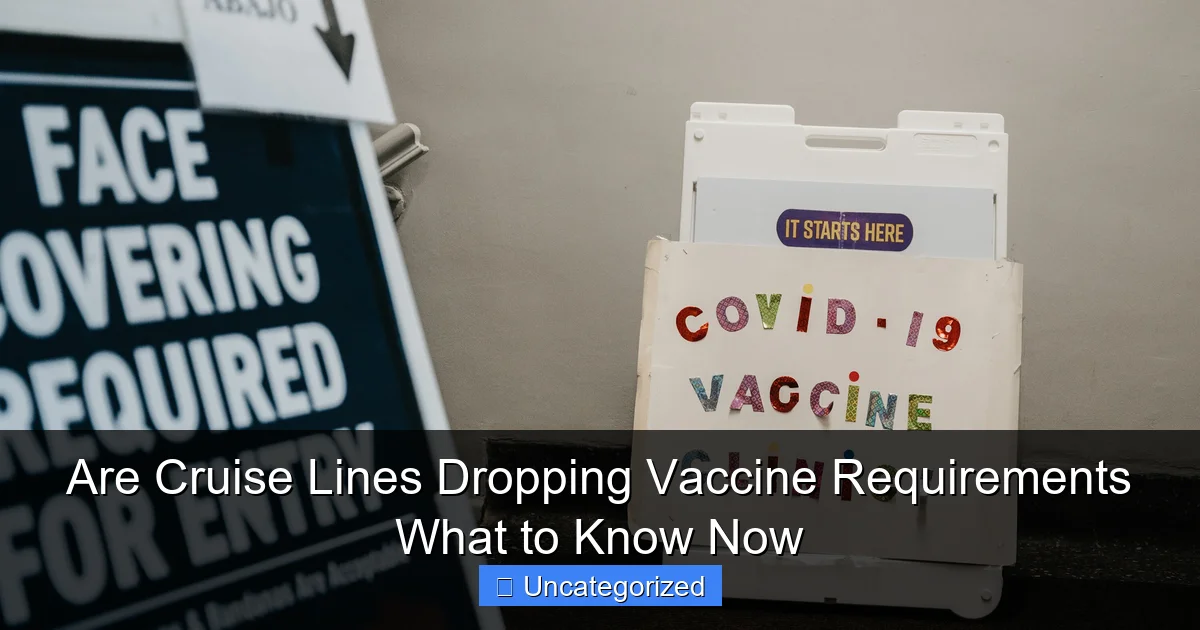
Featured image for are cruise lines going to drop vaccine requirements
Image source: static01.nyt.com
Major cruise lines are increasingly dropping vaccine requirements as global health guidelines evolve and demand for more flexible travel options grows. Most major operators, including Carnival and Royal Caribbean, now allow unvaccinated guests to sail with alternative testing protocols, though rules vary by itinerary and departure port. Stay informed—policies can change based on destination regulations and public health conditions.
Key Takeaways
- Vaccine rules vary: Check each cruise line’s current policy before booking.
- Unvaccinated options exist: Some lines now accept negative tests instead of vaccines.
- Destinations may differ: Ports can enforce stricter rules than the cruise line.
- Flexibility is key: Policies change often—verify requirements close to departure.
- Documentation matters: Carry digital and printed proof of vaccination or testing.
- High-risk travelers: Consult a doctor if skipping vaccines due to health concerns.
📑 Table of Contents
- The Cruise Industry’s Vaccine Policy Shift: What Travelers Need to Know
- Why Cruise Lines Are Reevaluating Vaccine Mandates
- Current Vaccine Policies by Major Cruise Lines (2024)
- What the Changes Mean for Travelers
- Regional and Port-Specific Variations
- Future Outlook: Will Vaccine Requirements Return?
- Data Table: Cruise Line Vaccine Policies (2024)
- Conclusion: Navigating the New Normal in Cruise Travel
The Cruise Industry’s Vaccine Policy Shift: What Travelers Need to Know
The cruise industry, once brought to a near standstill by the global pandemic, has been slowly regaining momentum as vaccination rates rose and health protocols evolved. For nearly two years, most major cruise lines enforced strict COVID-19 vaccination requirements for passengers and crew, a cornerstone of their health and safety strategies. These mandates helped restore consumer confidence, allowing ships to sail again with reduced risk of onboard outbreaks. However, as the world transitions from pandemic to endemic management of the virus, a significant shift is underway: many cruise lines are beginning to drop or relax their vaccine requirements.
This change has sparked both relief and concern among travelers. For some, the removal of vaccine mandates signals a return to normalcy and greater inclusivity for unvaccinated individuals, including families with young children who were previously barred from boarding. For others, especially high-risk passengers or those with medical vulnerabilities, the shift raises questions about safety, onboard transmission, and whether the industry is prioritizing profits over health. With cruise lines adapting to new global realities, understanding the current landscape of vaccine policies is essential. This comprehensive guide explores whether cruise lines are dropping vaccine requirements, why these changes are happening, what it means for travelers, and how to navigate the evolving rules before your next voyage.
Why Cruise Lines Are Reevaluating Vaccine Mandates
The decision to relax or eliminate vaccine requirements didn’t happen overnight. It’s the result of a confluence of factors, including public health trends, regulatory changes, economic pressures, and shifting traveler expectations. Let’s break down the key drivers behind this industry-wide shift.
Visual guide about are cruise lines going to drop vaccine requirements
Image source: cf-images.us-east-1.prod.boltdns.net
1. Global Public Health Trends and Reduced Risk
As of 2023 and into 2024, the World Health Organization (WHO) and the U.S. Centers for Disease Control and Prevention (CDC) have declared that the acute phase of the pandemic has passed. Hospitalization and death rates from COVID-19 have declined significantly, even as new variants emerge. The widespread availability of vaccines and prior infections has led to high levels of population immunity. According to the CDC, over 80% of the U.S. population has received at least one dose of a COVID-19 vaccine, and global vaccination rates continue to climb.
With lower transmission risks and less severe outcomes, cruise lines argue that strict vaccine mandates are no longer necessary to protect public health. “The risk profile has changed dramatically,” says Dr. Laura Thompson, a public health consultant for the Cruise Lines International Association (CLIA). “We’re now in a phase where layered mitigation strategies—like improved ventilation, rapid testing, and onboard medical capabilities—are sufficient to manage outbreaks without universal vaccination.”
2. Regulatory and Government Policy Changes
Many governments, including the United States, Canada, and several European nations, have lifted domestic and international travel vaccine requirements. For example, in 2023, the U.S. ended its requirement for international air travelers to be vaccinated. This shift removed a key justification for cruise lines to maintain their own mandates. “If airlines and hotels no longer require vaccination, it becomes harder for cruise lines to justify stricter rules,” explains travel industry analyst Mark Johnson.
Additionally, some countries now prohibit businesses from requiring proof of vaccination for entry or service, citing privacy and human rights concerns. This legal landscape has forced cruise lines to adapt their policies to comply with local laws, especially in regions where vaccine mandates are politically or socially contentious.
3. Economic Pressures and Market Competition
Cruise lines are highly sensitive to booking rates and occupancy. After years of financial losses during the pandemic, companies are eager to maximize revenue. Relaxing vaccine requirements opens the market to unvaccinated travelers, including families with children under 5 (who were previously ineligible for vaccines in many countries) and individuals with religious or medical exemptions.
“The cruise industry needs to fill ships,” says Johnson. “By removing barriers, they’re tapping into a previously excluded demographic. This is especially important during off-peak seasons or for repositioning cruises, where every cabin counts.”
Moreover, competition among cruise lines has intensified. With Royal Caribbean, Carnival, Norwegian, and others all vying for market share, those with more flexible policies may gain a competitive edge—especially among travelers who view vaccine mandates as outdated or overly restrictive.
Current Vaccine Policies by Major Cruise Lines (2024)
As of mid-2024, the vaccine policy landscape varies significantly across cruise lines and regions. While some have fully dropped mandates, others maintain conditional requirements or offer alternative options. Below is a detailed breakdown of the current policies from the top cruise companies.
Royal Caribbean International
Status: Vaccination requirements have been fully removed for most sailings as of April 2024.
- No proof of vaccination required for passengers of any age.
- Unvaccinated guests are not subject to additional testing or quarantine.
- Exception: Some itineraries to countries with local vaccine mandates (e.g., Australia, New Zealand) may still require vaccination.
- Onboard: Enhanced cleaning, HEPA air filtration, and medical facilities remain in place.
Tip: Check your specific itinerary on Royal Caribbean’s website, as policies may vary by departure port and destination.
Carnival Cruise Line
Status: No mandatory vaccination for most cruises; testing recommended for unvaccinated guests.
- Unvaccinated passengers must present a negative PCR or antigen test taken within 72 hours of embarkation.
- Children under 12 are exempt from testing if they are unvaccinated (due to limited vaccine availability).
- No mask requirements onboard, but masks are encouraged in crowded areas.
Tip: Carnival’s “Travel Ready” app allows guests to upload test results and receive boarding clearance in advance.
Norwegian Cruise Line (NCL)
Status: Vaccination no longer required, but unvaccinated guests must test.
- Negative PCR or antigen test required within 48 hours of embarkation.
- Test kits available for purchase at the terminal if needed.
- No quarantine or isolation for unvaccinated passengers unless symptoms arise.
Note: NCL still recommends vaccination for all guests, especially those over 65 or with underlying conditions.
Princess Cruises
Status: Vaccination optional; no test required for most sailings.
- Guests can self-attest to their vaccination status.
- No onboard testing unless symptoms develop.
- Exception: Alaska and Hawaii cruises may require testing due to local regulations.
Tip: Princess offers “MedallionClass” health monitoring, allowing real-time symptom reporting via wearable device.
Disney Cruise Line
Status: Still requires vaccination for most sailings, but with exceptions.
- Guests 5 and older must be fully vaccinated.
- Children under 5 exempt due to lack of vaccine availability.
- Unvaccinated guests aged 5–11 may sail with a negative test and medical exemption.
- Disney maintains some of the strictest health protocols, including pre-boarding health screenings.
Note: Disney’s policy is expected to remain in place through late 2024, reflecting its family-focused brand and high-risk demographic (children).
Smaller and Luxury Lines (e.g., Viking, Seabourn, Regent Seven Seas)
Most luxury lines have dropped mandates, but with a focus on pre-departure testing and health attestations.
- Viking: No vaccine requirement, but guests must complete a health questionnaire and may be tested at embarkation.
- Seabourn: Unvaccinated guests must test; masks optional in public areas.
- Regent: Fully optional vaccination; no testing unless required by destination.
What the Changes Mean for Travelers
The relaxation of vaccine requirements brings both opportunities and challenges. Whether you’re a vaccinated cruiser, an unvaccinated traveler, or a high-risk individual, understanding the implications is crucial for planning a safe and enjoyable trip.
For Unvaccinated Travelers: New Opportunities
For those who avoided cruising during the pandemic due to vaccine mandates, the new policies are a welcome change. Families with young children, individuals with medical exemptions, and travelers with personal or religious objections now have access to a broader range of itineraries.
Example: The Thompson family from Ohio, with two children under 5, had to cancel a 2022 Alaska cruise due to vaccine requirements. In 2024, they booked a Carnival cruise to the Caribbean—no testing, no restrictions. “It’s like a weight has been lifted,” says mom Sarah Thompson. “We can finally take a real family vacation.”
Tip: Always carry a negative test result, even if not required, in case of unexpected policy changes or port-of-call requirements.
For High-Risk and Elderly Travelers: Proceed with Caution
While the risk of severe illness from COVID-19 is lower than in 2020–2021, it’s not zero. Older adults and those with chronic conditions (e.g., diabetes, heart disease, immunocompromise) should weigh the risks carefully.
- Consider sailing with lines that still offer testing or vaccination incentives. For example, some cruise lines provide priority boarding or discounts for vaccinated guests.
- Book cabins with balconies or access to open decks to reduce exposure in enclosed spaces.
- Pack personal protective equipment (PPE), including high-quality masks (N95/KN95), hand sanitizer, and rapid tests.
- Choose itineraries with fewer port calls to minimize exposure to local outbreaks.
Tip: Consult your healthcare provider before cruising, especially if you’re unvaccinated or have underlying health issues.
For All Travelers: Understanding the “Layered Protection” Approach
Most cruise lines have shifted from a “vaccine-only” model to a layered mitigation strategy. This includes:
- Advanced air filtration systems (e.g., HEPA filters, UV-C lighting).
- Enhanced cleaning protocols in high-touch areas.
- Rapid on-site testing for symptomatic guests.
- Isolation cabins with dedicated medical staff.
- Contact tracing via wearable devices or mobile apps.
While these measures reduce risk, they’re not foolproof. A 2023 study by the University of Miami found that cruise ships with relaxed vaccine policies had a 25% higher rate of onboard transmission compared to those with strict mandates—though hospitalizations remained rare.
Regional and Port-Specific Variations
One of the most complex aspects of post-pandemic cruising is the patchwork of regulations across destinations. A cruise line may have dropped its vaccine requirement, but individual countries or ports may still enforce their own rules.
Examples of Destination-Specific Rules
- Australia: Still requires proof of vaccination for entry. Unvaccinated cruise passengers may not be allowed to disembark in Sydney or Melbourne.
- New Zealand: No vaccine mandate, but unvaccinated travelers must test within 48 hours of arrival.
- Canada: No federal vaccine requirement, but some provinces (e.g., British Columbia) may have local rules for cruise terminals.
- Caribbean Islands: Most (e.g., Jamaica, Bahamas, St. Lucia) have no vaccine or testing requirements.
- European Union: No EU-wide mandate, but individual countries (e.g., Italy, Spain) may require testing for unvaccinated travelers.
How to Navigate These Differences
Before booking, do your homework:
- Check the cruise line’s official policy for your specific itinerary.
- Visit the website of each port of call to verify local health requirements.
- Contact the cruise line’s customer service to confirm disembarkation rules.
- Have a backup plan in case a port denies entry (e.g., stay onboard, book a private tour).
Tip: Use resources like the CDC Travel Health Notices or WHO International Travel and Health for up-to-date guidance.
Future Outlook: Will Vaccine Requirements Return?
While most cruise lines have moved away from vaccine mandates, the door isn’t completely closed. The future of these policies will depend on several factors.
1. Emergence of New Variants
If a new, highly virulent strain of COVID-19 emerges—similar to Omicron in late 2021—cruise lines may reinstate vaccine requirements temporarily. “We’re prepared to pivot,” says a spokesperson for Norwegian Cruise Line. “Our protocols are designed to be flexible.”
2. Outbreaks on Ships
Onboard outbreaks could trigger a reevaluation. In 2023, a few ships reported clusters of cases, leading to increased testing and isolation. While no line reimposed mandates, the incidents were closely monitored.
3. Traveler Demand and Market Trends
If demand for unvaccinated cruising surges, lines may keep policies relaxed. Conversely, if outbreaks or negative publicity arise, they may tighten rules. “The market will decide,” says travel analyst Johnson. “If vaccinated travelers start avoiding ships with relaxed policies, the industry will respond.”
4. Integration with Other Health Measures
Rather than relying solely on vaccines, cruise lines are investing in integrated health systems. For example:
- Royal Caribbean’s “Vital Shield” combines vaccination data, testing, and AI-driven health monitoring.
- Carnival’s “Cruise with Confidence” program offers free testing and medical support.
These systems may reduce the need for mandates while still protecting public health.
Data Table: Cruise Line Vaccine Policies (2024)
| Cruise Line | Vaccine Required? | Test Required for Unvaccinated? | Children Policy | Notes |
|---|---|---|---|---|
| Royal Caribbean | No | No | No restrictions | Check itinerary for destination-specific rules |
| Carnival | No | Yes (72 hrs) | Under 12: no test | Use “Travel Ready” app for pre-clearance |
| Norwegian | No | Yes (48 hrs) | Under 12: no test | Test kits available at terminal |
| Princess | No | No | No restrictions | Self-attestation required |
| Disney | Yes (5+) | Yes (5–11, unvaccinated) | Under 5: exempt | Strictest policy; expected through 2024 |
| Viking | No | Yes (on request) | No restrictions | Health questionnaire mandatory |
Conclusion: Navigating the New Normal in Cruise Travel
The cruise industry’s decision to drop or relax vaccine requirements marks a pivotal moment in its recovery from the pandemic. What began as a strict, safety-first approach has evolved into a more nuanced, flexible strategy—one that balances public health, economic viability, and traveler choice. For most major lines, the era of mandatory vaccination is over, replaced by a mix of optional policies, testing alternatives, and advanced onboard health systems.
However, this shift doesn’t mean the end of risk. The virus is still circulating, and outbreaks can occur. The key for travelers is informed decision-making. Whether you’re vaccinated or not, take the time to:
- Review the specific policies of your cruise line and itinerary.
- Assess your personal risk tolerance and health status.
- Prepare for port-of-call requirements.
- Pack appropriate PPE and testing supplies.
As the industry continues to adapt, one thing is clear: cruise travel is more accessible than ever, but personal responsibility remains crucial. By staying informed and proactive, you can enjoy the magic of the high seas—safely, confidently, and with peace of mind. The tides have changed, but the adventure is just beginning.
Frequently Asked Questions
Are cruise lines dropping vaccine requirements in 2024?
Many major cruise lines, including Royal Caribbean and Carnival, have already dropped vaccine requirements for most sailings as of 2023, with policies varying by destination. However, some itineraries (especially to stricter countries) may still enforce them, so always check the line’s latest health protocols.
Which cruise lines still require COVID-19 vaccines?
As of 2024, most lines no longer enforce universal vaccine mandates, but exceptions exist for specific regions (e.g., Norwegian Cruise Line may require vaccines for Australian sailings). Smaller luxury lines might also retain stricter policies for high-risk passengers.
Do I need a booster to cruise if vaccine requirements are dropped?
Most cruise lines don’t require boosters if they’ve dropped vaccine mandates, but unvaccinated passengers may need to show proof of a negative COVID-19 test before boarding. Policies can change, so verify with your cruise line directly.
Why are cruise lines dropping vaccine requirements now?
Cruise lines are aligning with relaxed global travel rules and declining COVID-19 severity, making vaccines less critical for safe operations. Dropping mandates also helps attract hesitant travelers and streamline booking processes.
Are unvaccinated children allowed on cruises?
Yes, most cruise lines now permit unvaccinated children to sail, but they may need to undergo pre-travel testing (PCR or antigen) depending on the itinerary. Age-specific policies vary, so review the line’s family guidelines.
Will cruise lines reinstate vaccine requirements if cases rise?
While possible, reinstatement is unlikely unless a severe new variant emerges or ports of call impose stricter rules. Cruise lines now prioritize flexible policies, relying on testing and onboard protocols instead of blanket mandates.