Featured image for are cruise lines foreign owned
Image source: image.cnbcfm.com
Most major cruise lines are foreign-owned, with companies like Carnival Corporation (based in the UK) and Royal Caribbean Group (incorporated in Liberia) operating globally despite their American branding. Ownership structures often involve international registrations for tax and regulatory advantages, revealing a complex truth behind the “American” cruise experience.
Key Takeaways
- Most cruise lines are foreign-owned: Major brands operate under international parent companies or registries.
- Flag of convenience matters: Ships fly foreign flags to reduce taxes and regulations.
- Ownership affects regulations: Foreign registration influences labor and safety standards onboard.
- US ties exist despite ownership: Many lines maintain headquarters or marketing arms in the US.
- Research before booking: Verify ownership and registry to align with your values.
- Tax benefits drive foreign ties: Offshore registration significantly cuts operational costs.
📑 Table of Contents
- Are Cruise Lines Foreign Owned? The Truth Behind the Brands
- The Global Nature of the Cruise Industry
- Major Cruise Lines and Their Foreign Ownership Structures
- Why Are So Many Cruise Lines Foreign Owned?
- Impact on the U.S. Economy and Jobs
- What This Means for Cruisers: Practical Tips
- Conclusion: The Truth Behind the Flags
Are Cruise Lines Foreign Owned? The Truth Behind the Brands
When you think of a luxurious cruise vacation, you might picture a grand vessel sailing under a familiar American flag, perhaps even one with a brand name that feels like a household staple. Names like Carnival Cruise Line, Royal Caribbean, or Norwegian Cruise Line are often associated with U.S.-based operations, especially since their marketing, customer service, and headquarters often appear American. But have you ever wondered: are cruise lines foreign owned? The answer might surprise you. Despite their American-sounding names and heavy presence in U.S. ports, many of the world’s most popular cruise lines are, in fact, owned by foreign corporations or operate under complex international structures that blur the lines of national ownership.
The cruise industry is a fascinating blend of global economics, maritime law, and corporate strategy. With ships sailing across international waters, regulations, tax structures, and labor laws vary significantly from country to country. This has led cruise companies to adopt unique ownership and operational models that maximize efficiency, minimize costs, and comply with international maritime standards. In this deep dive, we’ll explore the truth behind the ownership of major cruise lines, uncover the reasons behind foreign ownership, examine the implications for travelers and the U.S. economy, and provide practical insights for cruisers who want to understand where their vacation dollars are going. Whether you’re a seasoned cruiser or planning your first voyage, knowing who really owns the cruise line you’re sailing with can add a new layer of awareness to your travel experience.
The Global Nature of the Cruise Industry
The cruise industry is one of the most internationalized sectors in the global economy. Unlike airlines, which often operate under strict national ownership rules, cruise lines are uniquely positioned to leverage international maritime laws, tax treaties, and labor markets. This global nature is not accidental—it’s a strategic choice made by corporations to optimize operations and profitability.
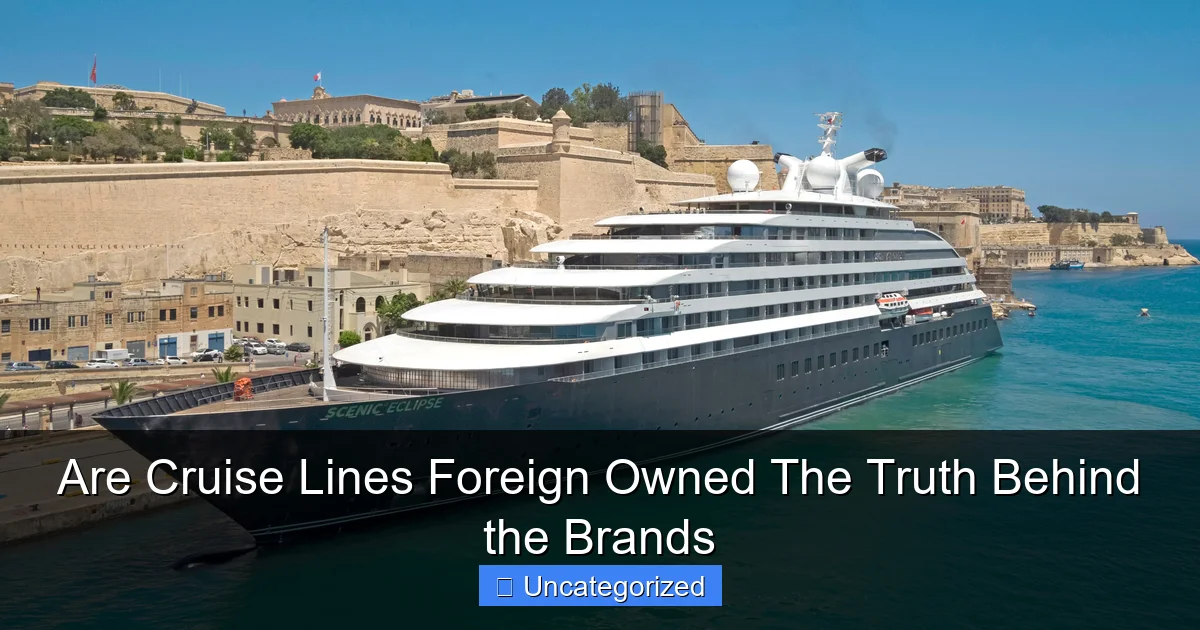
Visual guide about are cruise lines foreign owned
Image source: gannett-cdn.com
Why Ownership Is So Complex
Unlike land-based companies, cruise lines operate in international waters for much of the year. This means they are not subject to the tax laws, labor regulations, or environmental standards of any single country for extended periods. As a result, cruise companies often incorporate in jurisdictions that offer favorable corporate tax rates, relaxed labor laws, and streamlined registration processes. These jurisdictions, known as flags of convenience, include countries like the Bahamas, Panama, Liberia, and the Marshall Islands.
For example, even though Carnival Cruise Line is headquartered in Miami, Florida, the parent company—Carnival Corporation & plc—is a dual-listed company incorporated in the United Kingdom and the United States. It’s traded on both the New York Stock Exchange (NYSE) and the London Stock Exchange (LSE). This structure allows the company to access capital from global investors while maintaining a strong U.S. brand presence.
Flags of Convenience and Ship Registration
Ships are registered under the flag of the country where they are legally incorporated. This registration determines which country’s maritime laws apply to the vessel, including safety, labor, and environmental regulations. Over 70% of the world’s cruise ships are registered under foreign flags, primarily in:
- Panama – Known for low registration fees and minimal oversight
- Liberia – Offers tax incentives and a streamlined registration process
- Bahamas – Popular among U.S.-based cruise lines due to proximity and favorable tax treatment
- Malta – A European Union member with a reputable maritime registry
For instance, Royal Caribbean’s flagship Symphony of the Seas is registered in the Bahamas, despite the company being headquartered in Miami. This allows Royal Caribbean to avoid U.S. corporate taxes on international earnings and benefit from lower crewing costs, as many crew members are hired from developing nations under contracts governed by Bahamian law.
Implications for Travelers
For the average cruiser, the foreign flag of a ship doesn’t affect day-to-day operations—ships still follow strict safety protocols, and U.S. Coast Guard inspections apply when docked in American ports. However, it does mean that:
- Legal disputes involving crew or passengers may be governed by foreign law
- Environmental regulations may be less stringent than in U.S.-flagged vessels
- Labor rights for international crew members may be limited compared to U.S. standards
Understanding this global structure helps travelers appreciate why cruise lines operate the way they do—and why ownership is rarely as simple as it seems.
Major Cruise Lines and Their Foreign Ownership Structures
Now let’s examine the ownership of the world’s largest cruise brands. While some are partially or fully foreign-owned, others use hybrid models that reflect the industry’s global complexity.
Carnival Corporation & plc: Dual-Listed, Dual-Nation
Carnival Cruise Line is one of the most recognizable names in cruising, but its parent company, Carnival Corporation & plc, is a dual-listed entity. It was formed in 2003 when Carnival Corporation (U.S.) merged with P&O Princess Cruises (UK). Today:
- Headquarters: Miami, Florida (U.S.) and Southampton, England (UK)
- Incorporated: United States and United Kingdom
- Stock Exchange: NYSE and LSE
- Ownership: Publicly traded, with major institutional investors in the U.S. and Europe
While the company operates U.S.-based brands like Carnival Cruise Line, Princess Cruises, and Holland America Line, its dual incorporation means it is not solely a U.S. entity. In fact, over 60% of its shares are held by non-U.S. investors, including pension funds in the UK, Germany, and Japan.
Royal Caribbean Group: American Brand, Global Parent
Royal Caribbean International is another American-sounding brand with a global parent. The company, now known as Royal Caribbean Group, was founded in 1968 by a Norwegian shipping company. Today:
- Headquarters: Miami, Florida
- Incorporated: United States
- Ownership: Publicly traded on the NYSE (RCL)
- Foreign Influence: Significant Norwegian heritage and ongoing partnerships with Norwegian shipbuilders
Although Royal Caribbean Group is a U.S. corporation, it owns foreign-flagged ships and employs thousands of international crew members. Additionally, it operates brands like Silversea Cruises (Italy) and Azamara (U.S./UK), further diversifying its global footprint.
Norwegian Cruise Line Holdings: U.S. Base, Foreign Incorporation
Norwegian Cruise Line (NCL) is headquartered in Miami but is owned by Norwegian Cruise Line Holdings Ltd., a company incorporated in Liberia. This strategic choice allows the company to:
- Reduce corporate tax burden
- Streamline ship registration and flagging
- Access international capital markets
Despite being incorporated in Liberia, NCL Holdings is listed on the NYSE (NCLH) and operates primarily in U.S. waters. The company also owns Oceania Cruises and Regent Seven Seas Cruises, both of which are U.S.-managed but operate under foreign-flagged vessels.
MSC Cruises: Fully Foreign-Owned
Unlike the others, MSC Cruises is fully owned by a foreign entity: Mediterranean Shipping Company, a Swiss-Italian shipping conglomerate. MSC Cruises is:
- Headquartered: Geneva, Switzerland
- Incorporated: Switzerland
- Ownership: Privately held by the Aponte family (Italian)
- U.S. Presence: Strong marketing and port operations in Florida
MSC has aggressively expanded in the U.S. market, opening new terminals in Miami and Port Canaveral. However, its ownership and operational control remain firmly in Europe.
Disney Cruise Line: The Exception
One of the few major cruise lines that is truly U.S.-owned and operated is Disney Cruise Line. It is a subsidiary of The Walt Disney Company, incorporated in Delaware and headquartered in Orlando, Florida. All Disney ships are U.S.-flagged (registered in the U.S.), and the company adheres to U.S. labor and environmental standards. This makes Disney a rare outlier in an otherwise foreign-dominated industry.
Why Are So Many Cruise Lines Foreign Owned?
The prevalence of foreign ownership in the cruise industry is not a coincidence—it’s the result of deliberate business strategies designed to maximize efficiency and profitability. Several key factors drive this trend.
Tax Optimization
One of the biggest incentives for foreign incorporation is tax avoidance. The U.S. has one of the highest corporate tax rates in the world (21% federal, plus state taxes). By incorporating in low-tax or no-tax jurisdictions like Panama, Liberia, or the Bahamas, cruise companies can:
- Reduce or eliminate corporate income taxes on international earnings
- Defer U.S. taxes through offshore subsidiaries
- Benefit from double taxation treaties
For example, Carnival Corporation reports that over 80% of its revenue comes from non-U.S. sources, and much of that is taxed at rates below 10% due to its international structure.
Labor Cost Management
Cruise lines employ tens of thousands of crew members, many of whom work under contracts governed by foreign law. By hiring from countries like the Philippines, India, Indonesia, and Eastern Europe, cruise companies can:
- Offer lower wages than U.S. maritime standards
- Limit unionization and labor protections
- Reduce benefits and retirement obligations
While U.S. law requires American-flagged ships to hire U.S. citizens for certain roles (e.g., officers), foreign-flagged ships have no such restrictions. This allows cruise lines to build diverse, cost-effective crews without the overhead of U.S. labor laws.
Regulatory Flexibility
Maritime regulations vary widely by country. Some nations have strict environmental, safety, and labor standards (e.g., the U.S., EU), while others have more relaxed rules. By registering ships under foreign flags, cruise lines can:
- Comply with less stringent environmental regulations
- Avoid costly U.S. Coast Guard inspections for international operations
- Streamline ship design and maintenance standards
For instance, U.S.-flagged ships must meet higher safety and pollution standards under the Jones Act and the Clean Water Act. Foreign-flagged ships, while still required to meet international standards (e.g., IMO), often have more flexibility in implementation.
Access to Capital and Investor Appeal
Global investors are more likely to invest in companies that operate internationally and offer diversified revenue streams. By incorporating abroad, cruise lines can:
- Attract European, Asian, and Middle Eastern investors
- List on multiple stock exchanges (e.g., NYSE and LSE)
- Present a more “global” brand image
This is particularly important during economic downturns or global crises, when diversified ownership can provide stability.
Impact on the U.S. Economy and Jobs
While foreign ownership allows cruise lines to thrive, it raises questions about the impact on the U.S. economy, jobs, and national maritime interests.
Revenue vs. Retained Value
Cruise lines generate billions in U.S. revenue—through ticket sales, onboard spending, port fees, and tourism. In 2023, the cruise industry contributed over $55 billion to the U.S. economy and supported over 436,000 jobs (Cruise Lines International Association, CLIA). However, much of the profit is funneled back to foreign shareholders or reinvested overseas.
For example, when a Carnival cruise ship sails from Miami to the Caribbean, the company collects revenue in U.S. dollars. But after paying U.S. port fees, taxes, and crew (a mix of U.S. and international), the remaining profit is distributed to global shareholders, many of whom are not U.S. residents.
U.S. Jobs: A Mixed Picture
While cruise lines create jobs in U.S. ports—such as dockworkers, tour guides, and hotel staff—the number of U.S. citizen crew members is relatively low. Most crew are hired internationally under foreign contracts. According to CLIA, only about 15% of cruise ship crew are U.S. citizens, primarily in management or specialized roles.
On the other hand, cruise lines invest heavily in U.S. infrastructure. Royal Caribbean recently opened the Port Miami Terminal A, a $250 million facility. Carnival has invested in new terminals in Galveston, Seattle, and Baltimore. These projects create construction and long-term operational jobs.
National Maritime Strategy
The U.S. has one of the smallest merchant fleets in the world, with only about 80 U.S.-flagged cargo ships. The dominance of foreign-flagged cruise ships reflects a broader trend: the U.S. relies on foreign-owned vessels for both passenger and cargo transport. This raises concerns about:
- National security – Limited domestic maritime capacity
- Economic sovereignty – Profits leaving the country
- Environmental accountability – Less oversight on foreign-flagged ships
Some policymakers have proposed incentives for U.S.-flagged cruise operations, similar to the Jones Act for cargo, but these face strong industry opposition due to cost implications.
What This Means for Cruisers: Practical Tips
As a traveler, you don’t need to avoid foreign-owned cruise lines—most are safe, luxurious, and reliable. But understanding ownership can help you make more informed decisions.
Check the Flag of the Ship
You can find the flag (registry) of your cruise ship on the company’s website, your cruise contract, or maritime databases like MarineTraffic.com. Ships flagged in the U.S. (like Disney) may have stricter labor and environmental standards. Foreign-flagged ships may offer lower prices due to tax and labor advantages.
Understand Legal Jurisdiction
If you’re injured or involved in a dispute, the law of the ship’s flag may apply. For example, a lawsuit against a Bahamian-flagged ship may be heard in Bahamian courts, even if you’re a U.S. citizen. Always review your cruise contract’s “jurisdiction” clause.
Support U.S.-Flagged Options
If you want to support U.S. jobs and regulations, consider:
- Disney Cruise Line – All ships U.S.-flagged
- American Queen Voyages – U.S.-owned and U.S.-flagged river and coastal ships
- Hornblower Cruises (in select U.S. markets) – U.S.-based operations
Ask About Crew Nationality
While most crew are international, some lines (like Princess Cruises) have higher percentages of U.S. and Western European crew. If labor practices matter to you, research the company’s crew policies and union affiliations.
Look Beyond the Brand Name
Don’t assume a cruise line is U.S.-owned just because it sails from Miami or has an American-sounding name. Do a quick search on the parent company and its incorporation location. Knowledge is power.
| Cruise Line | Parent Company | Country of Incorporation | Flag of Vessels | U.S. Ownership? |
|---|---|---|---|---|
| Carnival Cruise Line | Carnival Corporation & plc | U.S. & U.K. | Bahamas, Panama, Liberia | No (Dual) |
| Royal Caribbean | Royal Caribbean Group | U.S. | Bahamas, Malta | Yes (but foreign-flagged) |
| Norwegian Cruise Line | NCL Holdings Ltd. | Liberia | Bahamas, Malta | No |
| MSC Cruises | MSC Mediterranean Shipping | Switzerland | Panama, Malta | No |
| Disney Cruise Line | The Walt Disney Company | U.S. | U.S. | Yes |
| Princess Cruises | Carnival Corporation & plc | U.S. & U.K. | Bahamas, Bermuda | No (Dual) |
Conclusion: The Truth Behind the Flags
So, are cruise lines foreign owned? The answer is nuanced. While many of the most popular cruise brands have strong U.S. presences—headquartered in Miami, marketing in English, and docking in American ports—the reality is that the vast majority are either foreign-owned, foreign-incorporated, or operate under foreign flags. This global structure is not a sign of deception but a reflection of the cruise industry’s unique economic and regulatory environment.
From Carnival’s dual U.S.-U.K. incorporation to NCL’s Liberian registration and MSC’s Swiss-Italian ownership, the industry thrives on internationalization. This allows cruise lines to offer affordable, luxurious vacations while navigating complex tax, labor, and maritime laws. For travelers, this means more choices, lower prices, and access to world-class amenities. But it also means that the profits and legal frameworks often lie beyond U.S. borders.
Understanding this landscape empowers you as a consumer. You can choose to support U.S.-flagged operators like Disney or American Queen Voyages, or embrace the global nature of the industry with confidence. Either way, knowing who really owns the cruise line adds depth to your vacation experience—and reminds us that in today’s interconnected world, even a floating city is part of a much larger global story.
Frequently Asked Questions
Are cruise lines foreign owned, or are any based in the U.S.?
Most major cruise lines, including giants like Carnival, Royal Caribbean, and Norwegian, are incorporated in foreign countries (e.g., Panama, Bermuda) for tax and regulatory benefits. However, they are headquartered in the U.S. and operate as American companies in practice.
Why are so many cruise lines incorporated overseas?
Cruise lines often register ships under foreign “flags of convenience” (like the Bahamas or Liberia) to reduce operational costs, avoid stricter labor laws, and minimize U.S. corporate taxes. This doesn’t mean they aren’t tied to their home markets.
Is Royal Caribbean a foreign-owned cruise line?
Despite being incorporated in Liberia, Royal Caribbean is a U.S.-based company with its headquarters in Miami. Ownership is split between U.S. and international investors, but it operates as an American brand.
Do foreign-owned cruise lines pay U.S. taxes?
While foreign-flagged cruise lines pay minimal U.S. federal income taxes due to international maritime laws, they contribute to local economies through port fees, employee wages, and tourism spending in U.S. ports.
Can a foreign-owned cruise line operate in U.S. waters?
Yes, foreign-owned cruise lines can operate in U.S. waters under the Passenger Vessel Services Act, which requires foreign-flagged ships to stop at a foreign port (e.g., the Bahamas) before returning to the U.S. This is standard for most major lines.
Are cruise lines foreign owned, and does it impact passenger experience?
Ownership structure doesn’t significantly affect onboard experience—service, safety, and amenities are standardized globally. However, foreign incorporation may influence tax policies and labor regulations behind the scenes.