Featured image for are cruise lines cruising
Image source: cruisingkids.co.uk
Cruise lines are making a powerful comeback in 2024, fueled by soaring demand and reimagined onboard experiences. With record-breaking bookings and expanded fleets, the industry is defying post-pandemic doubts and sailing toward unprecedented growth, proving that the allure of ocean travel remains stronger than ever.
Key Takeaways
- Cruise demand is surging: Book early for 2024’s record-breaking sailings.
- Health protocols evolved: Enhanced safety measures now boost traveler confidence.
- Sustainability is key: Choose lines investing in green tech and cleaner fuels.
- New ships dominate: Modern vessels offer better amenities and experiences.
- Destination diversity grows: Explore emerging ports beyond traditional routes.
- Onboard spending rises: Budget extra for premium upgrades and experiences.
📑 Table of Contents
- Are Cruise Lines Cruising Back to Success in 2024
- 1. The Post-Pandemic Rebound: Numbers Don’t Lie
- 2. Safety First: How Health Protocols Evolved
- 3. Sustainability: Sailing Toward a Greener Future
- 4. Technology at Sea: The Digital Transformation
- 5. The New Cruise Experience: What’s Changed
- 6. The Road Ahead: Challenges and Opportunities
Are Cruise Lines Cruising Back to Success in 2024
The cruise industry, once a symbol of carefree luxury and boundless exploration, faced unprecedented challenges during the global pandemic. With ships docked for months and travelers hesitant to return, the sector seemed to be navigating stormy waters. But as we step into 2024, signs point to a remarkable resurgence. From record-breaking bookings to innovative health protocols, cruise lines are not just bouncing back—they’re redefining what modern sea travel looks like. The question on everyone’s mind: Are cruise lines truly cruising back to success?
This comprehensive analysis dives into the current state of the cruise industry, examining the strategies driving its recovery, the evolving preferences of travelers, and the technological advancements shaping the future. Whether you’re a seasoned cruiser, a hesitant first-timer, or simply curious about the industry’s trajectory, this article unpacks the data, trends, and real-world examples that reveal how cruise lines are charting a course toward sustainable growth. Buckle up—we’re setting sail into the heart of the 2024 comeback story.
1. The Post-Pandemic Rebound: Numbers Don’t Lie
Booking Trends and Revenue Recovery
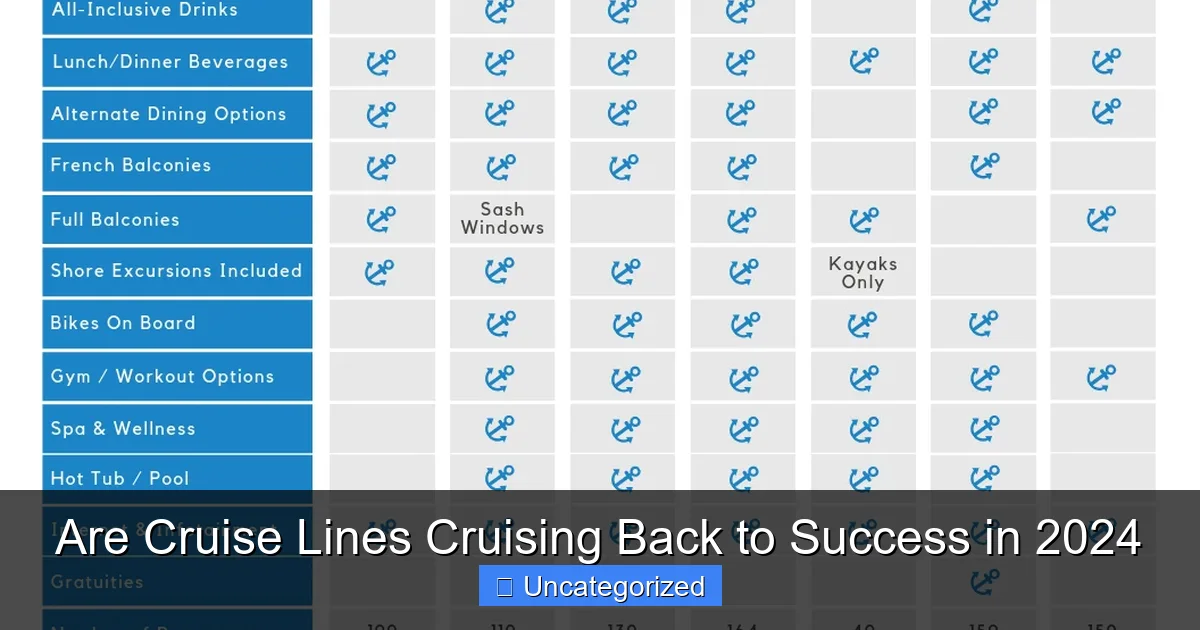
The cruise industry’s recovery is no longer a hopeful prediction—it’s a statistical reality. According to CLIA (Cruise Lines International Association), 2024 is projected to see 35.7 million passengers globally, surpassing pre-pandemic 2019 levels by 12%. This growth is fueled by pent-up demand, with 68% of cruisers in a recent Carnival Corporation survey stating they “missed the unique experience” of cruising. Revenue is also rebounding: Royal Caribbean Group reported $12.9 billion in Q1 2024 revenue, a 23% increase from Q1 2023, while Norwegian Cruise Line Holdings hit $1.9 billion, up 28% year-over-year.
Visual guide about are cruise lines cruising
Image source: blog.cruiseinsider.com
Key drivers of this rebound include:
- Early booking incentives: Lines like Princess Cruises offered “book now, pay later” plans with 10% deposits, leading to 40% higher advance bookings in 2023.
- Shorter itineraries: 3-5 day “weekend getaways” saw a 65% uptake, appealing to time-constrained travelers.
- Multi-generational travel: 45% of 2024 bookings include families with children, a 15-point increase from 2022.
Port Reopenings and Global Expansion
While the Caribbean remains the most popular destination (accounting for 35% of 2024 itineraries), cruise lines are diversifying. Alaska bookings rose 22% due to extended summer seasons, and Asia-Pacific routes are recovering, with Japan and Australia reopening to international cruises. MSC Cruises’ 2024 World Cruise sold out in 72 hours, highlighting demand for longer, bucket-list voyages. Notably, 18 new ports—including Colombia’s Cartagena and Greece’s Milos—are being added to itineraries, addressing travelers’ desire for “less crowded” destinations.
Tip for travelers: Book 6-9 months in advance for the best cabin selection and pricing, but monitor for last-minute deals on repositioning cruises (e.g., transatlantic crossings).
2. Safety First: How Health Protocols Evolved
From Crisis to Confidence-Building
The pandemic forced cruise lines to overhaul health protocols, and 2024 marks the transition from reactive measures to proactive wellness ecosystems. While most COVID-19 restrictions have been lifted, enhanced hygiene standards remain. Royal Caribbean’s “Cruise with Confidence” program, for instance, includes:
- Hospital-grade air filtration (MERV-13 systems) on all ships
- 24/7 medical centers with PCR testing capabilities
- Contactless embarkation via mobile apps
Disney Cruise Line takes a unique approach with its “Healthy at Sea” initiative, combining AI-powered crowd monitoring (using onboard cameras to track capacity) with mandatory vaccination for crew. The result? A 2024 CLIA survey found 89% of passengers feel “as safe or safer” on cruises than at hotels.
Mental Health and Wellness Focus
Beyond physical health, cruise lines are addressing pandemic-induced anxiety. Norwegian Cruise Line’s “Mindfulness at Sea” program offers meditation workshops and digital detox zones, while Celebrity Cruises partners with wellness app Calm to provide guided sleep sessions. Notably, 73% of cruisers in a 2023 Booking.com survey cited “mental reset” as a primary reason for traveling.
Pro tip: Check each line’s health policy before booking. Some (like Virgin Voyages) require pre-travel antigen tests, while others (like Holland America) offer free on-site testing for symptomatic guests.
3. Sustainability: Sailing Toward a Greener Future
Eco-Friendly Innovations and Regulations
Environmental concerns are reshaping cruise operations. The International Maritime Organization’s (IMO) 2024 sulfur cap reduction (to 0.1% in Emission Control Areas) has spurred investments in cleaner technologies:
- Liquid Natural Gas (LNG): Carnival’s AIDAnova and MSC World Europa run on LNG, cutting CO2 emissions by 25% and sulfur by 99%.
- Shore Power: Ports in Seattle and Barcelona now offer “cold ironing,” allowing docked ships to shut down engines and use grid power.
- Waste Reduction: Royal Caribbean’s “Save the Waves” program recycles 90% of onboard waste, with food waste converted to biogas.
Carbon-Neutral Ambitions
Major lines are setting bold targets: Norwegian Cruise Line aims for net-zero emissions by 2050, while Hurtigruten Expeditions already operates carbon-neutral voyages using biofuels. Smaller operators like UnCruise Adventures go further, banning single-use plastics and using 100% renewable energy on select ships.
Traveler’s guide: Look for “Green Marine” or “Blue Flag” certified ships. For example, Hurtigruten’s MS Fridtjof Nansen carries 500 passengers but produces 20% fewer emissions than a 2,000-passenger conventional ship.
4. Technology at Sea: The Digital Transformation
Smart Ships and Personalized Experiences
Cruise ships are becoming floating tech hubs. MSC Cruises’ “MSC for Me” app integrates AI to:
- Predict dining preferences (e.g., reserving your favorite table)
- Track fitness goals via wearable bands
- Navigate ships with AR wayfinding
Disney’s MagicBand+ takes personalization further, syncing with onboard cameras to capture candid moments and triggering character greetings. Meanwhile, Royal Caribbean’s Quantum-class ships feature “Robotic Bartenders” that mix drinks via voice command.
Connectivity Without Compromise
Starlink’s high-speed internet (launched in 2023) now covers 80% of Carnival’s fleet, offering speeds of 200+ Mbps—enough for Zoom calls and streaming. Princess Cruises’ MedallionNet provides unlimited data for $25/day, while Virgin Voyages includes free basic Wi-Fi in all fares.
Insider tip: Download apps pre-cruise for smoother embarkation. For example, Norwegian’s app lets you check-in, book excursions, and unlock your cabin door.
5. The New Cruise Experience: What’s Changed
Itinerary Innovation and Niche Markets
2024 itineraries reflect post-pandemic priorities:
- Slow travel: 10-14 day voyages with overnight stays in ports (e.g., Viking’s “Grand European Tour” spends two nights in Paris).
- Themed cruises: Music (Norwegian’s “Sail Away with Weezer”), wellness (Celebrity’s “MindBodySpirit”), and culinary cruises (Holland America’s “Dine & Discover” with Michelin-starred chefs).
- Expedition cruising: Small-ship lines like Lindblad Expeditions offer Antarctica voyages with National Geographic experts.
Cabin Redesigns and Space Optimization
Social distancing has permanently influenced cabin design. Key changes include:
- More balcony cabins (up 30% on new ships)
- Flexible layouts (e.g., Royal Caribbean’s “Ultimate Family Suite” converts from 4 to 8 beds)
- Soundproofing between connecting rooms
Pro tip: Book “guarantee” cabins (category but not specific room) for potential upgrades. Carnival reports 60% of guarantee cabins are upgraded at no extra cost.
6. The Road Ahead: Challenges and Opportunities
Economic Headwinds and Inflation
While demand is strong, rising costs pose challenges. Fuel prices remain 22% above 2019 levels, and labor shortages (particularly for skilled crew) are pushing wages up. To offset this, lines are:
- Introducing dynamic pricing (e.g., Royal Caribbean’s “Price Lock” guarantees no fare increases)
- Offering bundled packages (e.g., “All-Inclusive” deals with drinks and excursions)
- Expanding premium dining (e.g., Carnival’s “Chef’s Table” experiences at $75/person)
Regulatory and Geopolitical Factors
New regulations loom: The EU’s 2024 Emissions Trading System will tax cruise ships for CO2 emissions, potentially increasing fares by 5-8%. Geopolitical tensions also impact itineraries—MSC temporarily rerouted Red Sea voyages due to regional conflicts. However, this creates opportunities for alternative routes like the “Northern Europe Grand Tour” (now 15% more popular).
2025 and Beyond: What’s Next?
The future looks bright with:
- AI integration: Predictive maintenance to reduce mechanical issues
- Space cruises: Virgin Galactic’s 2025 partnership with Carnival for suborbital experiences
- Floating resorts: Royal Caribbean’s “Perfect Day at CocoCay” expansion adding zip lines and waterparks
| Cruise Line | 2024 Revenue (Projected) | Key Innovation | Sustainability Goal |
|---|---|---|---|
| Royal Caribbean Group | $13.5 billion | Robotic bartenders (Bionic Bar) | Net-zero emissions by 2050 |
| Carnival Corporation | $24.3 billion | LNG-powered ships (AIDAnova) | 50% emissions reduction by 2030 |
| Norwegian Cruise Line | $8.7 billion | Contactless check-in (Haven Lounge) | Zero single-use plastics by 2025 |
| MSC Cruises | $11.2 billion | AI-powered app (MSC for Me) | Carbon-neutral operations by 2030 |
| Disney Cruise Line | $4.1 billion | MagicBand+ (interactive experiences) | Net-zero waste by 2025 |
The cruise industry’s 2024 comeback is more than a return to normal—it’s a reinvention. By embracing technology, sustainability, and evolving traveler preferences, cruise lines have transformed pandemic-era challenges into opportunities for innovation. From LNG-powered ships to AI-driven personalization, the sector is sailing toward a future where health, environmental responsibility, and unforgettable experiences coexist. While economic and regulatory hurdles remain, the data is clear: passengers are voting with their wallets, and the industry is responding with agility and creativity.
For travelers, this means more choices than ever—whether you seek a quick weekend escape, a multi-generational family adventure, or a carbon-neutral expedition to the Arctic. The key is to research thoroughly: compare health protocols, sustainability certifications, and tech features to find the perfect match. As cruise lines continue refining their offerings, one thing is certain: the era of “cruising back to success” isn’t just about recovery—it’s about reimagining what sea travel can be. The gangway is down, the sails are set, and 2024’s voyage promises to be the most exciting chapter yet in the cruise industry’s storied history.
Frequently Asked Questions
Are cruise lines cruising back to full operations in 2024?
Yes, most major cruise lines have resumed full operations in 2024, with nearly all ships back at sea and itineraries restored to pre-pandemic levels. Enhanced health protocols and flexible booking policies continue to support a steady recovery in the industry.
What health and safety measures are cruise lines implementing this year?
Cruise lines are maintaining updated health protocols, including advanced air filtration systems, optional testing, and streamlined medical facilities onboard. These measures aim to ensure passenger safety while minimizing disruptions to the cruising experience.
Are cruise lines cruising to the same destinations as before the pandemic?
Most cruise lines have returned to their traditional destinations, including the Caribbean, Mediterranean, and Alaska, while also introducing new itineraries to meet growing demand. Some regions, however, may still have limited sailings due to local regulations.
How are cruise lines addressing environmental concerns in 2024?
Many cruise lines are investing in cleaner fuels, LNG-powered ships, and advanced waste management systems to reduce their environmental impact. Sustainability initiatives are now a key focus as the industry works toward net-zero emissions goals.
Are cruise lines offering better deals and promotions in 2024?
To attract travelers, cruise lines are providing competitive pricing, early-bird discounts, and onboard credits. These promotions, combined with flexible cancellation policies, make 2024 an appealing time to book a cruise.
What is the current demand for cruises in 2024?
Demand for cruises has surged in 2024, with many sailings booking up months in advance. The combination of pent-up travel demand and renewed confidence in cruising has driven the industry’s strong rebound.