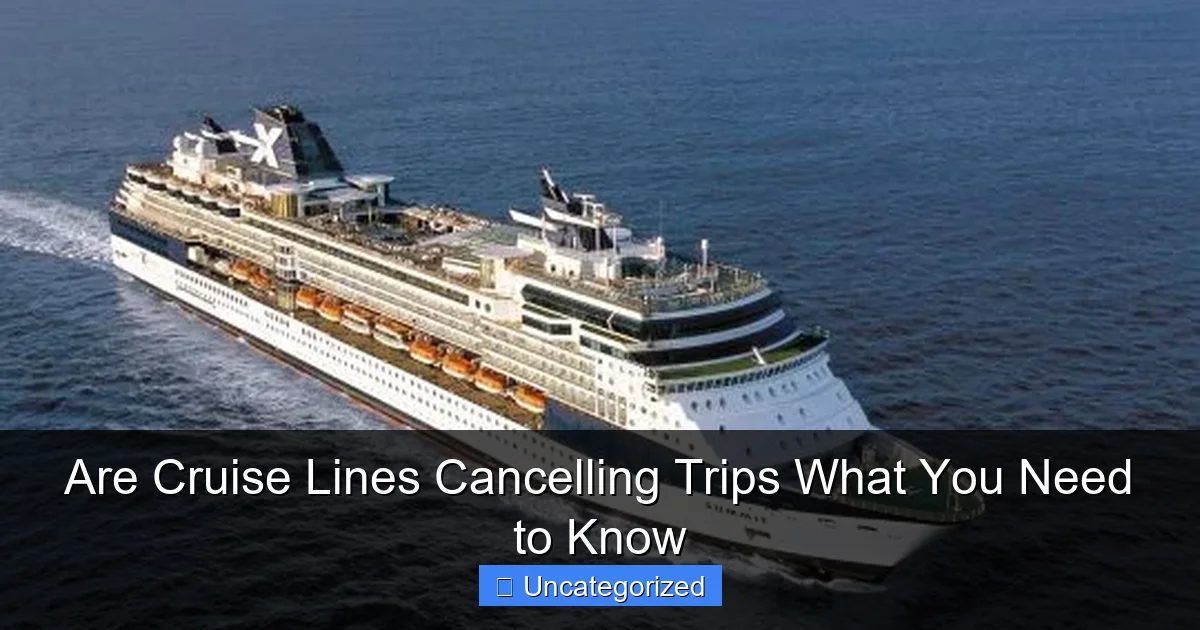
Featured image for are cruise lines cancelling
Image source: media.asiaone.com
Cruise lines are cancelling trips more frequently due to weather, mechanical issues, and global disruptions—but it’s not always a cause for panic. Most cancellations come with refunds, rebooking options, or onboard credits, so travelers should review policies and book with flexible itineraries. Staying informed and purchasing travel insurance can turn a cancelled cruise into a manageable, even stress-free, experience.
Key Takeaways
- Cruise cancellations are rare but possible due to weather, health, or operational issues.
- Monitor your cruise line’s policy for flexible rebooking or refund options if canceled.
- Book refundable fares to minimize financial risk if trips are disrupted.
- Travel insurance is essential to cover cancellations, delays, and medical emergencies.
- Check port advisories before departure to avoid last-minute itinerary changes.
- Stay informed via apps for real-time updates from your cruise line.
- Contact customer service early to secure alternatives if your trip is canceled.
📑 Table of Contents
- Are Cruise Lines Cancelling Trips? What You Need to Know
- Why Are Cruise Lines Cancelling Trips? The Top Reasons
- How Cruise Lines Decide to Cancel a Trip: The Process Explained
- How to Protect Yourself from Cancellations: Practical Tips
- Recent Examples of Cruise Cancellations: A 2023–2024 Snapshot
- Looking Ahead: The Future of Cruise Cancellations
- Conclusion
Are Cruise Lines Cancelling Trips? What You Need to Know
The world of cruising has long been associated with luxury, adventure, and relaxation. From tropical island getaways to Arctic expeditions, cruise ships offer travelers a unique way to explore multiple destinations without the hassle of constant packing and unpacking. However, recent years have introduced a wave of uncertainty, leaving many travelers wondering: Are cruise lines cancelling trips? The answer is more complex than a simple yes or no. While some voyages have been disrupted due to a variety of factors, others continue to sail smoothly. Understanding the current state of the cruise industry, the reasons behind cancellations, and how to protect your travel plans is essential for anyone considering a cruise in today’s unpredictable climate.
Whether you’re a seasoned cruiser or planning your first voyage, staying informed about the potential for cancellations can save you time, money, and stress. From global health concerns to environmental regulations, labor shortages, and geopolitical tensions, the factors influencing cruise line operations are more diverse than ever. This guide will dive deep into the realities of cruise cancellations, explore the most common causes, and provide actionable advice to help you navigate the ever-changing landscape of modern cruising. By the end of this article, you’ll be equipped with the knowledge to make informed decisions and safeguard your next maritime adventure.
Why Are Cruise Lines Cancelling Trips? The Top Reasons
To understand whether cruise lines are cancelling trips, it’s crucial to examine the root causes behind these disruptions. While the cruise industry has rebounded significantly since the global pandemic, several ongoing and emerging challenges continue to impact operations. Below are the most significant reasons why cruise lines may cancel or alter voyages.

Visual guide about are cruise lines cancelling
Image source: media.notthebee.com
1. Health and Safety Concerns
Perhaps the most prominent reason for cruise cancellations in recent years has been health-related. The COVID-19 pandemic brought the entire industry to a near standstill in 2020, with major lines like Carnival, Royal Caribbean, and Norwegian Cruise Line suspending operations for over a year. While most ships have resumed sailing, health concerns still linger.
- Outbreaks onboard: Even with advanced sanitation protocols, cruise ships—being semi-enclosed environments—can be vulnerable to contagious illnesses. In 2023, several ships reported norovirus or respiratory virus outbreaks, leading to itinerary changes or early disembarkation.
- Port restrictions: Some destinations impose strict entry requirements based on infection rates. For example, in 2022, Japan temporarily banned foreign-flagged cruise ships due to rising case numbers, forcing lines to reroute or cancel entire voyages.
- Passenger and crew illness: If a significant number of crew members fall ill, a ship may not meet minimum staffing requirements to operate safely, resulting in cancellation.
Example: In January 2023, the Carnival Freedom cut short a Caribbean cruise after a norovirus outbreak affected over 200 passengers and crew. The ship returned to Miami two days early.
2. Geopolitical Instability and Travel Bans
Global conflicts and political unrest can directly impact cruise routes, especially in regions like the Eastern Mediterranean, Black Sea, and parts of the Middle East. When safety becomes a concern, cruise lines are quick to cancel or reroute voyages.
- War zones: The war in Ukraine led to the cancellation of Black Sea cruises by lines like Viking and Princess Cruises. Ports in Odessa and Sevastopol were removed from itineraries.
- Sanctions and embargoes: U.S. travel restrictions to Cuba have fluctuated, leading to last-minute changes. In 2023, several U.S.-based lines canceled Cuba stops due to tightened regulations.
- Civil unrest: Countries experiencing protests or political upheaval (e.g., Sri Lanka in 2022) may be deemed unsafe for tourism, prompting cruise lines to bypass them.
Tip: Monitor the U.S. State Department’s travel advisories and check if your cruise itinerary includes any Level 3 (Reconsider Travel) or Level 4 (Do Not Travel) countries.
3. Environmental and Regulatory Challenges
As environmental awareness grows, so do the regulations affecting cruise operations. Many ports and countries are implementing stricter rules to reduce emissions and protect marine ecosystems.
- Emissions control areas (ECAs): Regions like the Baltic Sea and North American coast require ships to use low-sulfur fuel or shore power, which can increase costs and complicate scheduling.
- Ban on heavy fuel oil in polar regions: The International Maritime Organization (IMO) prohibits the use of heavy fuel oil in Arctic and Antarctic waters, affecting expedition cruises.
- Port sustainability fees: Some cities, like Venice and Amsterdam, have introduced fees or outright bans on large cruise ships to reduce congestion and pollution, forcing lines to alter routes.
Example: In 2022, Venice restricted ships over 25,000 tons from docking at its historic center, leading MSC Cruises to reroute several Mediterranean itineraries.
4. Labor and Crew Shortages
The pandemic led to widespread layoffs and early retirements in the maritime industry. As demand for cruising rebounded, many lines faced a shortage of qualified crew members, including engineers, deck officers, and hospitality staff.
- Delayed ship launches: New ships like the Sun Princess and MSC Euribia faced delays due to staffing issues.
- Reduced itineraries: Some ships operate with fewer crew, leading to shortened routes or reduced onboard services.
- Training bottlenecks: Certification and training programs have struggled to keep pace with demand, exacerbating the shortage.
Tip: If you’re booking a cruise on a newly launched ship, check for recent reviews or news about staffing levels to avoid potential disruptions.
5. Weather and Natural Disasters
Hurricanes, typhoons, tsunamis, and other natural events can force cruise lines to cancel or reroute voyages. These disruptions are often unavoidable and require rapid decision-making.
- Hurricane season (June–November): The Caribbean and Gulf of Mexico are particularly vulnerable. In 2023, Hurricane Lee prompted several lines to cancel or divert cruises.
- Volcanic activity: The 2022 eruption of the Hunga Tonga volcano disrupted flights and port access in the South Pacific, affecting cruise schedules.
- Flooding and landslides: In 2023, landslides in Alaska blocked access to certain ports, forcing Princess Cruises to modify itineraries.
Tip: Consider purchasing travel insurance that covers weather-related cancellations, especially if sailing during hurricane season.
How Cruise Lines Decide to Cancel a Trip: The Process Explained
When a potential disruption arises, cruise lines don’t make cancellation decisions lightly. These choices involve multiple departments, including operations, safety, medical, legal, and customer service. Here’s a breakdown of the decision-making process and what it means for passengers.
The Risk Assessment Protocol
Before canceling a voyage, cruise lines conduct a comprehensive risk assessment. This includes:
- Health risk evaluation: Medical teams analyze infection rates among passengers and crew, port health protocols, and quarantine requirements.
- Safety and security review: Security teams assess geopolitical risks, port stability, and emergency response capabilities.
- Regulatory compliance: Legal teams ensure the line meets all international, national, and local regulations.
- Operational feasibility: Operations teams determine if the ship can safely sail with current staffing, fuel, and supply levels.
If the risk exceeds acceptable thresholds, cancellation or rerouting becomes likely.
Communication and Notification Timelines
Transparency is key, but cruise lines often face tight deadlines. Here’s how notifications typically unfold:
- 7–14 days before departure: Minor changes (e.g., port substitutions) are common. Passengers may receive an email or app notification.
- 3–7 days before departure: More significant changes (e.g., extended stays in a single port) are announced. Customer service teams begin outreach.
- 24–48 hours before departure: Full cancellations are rare but possible, especially for health or safety emergencies. In such cases, lines aim to notify passengers within 24 hours.
- After departure: If an onboard issue arises, the captain and medical team decide whether to return to port or continue with a modified itinerary.
Example: In 2023, Royal Caribbean’s Anthem of the Seas canceled a port call in St. Maarten due to a norovirus outbreak, notifying passengers via onboard announcements and the Cruise Planner app.
Passenger Rights and Compensation
When a cruise is canceled, lines are required to follow their contract terms, which are usually outlined in the Passenger Ticket Contract. Common compensation options include:
- Full refund: If the cruise is canceled more than 48 hours before departure, passengers are entitled to a full refund of cruise fare and most fees.
- Future cruise credit (FCC): Many lines offer FCCs as an alternative, often with a bonus (e.g., 10–25% extra value).
- Reimbursement for non-refundable expenses: Some lines may cover flights, hotels, or excursions if they caused the cancellation.
- Onboard credit for partial cancellations: If only a port is canceled, passengers may receive a credit for missed excursions or services.
Tip: Always read your cruise line’s cancellation policy before booking. Some lines (e.g., Virgin Voyages) offer more flexible terms than others.
How to Protect Yourself from Cancellations: Practical Tips
While you can’t control external events, you can take steps to minimize the impact of a canceled cruise. Here are actionable strategies to safeguard your investment and travel experience.
1. Choose the Right Travel Insurance
Not all travel insurance policies are created equal. Look for a policy that includes:
- Trip cancellation/interruption: Covers non-refundable expenses if your cruise is canceled due to covered reasons (e.g., illness, weather, airline delays).
- Cancel for any reason (CFAR): An add-on that allows you to cancel for non-covered reasons (e.g., fear of travel, work conflicts). Typically reimburses 50–75% of costs.
- Medical evacuation: Essential for remote destinations where emergency care may be limited.
- Coverage for pre-existing conditions: Important if you have health issues.
Tip: Purchase insurance within 14–21 days of your initial deposit to qualify for CFAR and pre-existing condition waivers.
2. Book with Flexible Cruise Lines
Some cruise lines are more lenient with changes than others. Consider:
- Royal Caribbean: Offers “Lift & Shift” — allows you to move your cruise to a future date within 12 months with no change fees.
- Celebrity Cruises: Provides “Cruise with Confidence” — free cancellations up to 48 hours before departure for a future credit.
- Virgin Voyages: No change fees and full refunds up to 48 hours before sailing.
Tip: Check the line’s website for current flexibility policies, as they may vary by season or region.
3. Book Through a Reputable Travel Advisor
Travel agents often have direct access to cruise line executives and can advocate for better compensation or rebooking options during disruptions.
- Agents can negotiate FCCs, refunds, or complimentary upgrades.
- They stay updated on port closures, health advisories, and weather forecasts.
- Many offer free services, as they earn commissions from the cruise line.
Example: During the 2023 hurricane season, travel advisors helped clients rebook Caribbean cruises to the Bahamas or Bermuda at no extra cost.
4. Avoid Peak Risk Periods
Timing your cruise can reduce cancellation risks:
- Hurricane season (June–November): Opt for Alaska, Europe, or the South Pacific instead of the Caribbean.
- Political unrest: Avoid regions with recent conflicts (e.g., Middle East, Eastern Europe).
- Health outbreaks: Monitor CDC and WHO reports before booking.
5. Monitor Your Cruise Line’s Communications
Stay informed by:
- Enabling push notifications from the cruise line’s app.
- Checking email regularly for updates.
- Following the cruise line on social media for real-time alerts.
Recent Examples of Cruise Cancellations: A 2023–2024 Snapshot
To illustrate the current landscape, here’s a look at notable cruise cancellations and disruptions from 2023 to early 2024.
| Date | Cruise Line | Ship | Reason | Impact | Compensation Offered |
|---|---|---|---|---|---|
| January 2023 | Carnival Cruise Line | Carnival Freedom | Norovirus outbreak | Early return to Miami; 2-day itinerary cut | Full refund + $100 onboard credit |
| March 2023 | Princess Cruises | Regal Princess | Geopolitical tensions (Red Sea) | Cancelled Egypt and Jordan ports | Future cruise credit (FCC) + $200 onboard credit |
| July 2023 | Royal Caribbean | Harmony of the Seas | Hurricane Idalia | Rerouted to Western Caribbean | $50 onboard credit per passenger |
| September 2023 | MSC Cruises | MSC Seashore | Port congestion (Barcelona) | Skipped Barcelona; added Palma de Mallorca | No compensation (port substitution) |
| December 2023 | Norwegian Cruise Line | Norwegian Encore | Crew shortage | Shortened Alaska cruise (7 days to 5 days) | Partial refund (2 days) + FCC |
| February 2024 | Viking Cruises | Viking Orion | Antarctic weather (storm) | Delayed departure by 12 hours | $150 onboard credit |
These examples highlight the diversity of cancellation causes and the varying levels of compensation offered. While most disruptions are handled professionally, the outcomes depend heavily on the cruise line’s policies and the nature of the event.
Looking Ahead: The Future of Cruise Cancellations
The cruise industry is evolving rapidly, and several trends suggest that cancellations may become less frequent—but more complex—in the coming years.
Technology and Predictive Analytics
Cruise lines are investing in AI and data analytics to predict disruptions before they occur. For example:
- Weather modeling: Advanced systems can reroute ships days in advance to avoid storms.
- Health monitoring: Onboard sensors track air quality and infection rates in real time.
- Port congestion alerts: AI tools predict docking delays due to traffic or strikes.
These technologies could reduce last-minute cancellations and improve passenger safety.
Stricter Environmental Regulations
As governments push for sustainability, cruise lines may face more cancellations due to:
- Mandatory use of shore power in eco-sensitive ports.
- Fines for non-compliance with emissions standards.
- Port bans on older, less efficient ships.
Newer ships like the MSC World Europa (powered by LNG) are designed to meet these standards, reducing regulatory risks.
Increased Consumer Awareness
Travelers are now more informed about cancellation risks and rights. This demand is pushing lines to:
- Offer clearer cancellation policies.
- Improve transparency in communications.
- Provide better compensation and support.
Example: In 2023, Carnival introduced a “Cancellation Protection Program” with tiered refund options based on timing.
Resilience Through Diversification
To mitigate risks, cruise lines are diversifying their itineraries and fleets. For instance:
- Expanding into emerging markets (e.g., India, Southeast Asia).
- Adding more short cruises (3–4 days) to reduce exposure to long-haul disruptions.
- Partnering with local governments to secure port access.
The future of cruising is not about avoiding cancellations entirely—but about building systems that respond faster, communicate better, and protect passengers more effectively.
Conclusion
So, are cruise lines cancelling trips? The answer is: sometimes, but not as frequently as in recent years. While the cruise industry has faced unprecedented challenges, it has also demonstrated remarkable resilience and adaptability. Health concerns, geopolitical tensions, environmental regulations, labor shortages, and weather events can still lead to disruptions—but cruise lines are better equipped than ever to manage them.
The key to a stress-free cruise experience lies in preparation. By choosing flexible cruise lines, investing in comprehensive travel insurance, booking through trusted advisors, and staying informed, you can significantly reduce the risk of a canceled or altered voyage. Remember, a cancellation doesn’t have to mean a lost vacation—it can be an opportunity to rebook with confidence, often with added perks or credits.
As the industry continues to innovate and adapt, the dream of exploring the world by sea remains alive and well. Whether you’re sailing the turquoise waters of the Caribbean, the fjords of Norway, or the remote islands of the Pacific, the magic of cruising endures. Just pack your bags, stay informed, and sail with confidence—because the next great adventure is just over the horizon.
Frequently Asked Questions
Are cruise lines cancelling trips due to current global events?
Yes, some cruise lines are cancelling or modifying trips in response to global events like weather disruptions, geopolitical issues, or health concerns. Always check your cruise line’s official updates for the latest itinerary changes.
How can I find out if my cruise has been cancelled?
Most cruise lines will notify you via email, SMS, or their mobile app if your sailing is cancelled or altered. You can also visit the cruise line’s website and log into your booking portal for real-time updates.
What happens if my cruise is cancelled by the cruise line?
If your cruise is cancelled, the cruise line typically offers a full refund or a future cruise credit. Some may also cover additional expenses like flights or hotel stays, depending on the policy.
Are cruise lines cancelling due to health concerns like illness outbreaks?
Yes, cruise lines may cancel or delay trips if there’s a significant onboard illness outbreak or public health advisory. Enhanced sanitation protocols and pre-boarding health checks help reduce these risks.
Can I cancel my cruise without penalty if I’m worried about cancellations?
Most standard fares have strict cancellation policies, but some cruise lines offer “cancel for any reason” insurance or flexible booking options. Review your booking terms or contact customer service for details.
Do travel insurance policies cover cruise cancellations?
Many comprehensive travel insurance plans cover trip cancellations if the cruise line cancels or if you cancel for a covered reason (e.g., illness). Always confirm your policy includes cruise-specific coverage before booking.