
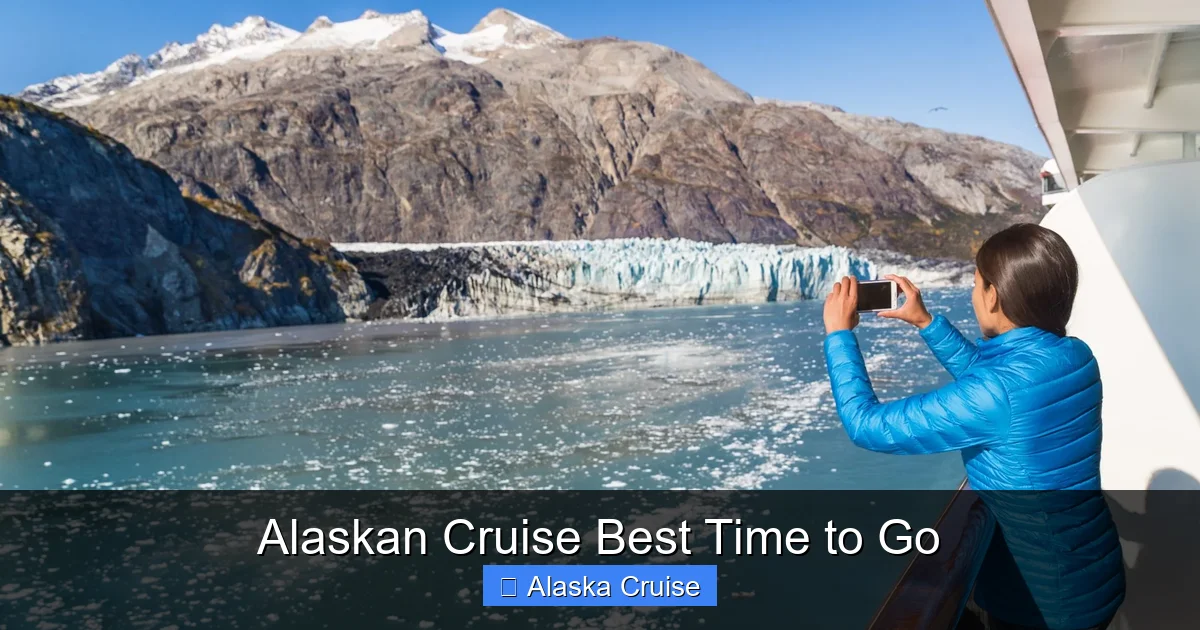
The best time to go on an Alaskan cruise is typically from late May to early September, with peak season in June, July, and August. These months offer mild weather, long daylight hours, active wildlife, and full access to ports and excursions. However, shoulder months like May and September provide fewer crowds and lower prices with still-plenty of natural beauty.
Key Takeaways
- Peak Season (June–August): Ideal for warm weather, full excursion availability, and abundant wildlife viewing, but expect larger crowds and higher prices.
- Shoulder Seasons (May & September): Offer quieter ships, lower fares, and crisp scenery, with slightly cooler temps and fewer daylight hours.
- Wildlife Viewing Peaks in July: Bears, whales, and migratory birds are most active during midsummer, making it prime time for nature lovers.
- Daylight Varies Greatly: In June and July, expect up to 18–20 hours of daylight, perfect for extended sightseeing and photography.
- Weather Is Unpredictable: Even in summer, pack layers—Alaska’s coastal climate can shift quickly, with rain possible any month.
- Port Access Matters: Some remote destinations like Glacier Bay or Hubbard Glacier are only accessible during the official cruise season (May–September).
- 2026 Booking Tip: Reserve early—popular itineraries and cabins fill fast, especially for summer 2026 sailings.
📑 Table of Contents
- When Is the Best Time to Go on an Alaskan Cruise in 2026?
- Understanding Alaska’s Cruise Season: May to September
- Weather and Climate: What to Expect Each Month
- Wildlife Viewing: When and Where to See Alaska’s Icons
- Crowds, Prices, and Booking Tips for 2026
- Final Tips for Choosing Your 2026 Alaskan Cruise
- Conclusion
When Is the Best Time to Go on an Alaskan Cruise in 2026?
So, you’re dreaming of glaciers calving into icy waters, bald eagles soaring above snow-capped peaks, and humpback whales breaching just off the ship’s bow. An Alaskan cruise is one of the most breathtaking travel experiences on Earth—but timing is everything. With a short sailing season and dramatic shifts in weather, wildlife, and daylight, choosing the right month can make or break your adventure.
The official Alaskan cruise season runs from **mid-May through early September**, with most major cruise lines—like Holland America, Princess, Royal Caribbean, and Norwegian—offering sailings during this window. But within that five-month span, each month brings its own unique vibe. Whether you’re chasing the midnight sun, hoping to spot a grizzly bear at Brooks Falls, or simply want the best value for your dollar, understanding the nuances of Alaska’s seasonal rhythm is key.
In this guide, we’ll break down the pros and cons of each month, highlight the best times for wildlife, weather, and crowd levels, and give you practical tips to help you pick the perfect week for your 2026 Alaskan cruise. Whether you’re a first-time cruiser or a seasoned Alaska traveler, this year-by-year breakdown will help you sail smarter.
Understanding Alaska’s Cruise Season: May to September
Alaska’s cruise season is short but spectacular. Unlike tropical destinations that welcome ships year-round, Alaska’s harsh winters and frozen waterways limit cruising to just five months. The season typically kicks off in **mid-May**, when ice melts enough for ships to safely navigate narrow channels like the Inside Passage. It wraps up by **early September**, as colder temps and shorter days signal the approach of fall.
During this window, cruise lines operate a mix of **7-night, 10-night, and even 14-night itineraries**, departing from major hubs like Seattle, Vancouver, Seward, and Whittier. Most popular routes include the **Inside Passage**, **Gulf of Alaska**, and **Glacier Bay National Park**, with stops in ports like Juneau, Ketchikan, Skagway, and Sitka.
One thing to keep in mind: **not all months are created equal**. While the entire season offers stunning scenery, the experience can vary dramatically depending on when you go. Let’s dive into what each month brings to the table.
May: The Quiet Start to the Season
May marks the beginning of the Alaskan cruise season, and it’s a time of quiet beauty and emerging life. As the snow melts and rivers swell, the landscape begins to awaken. This is a great time to go if you prefer **fewer crowds, lower prices, and a more intimate experience**.
Temperatures in May range from **40°F to 60°F (4°C to 15°C)**, depending on your route. Coastal areas like Ketchikan and Juneau tend to be milder, while inland stops like Skagway can still feel crisp. Rain is common—pack a waterproof jacket and layers.
Wildlife is starting to stir. You might spot **bald eagles, sea otters, and harbor seals**, and some early-migrating whales begin arriving. However, bear sightings are less common in May, as many are still emerging from hibernation.
One major perk of cruising in May? **Lower demand means better deals**. Cruise lines often offer discounts to fill ships early in the season. Plus, with fewer tourists, you’ll have more space on excursions and in port towns.
But there are trade-offs. Some **excursions may not be fully operational**, especially those dependent on snowmelt or trail conditions. And daylight, while increasing, is still limited—expect about **14–16 hours of daylight** by late May.
June: The Start of Peak Season
June is when Alaska truly comes alive. This is the **first full month of peak season**, and it’s a favorite among travelers for good reason. The weather warms up, wildlife becomes more active, and the days grow long—very long.
Average temperatures hover between **50°F and 65°F (10°C to 18°C)**, making it comfortable for outdoor activities. Rain is still possible, but sunny days are more frequent. And with up to **18 hours of daylight** by mid-June, you’ll have plenty of time to explore.
Wildlife viewing improves significantly in June. **Humpback whales** are commonly spotted in places like Icy Strait and Frederick Sound. **Sea lions** gather on rocky outcrops, and **puffins** return to nesting sites. On land, **black and brown bears** begin foraging along riverbanks, especially near salmon streams.
Ports are fully operational, and most excursions—like helicopter tours, dog sledding on glaciers, and whale-watching cruises—are running at full capacity. This is also a great time to visit **Glacier Bay National Park**, where glaciers are accessible and ranger-led programs are in full swing.
The downside? **Crowds start to build**. Popular ports like Juneau and Skagway can feel busy, and cabin availability may be limited. If you’re booking for June 2026, aim to reserve **6–9 months in advance**.
July: The Heart of Summer and Wildlife Season
If you’re looking for the **ultimate Alaskan cruise experience**, July is hard to beat. This is the **peak of peak season**, with warm weather, abundant wildlife, and nearly endless daylight.
Temperatures average **55°F to 70°F (13°C to 21°C)**, making it the warmest month of the season. While rain is still possible, July tends to have the most stable weather. And with up to **19–20 hours of daylight**, you’ll feel like you’re living in a perpetual golden hour.
This is **prime time for wildlife**. **Salmon runs** begin in July, drawing **grizzly and black bears** to rivers like Brooks River in Katmai National Park (accessible via flightseeing tours). **Humpback, orca, and minke whales** are frequently seen, and **sea bird colonies** are bustling with activity.
Ports are bustling, and every excursion is available. Whether you’re ziplining through temperate rainforests, kayaking near glaciers, or riding the White Pass & Yukon Route railway, July offers the full Alaska adventure.
But be prepared: **July is the busiest and most expensive month**. Ships are often at full capacity, and popular cabins (like balconies and suites) sell out fast. If you’re flexible, consider sailing **early or late July** to avoid the absolute peak.
August: Still Great, But Changing
August is a strong contender for the best time to go on an Alaskan cruise. While it’s still peak season, the experience begins to shift slightly as summer winds down.
Weather remains pleasant, with temperatures similar to July—**50°F to 68°F (10°C to 20°C)**. However, the chance of rain increases, especially in the latter half of the month. Daylight starts to shorten, dropping to about **16 hours** by late August.
Wildlife is still abundant. **Whales remain active**, and **bears continue fishing** for salmon. In fact, August is one of the best months for **bear viewing**, as the salmon runs peak in many rivers. Flightseeing tours to **Katmai or Lake Clark National Park** offer incredible opportunities to see bears in their natural habitat.
Ports are still busy, but the crowds begin to thin slightly compared to July. This can mean **shorter lines and more availability** for last-minute excursions.
One thing to note: **some remote areas may start to close**. For example, certain hiking trails or wildlife tours in more isolated regions might reduce operations as fall approaches.
September: The Quiet Farewell
September is the final month of the Alaskan cruise season, and it’s a magical time to visit. While it’s technically the **shoulder season**, it offers a unique blend of beauty, value, and tranquility.
Temperatures cool to **45°F to 60°F (7°C to 15°C)**, and rain becomes more frequent. But the landscape transforms into a **kaleidoscope of fall colors**, especially in inland areas like Skagway and Haines. The crisp air and golden aspens create a stunning backdrop for photos.
Wildlife is still active. **Whales** can be seen through early September, and **bears** are busy preparing for hibernation. Some cruise lines even offer special **“bear season” itineraries** in September, focusing on wildlife-rich areas.
The biggest advantage? **Fewer crowds and lower prices**. Ships are less full, ports are quieter, and cruise lines often offer **last-minute deals** to fill remaining cabins. If you’re budget-conscious or prefer a more relaxed pace, September is an excellent choice.
However, be aware that **some excursions may be limited or unavailable**. National parks might reduce hours, and certain flightseeing tours could be grounded due to weather. Always check with your cruise line about what’s operational.
Weather and Climate: What to Expect Each Month
Alaska’s weather is famously unpredictable, even in summer. While you can’t control the forecast, understanding the typical climate patterns can help you pack smart and set realistic expectations.
Temperature Trends
– **May:** 40°F–60°F (4°C–15°C)
– **June:** 50°F–65°F (10°C–18°C)
– **July:** 55°F–70°F (13°C–21°C)
– **August:** 50°F–68°F (10°C–20°C)
– **September:** 45°F–60°F (7°C–15°C)
Coastal areas like Ketchikan and Juneau are generally milder, while inland stops like Skagway can be cooler, especially at night. Always pack **layers**, including a waterproof outer shell, warm mid-layers, and moisture-wicking base layers.
Rainfall and Sunshine
Rain is common throughout the season, especially in the southern Inside Passage. Ketchikan, for example, averages **160+ inches of rain annually**. However, July and August tend to be the driest months.
Sunshine increases dramatically from May to July. In June and July, you’ll enjoy **18–20 hours of daylight**, often referred to as the “midnight sun.” This means you can take a late-night stroll on deck and still see glaciers glowing in the soft evening light.
Sea Conditions
The Pacific Ocean and Gulf of Alaska can be choppy, especially in open waters. If you’re prone to motion sickness, consider **medication or acupressure bands**, and choose a mid-ship cabin on a lower deck for more stability.
Wildlife Viewing: When and Where to See Alaska’s Icons
One of the biggest draws of an Alaskan cruise is the chance to see wildlife in its natural habitat. But timing and location matter.
Whales
– **Best Months:** June, July, August
– **Best Spots:** Icy Strait, Frederick Sound, Stephens Passage
– **Species:** Humpback, orca, minke, gray whales
Humpback whales are most active in summer, feeding on schools of herring and krill. Whale-watching excursions are offered in nearly every port, but **July is the peak** for sightings.
Bears
– **Best Months:** July, August, early September
– **Best Spots:** Katmai National Park, Lake Clark, Brooks Falls (via flightseeing)
– **Species:** Brown bears, black bears
Bears gather near rivers during salmon runs. **July and August** offer the best chances to see them fishing. Some cruise lines partner with air tour companies to offer bear-viewing flights.
Birds and Marine Life
– **Puffins:** Return in May–August; best seen in June and July
– **Sea Otters:** Common year-round, but easiest to spot in calm waters
– **Sea Lions and Seals:** Frequently seen on rocky islands and buoys
Crowds, Prices, and Booking Tips for 2026
Alaska is more popular than ever, and 2026 is expected to be another busy year. Here’s how to navigate the market.
Crowd Levels by Month
– **May & September:** Low crowds, quiet ports
– **June & August:** Moderate to high crowds
– **July:** Very high crowds, especially in popular ports
If you prefer solitude, aim for **May or September**. For the full Alaska experience with all activities available, **June to August** is ideal.
Pricing Trends
– **May & September:** Best deals, with discounts up to 20–30% off peak prices
– **June & August:** Mid-range pricing
– **July:** Highest prices, with limited availability
Booking early is crucial. For **summer 2026 sailings**, many cruise lines open bookings in late 2024 or early 2025. Set price alerts and consider **group or loyalty discounts**.
Booking Tips
– **Book 9–12 months in advance** for the best cabin selection
– **Consider repositioning cruises** (e.g., Seattle to Vancouver) for unique itineraries and lower prices
– **Look for package deals** that include airfare, hotels, and excursions
– **Check cancellation policies**—flexibility is key in case of weather or schedule changes
Final Tips for Choosing Your 2026 Alaskan Cruise
So, when is the best time to go on an Alaskan cruise in 2026? The answer depends on your priorities.
– Want **warm weather, full excursions, and peak wildlife**? Go in **July**.
– Prefer **lower prices and fewer crowds**? Choose **May or September**.
– Looking for a **balanced experience**? **June or August** are excellent middle-ground options.
No matter when you go, remember: **Alaska is wild, beautiful, and unpredictable**. Pack layers, bring a sense of adventure, and be ready to be amazed.
And don’t wait too long to book. With rising demand and limited ship capacity, **2026 sailings are filling fast**. Whether you’re dreaming of glaciers, grizzlies, or the glow of the midnight sun, now is the time to plan your Alaskan cruise.
Conclusion
An Alaskan cruise is a once-in-a-lifetime journey, and choosing the right time to go can elevate your experience from great to unforgettable. From the quiet beauty of May to the bustling energy of July and the golden hues of September, each month offers something special.
For most travelers, the **best time to go on an Alaskan cruise is between June and August**, when weather is warmest, wildlife is most active, and all ports and excursions are fully operational. However, if you value peace, value, and unique seasonal beauty, **May and September** are fantastic alternatives.
As you plan your 2026 adventure, keep in mind the trade-offs: crowds vs. solitude, price vs. availability, and weather vs. wildlife. With the insights in this guide, you’re well-equipped to make the smartest choice for your travel style.
So set your sights on Alaska—where glaciers meet the sea, eagles ride the wind, and every sunrise feels like a miracle. Your perfect cruise is waiting.
Frequently Asked Questions
What is the best month for an Alaskan cruise?
The best month for an Alaskan cruise is typically July, offering the warmest weather, longest daylight hours, and peak wildlife activity. However, June and August are also excellent, with slightly fewer crowds and great conditions.
Is May a good time to cruise Alaska?
Yes, May is a great time to cruise Alaska if you prefer quieter ships, lower prices, and emerging spring scenery. Wildlife is beginning to appear, and you’ll avoid the summer crowds, though some excursions may be limited.
Can you see whales on an Alaskan cruise in September?
Yes, you can still see whales in September, especially in early September. Humpback and orca whales remain active, though sightings may become less frequent as the season winds down.
What should I pack for an Alaskan cruise in 2026?
Pack layers, including a waterproof jacket, warm mid-layers, gloves, and a hat. Don’t forget binoculars, sunscreen, and motion sickness remedies. Comfortable walking shoes are essential for port excursions.
Are Alaskan cruises expensive in 2026?
Prices vary by month and cruise line, but 2026 is expected to be competitive due to high demand. Booking early and choosing shoulder months (May or September) can help you save significantly.
Do I need a passport for an Alaskan cruise?
If your cruise departs and returns to the same U.S. port (like Seattle), a passport is not required but highly recommended. For cruises departing from Vancouver or visiting Canadian ports, a passport is mandatory.