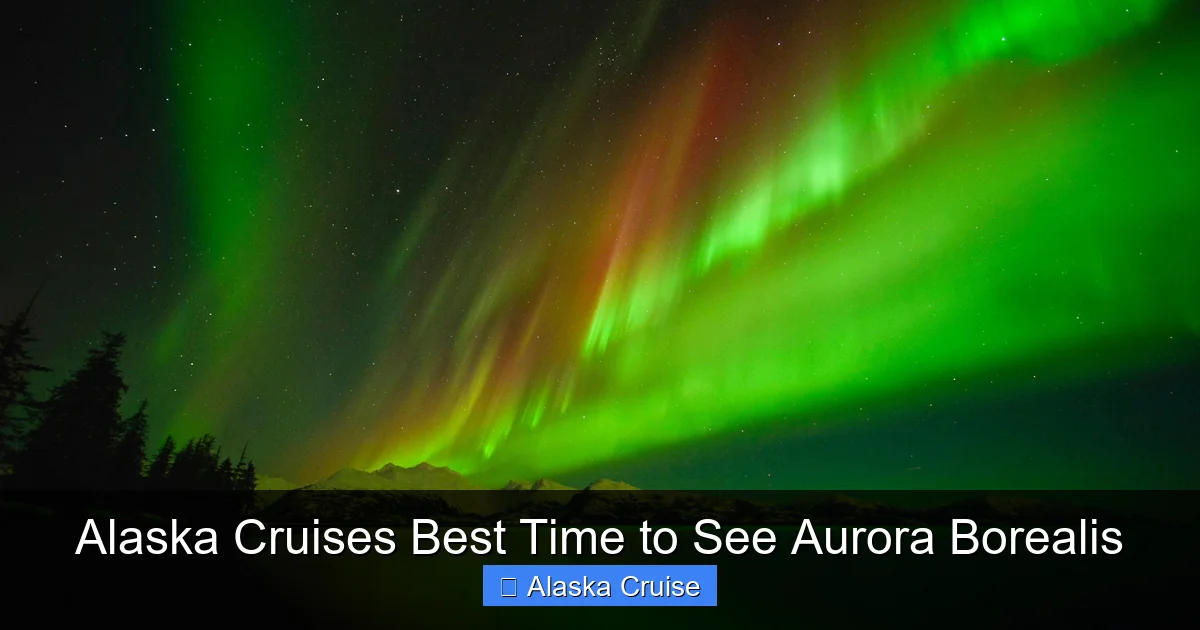
Alaska cruises offer a unique chance to witness the aurora borealis, but timing is everything. While the northern lights aren’t visible during summer’s midnight sun, late-season sailings in August and September—plus early winter shore excursions—can deliver unforgettable displays under dark, clear skies.
Key Takeaways
- Peak aurora season runs from late August to early April, with the highest activity between December and March.
- Alaska cruise ships don’t sail during peak aurora months, so plan pre- or post-cruise land tours for the best viewing.
- Late August and early September cruises offer the best overlap between cruise availability and aurora visibility.
- Dark, clear skies are essential—avoid full moons and light pollution for optimal viewing.
- Fairbanks and the Interior region are top aurora destinations, often accessible via cruise line add-on packages.
- 2026 is predicted to be a strong solar maximum year, increasing chances of vivid, frequent northern lights.
- Pack warm, layered clothing and a good camera—aurora chasing happens in freezing temperatures.
Why Alaska Cruises and the Aurora Borealis Don’t Always Mix
It’s a common misconception: many travelers assume that booking an Alaska cruise automatically means they’ll see the northern lights. But here’s the reality—most Alaska cruises run from May through September, a period when the midnight sun bathes the state in nearly 24-hour daylight. During these months, the sky simply doesn’t get dark enough for the aurora borealis to be visible, no matter how strong the solar activity.
The aurora borealis, or northern lights, is a natural light display caused by solar particles colliding with Earth’s atmosphere. This phenomenon is most visible in high-latitude regions like Alaska, especially within the “Auroral Oval”—a ring-shaped zone centered around the magnetic North Pole. But visibility depends heavily on darkness, clear skies, and solar activity. Unfortunately, Alaska’s cruise season aligns with summer, when the sun barely sets in the northern parts of the state. In places like Barrow (now Utqiaġvik), the sun doesn’t set at all from mid-May to late July.
The Cruise Season Dilemma
Major cruise lines like Holland America, Princess, and Norwegian Cruise Line operate Alaska itineraries primarily between May and September. These months offer mild weather, calmer seas, and access to glaciers, wildlife, and scenic fjords—perfect for sightseeing. But they’re the worst months for aurora viewing. Even in September, when nights begin to lengthen, the window for darkness is still limited, especially in southern ports like Juneau or Ketchikan.
So, if you’re dreaming of dancing green curtains of light across a star-filled Alaskan sky, a standard summer cruise won’t cut it. That doesn’t mean your dream is impossible—it just means you’ll need to adjust your strategy. The key is combining your cruise with a land-based aurora adventure, either before or after your voyage.
When Is the Best Time to See the Aurora Borealis in Alaska?
The aurora borealis is technically active year-round, but visibility depends on darkness and weather. In Alaska, the optimal window for viewing the northern lights stretches from late August to early April. During this period, nights are long enough—and dark enough—for the lights to shine brightly.
Within that window, the peak aurora season runs from December through March. These months offer the longest, darkest nights, increasing your chances of witnessing a strong display. February and March are especially popular among aurora chasers because the weather is often clearer than in the dead of winter, and daylight hours are beginning to return, making travel more comfortable.
Solar Activity and the 2026 Aurora Forecast
Solar activity follows an 11-year cycle, with periods of high and low sunspot activity. We’re currently in Solar Cycle 25, which is expected to reach its peak—known as the solar maximum—around 2025 to 2026. This means that 2026 is shaping up to be one of the best years in over a decade to see the northern lights.
During solar maximum, the sun emits more solar flares and coronal mass ejections (CMEs), which send charged particles toward Earth. When these particles interact with our magnetic field, they create stronger, more frequent, and more vivid auroras. Scientists predict that 2026 could bring spectacular displays, even at lower latitudes. For Alaska, this means more intense and colorful light shows, potentially visible on multiple nights during a single trip.
Why Late August and Early September Are Special
While December through March offers the darkest skies, late August and early September present a unique opportunity: the overlap between the tail end of the cruise season and the beginning of aurora visibility. By mid-August, nights in northern Alaska are already dark for several hours, and by September, the aurora season is in full swing.
This timing allows travelers to enjoy the best of both worlds: a scenic Alaska cruise with glacier views and wildlife sightings, followed by a few nights on land under dark skies. For example, you could cruise from Seattle to Seward in late August, then fly to Fairbanks for a 3–5 night aurora tour. This hybrid approach maximizes your chances of seeing both Alaska’s natural wonders and the northern lights.
Best Places in Alaska to See the Aurora Borealis
Not all parts of Alaska are created equal when it comes to aurora viewing. While the lights can technically be seen across the state, some locations offer better conditions due to lower light pollution, clearer skies, and proximity to the Auroral Oval.
Fairbanks: The Aurora Capital of Alaska
Fairbanks is widely regarded as the best place in Alaska to see the northern lights. Located directly under the Auroral Oval, it experiences aurora activity on over 200 nights per year. The city’s relatively dry climate also means clearer skies compared to coastal areas, which are often cloudy.
Many cruise lines offer pre- or post-cruise packages that include flights to Fairbanks. These packages often feature guided aurora tours, heated viewing lodges, and cultural experiences like dog sledding or visits to the Chena Hot Springs. Staying outside the city—such as at the Chena Hot Springs Resort or a remote cabin—reduces light pollution and increases your chances of a clear view.
Denali National Park and the Interior
The region around Denali National Park offers pristine, dark skies ideal for aurora viewing. With minimal light pollution and expansive wilderness, this area provides a truly immersive experience. Lodges like the Denali Backcountry Lodge or Kantishna Roadhouse offer guided aurora tours and comfortable accommodations.
Keep in mind that access to Denali is limited in winter, but many tour operators run aurora-focused trips from late August through March. These trips often include snowshoeing, wildlife viewing, and photography workshops.
Anchorage and Southcentral Alaska
Anchorage is more accessible and offers more amenities, but it’s also more prone to cloud cover and light pollution. That said, if you’re staying in Anchorage before or after your cruise, you can still see the aurora—especially during strong solar events. Head to darker areas like Chugach State Park or the Turnagain Arm for better viewing.
Cruise passengers docking in Seward or Whittier can easily reach Anchorage by train or car, making it a convenient base for aurora chasing. Just be prepared for variable weather and plan for multiple nights to increase your odds.
How to Maximize Your Chances of Seeing the Northern Lights
Seeing the aurora borealis is never guaranteed—it’s a natural phenomenon, after all. But with smart planning and a bit of luck, you can significantly improve your odds.
Check the Aurora Forecast
Use reliable aurora forecasting tools to track solar activity and cloud cover. Websites like the University of Alaska Fairbanks Geophysical Institute and apps like My Aurora Forecast & Alerts provide real-time KP index readings, which measure geomagnetic activity. A KP index of 3 or higher increases your chances of seeing the lights, especially in southern Alaska.
Also monitor local weather forecasts. Clear skies are essential—clouds can completely block the view, even during a strong aurora event. Apps like Clear Outside or Windy offer detailed cloud cover predictions.
Avoid Light Pollution
The darker the location, the better. Stay away from city lights, streetlamps, and even campground lighting. If you’re staying in a hotel, ask for a room facing away from bright areas, or consider booking a remote cabin or aurora lodge.
Many tour operators offer “aurora wake-up calls”—if the lights appear, they’ll call or text you to head outside. This is especially helpful if you’re trying to sleep during the peak viewing hours (typically between 10 PM and 2 AM).
Be Patient and Flexible
Aurora chasing requires patience. Even during peak season, the lights may not appear every night. Plan to stay at least 3–5 nights in an aurora-friendly location to increase your chances. Flexibility is key—be ready to adjust your schedule based on weather and solar activity.
Bring warm clothing, a thermos of hot cocoa, and a comfortable chair. Dress in layers, including a heavy parka, insulated boots, gloves, and a hat. Temperatures can drop well below freezing, even in September.
Photography Tips
If you want to capture the aurora, bring a DSLR or mirrorless camera with manual settings. Use a tripod, set your ISO between 800 and 3200, aperture to f/2.8 or lower, and shutter speed between 5 and 25 seconds. Focus manually on a bright star or distant light.
Smartphone cameras have improved, but they still struggle with low-light conditions. Use night mode or a dedicated aurora photography app, and avoid zooming in, which reduces image quality.
Planning Your 2026 Alaska Aurora Cruise Adventure
Now that you know when and where to see the northern lights, it’s time to plan your trip. Here’s a step-by-step guide to combining an Alaska cruise with an aurora experience in 2026.
Step 1: Choose Your Cruise Dates
Opt for a late-season cruise—ideally in August or early September. These dates offer the best balance between cruise availability and aurora visibility. Look for itineraries that end in Seward or Whittier, as these ports are closest to Anchorage and Fairbanks.
Popular cruise lines offering Alaska voyages include Princess Cruises, Holland America Line, and Norwegian Cruise Line. Many offer 7- to 14-day itineraries, with stops in Juneau, Skagway, Ketchikan, and Glacier Bay.
Step 2: Book a Pre- or Post-Cruise Aurora Tour
Once your cruise is booked, add a land tour focused on aurora viewing. Most cruise lines offer add-on packages, or you can book independently through local tour operators.
For example, Princess Cruises offers a “Northern Lights & Glacier Adventure” package that includes a flight to Fairbanks, aurora viewing at Chena Hot Springs, and a visit to the Trans-Alaska Pipeline. Holland America partners with Alaska Wildland Adventures for multi-day aurora and wildlife tours.
If booking independently, consider companies like Alaska Aurora Adventures, Northern Alaska Tour Company, or Go Alaska Tours. These operators specialize in aurora trips and often include transportation, lodging, and guided excursions.
Step 3: Pack Smart
Aurora chasing is a cold-weather activity. Pack thermal base layers, a down jacket, insulated pants, waterproof boots, and warm gloves. Don’t forget a headlamp with a red light setting—white light can ruin your night vision.
Bring a camera with extra batteries (cold drains them quickly), a tripod, and a power bank. If you wear glasses, consider anti-fog wipes.
Step 4: Stay Flexible and Positive
Even with perfect planning, the aurora is unpredictable. Some nights will be cloudy, others will have weak activity. But the experience of being in Alaska’s vast wilderness, under a sky full of stars, is magical in itself.
Use your time to enjoy other winter activities—dog sledding, snowshoeing, visiting Indigenous cultural centers, or soaking in natural hot springs. These experiences enrich your trip and make the wait worthwhile.
Conclusion: Make 2026 Your Year to See the Northern Lights
Alaska cruises are incredible journeys—offering glacier calving, whale sightings, and breathtaking coastal scenery. But if seeing the aurora borealis is on your bucket list, you’ll need to think beyond the ship. By timing your cruise for late August or early September and adding a land-based aurora adventure, you can experience the best of both worlds.
With 2026 predicted to be a peak year for solar activity, the northern lights promise to be more vivid and frequent than in recent memory. Whether you’re standing under the glowing skies of Fairbanks or watching the lights dance over Denali, the experience will stay with you forever.
So start planning now. Book your cruise, arrange your aurora tour, and pack your warmest clothes. The lights are waiting—and 2026 might just be your best chance to see them in all their glory.
FAQs
Can you see the aurora borealis from an Alaska cruise ship?
It’s very unlikely. Most Alaska cruises run during summer months when the sun doesn’t set, making aurora visibility impossible. Even in September, ships are usually in southern ports with limited darkness.
What month is best to see the northern lights in Alaska?
The best months are December through March, when nights are longest and darkest. However, late August and early September offer a good compromise if you’re combining a cruise with a land tour.
Is 2026 a good year to see the aurora borealis?
Yes! 2026 is expected to be near the peak of Solar Cycle 25, meaning stronger and more frequent auroras. This makes it an ideal time for aurora chasing in Alaska.
Where in Alaska has the clearest skies for aurora viewing?
Fairbanks and the Interior region have the clearest skies and are located directly under the Auroral Oval, making them the top choice for aurora viewing.
Do I need a special camera to photograph the northern lights?
A DSLR or mirrorless camera with manual settings is ideal, but modern smartphones with night mode can also capture decent shots. A tripod is essential for long exposures.
Can I see the aurora in Anchorage?
Yes, but it’s less reliable due to light pollution and cloud cover. For the best chance, head to darker areas like Chugach State Park or take a short trip to Fairbanks.
This is a comprehensive guide about alaska cruises best time to see aurora borealis.
Key Takeaways
- Understanding alaska cruises best time to see aurora borealis: Provides essential knowledge
Frequently Asked Questions
What is alaska cruises best time to see aurora borealis?
alaska cruises best time to see aurora borealis is an important topic with many practical applications.